goodheart786@gmail.com

Hybrid polymer, rubber, and polyurethane air hoses coiled on a frozen workshop bench with frost on the fittings, demonstrating low-temperature flexibility

Best Air Hose for Cold Weather: What to Look For

Looking for the best air hose for cold weather? The short answer: for most buyers, that is a hybrid polymer air hose rated to -40°F — pliable below zero, kink-resistant, and priced between PVC and rubber. Choose EPDM rubber for industrial or oily environments, and polyurethane when weight matters most. This 2026 edition of the guide compares the four

Best Air Hose for Cold Weather: What to Look For Read More »

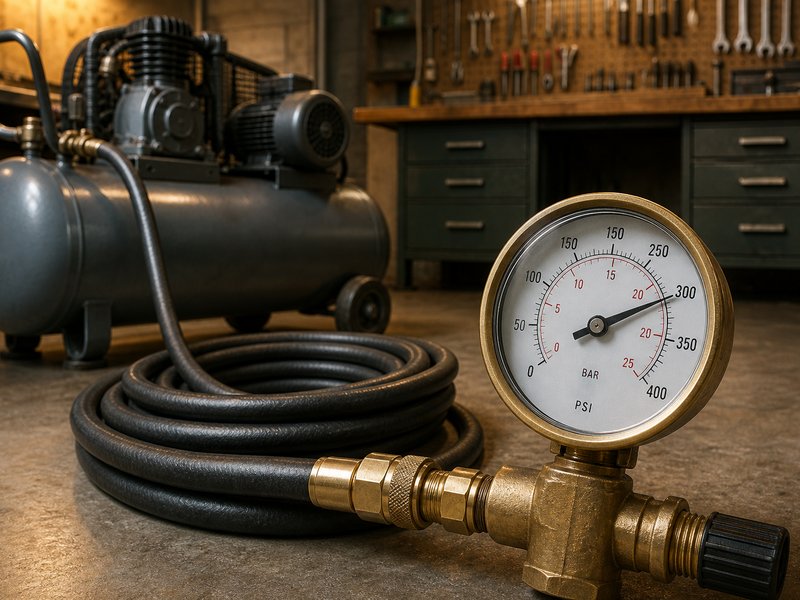
air compressor connected to a coiled air hose with a pressure gauge showing the working pressure in a workshop

Air Hose Working Pressure vs Burst Pressure: Safety Factor Explained

Air hose working pressure vs burst pressure — the short answer: working pressure is the maximum internal pressure an air hose can carry continuously and safely, while burst pressure is the destructive-test pressure at which the hose ruptures. The gap between the two numbers is the safety factor, and for compressed air hoses it is

Air Hose Working Pressure vs Burst Pressure: Safety Factor Explained Read More »

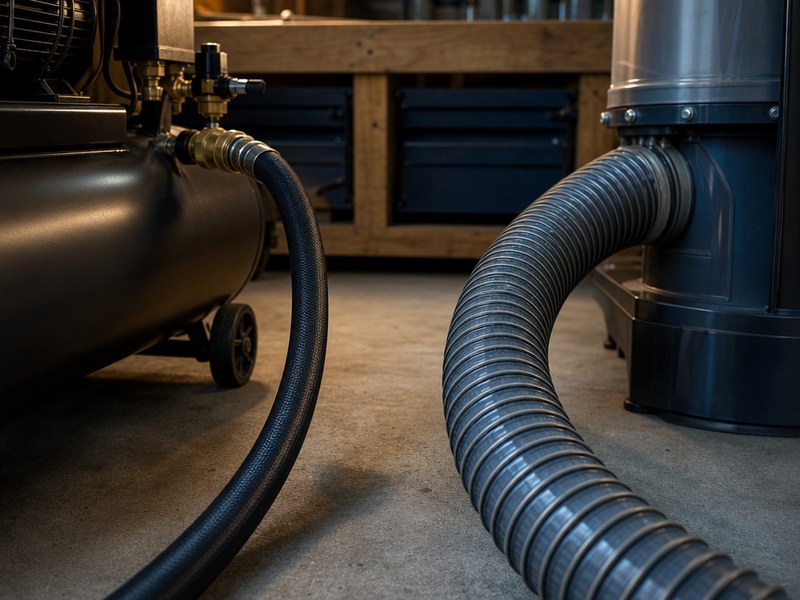
textile-braided air delivery hose and wire-reinforced air suction hose side by side in an industrial workshop

Air Delivery Hose vs Air Suction Hose: Key Differences

The suction hose vs delivery hose question comes down to one engineering fact: pressure direction. If air is pushed through the hose — delivery hose. If air is pulled through it — suction hose. An air delivery hose is reinforced to withstand positive internal pressure, while an air suction hose resists negative pressure (vacuum). Throughout

Air Delivery Hose vs Air Suction Hose: Key Differences Read More »

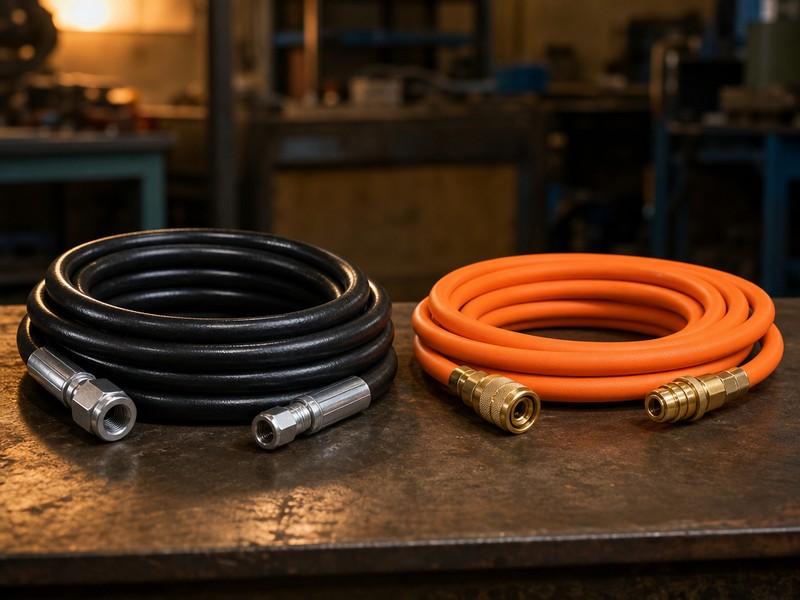
Black steel-wire-reinforced hydraulic hose with crimped fittings coiled beside a lightweight orange air hose with brass quick-connect couplings in a workshop

Hydraulic Hose vs Air Hose: Key Differences Explained

The hydraulic hose vs air hose question has one answer that settles everything: pressure. A hydraulic hose carries pressurized liquid — usually hydraulic oil — at 3,000–6,000 PSI through steel-wire reinforcement, 10–20 times the 150–300 PSI an air hose handles with a light fiber-braided body. That is why the two are never interchangeable: put an

Hydraulic Hose vs Air Hose: Key Differences Explained Read More »

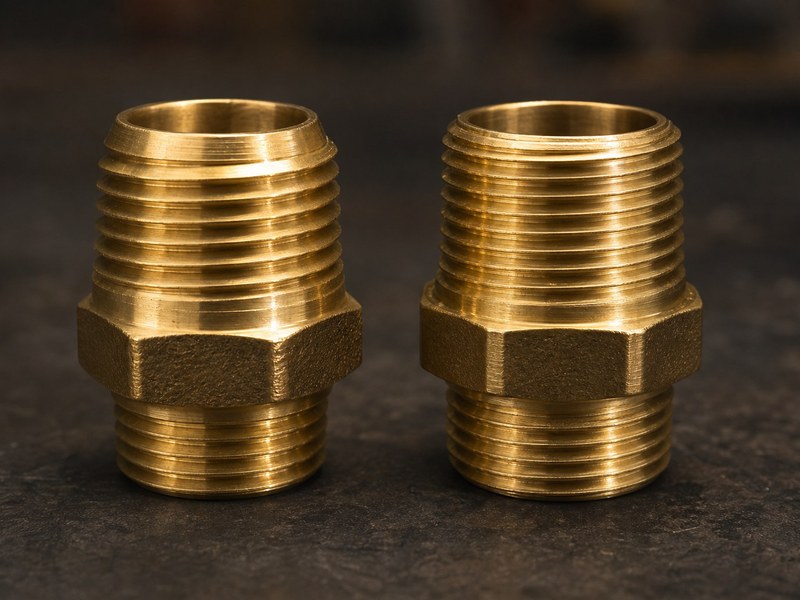
Brass NPT tapered thread fitting next to a brass BSP parallel thread fitting on a workbench

NPT vs BSP Threads: What They Mean for Air Fittings

NPT and BSP are not interchangeable. NPT (National Pipe Taper, ANSI/ASME B1.20.1) is a 60-degree US taper thread with flat crests; BSP (British Standard Pipe, ISO 228-1 for parallel BSPP, ISO 7-1 for tapered BSPT) is a 55-degree British thread with rounded crests. Their pitches match only at 1/2 inch and 3/4 inch (14 TPI),

NPT vs BSP Threads: What They Mean for Air Fittings Read More »

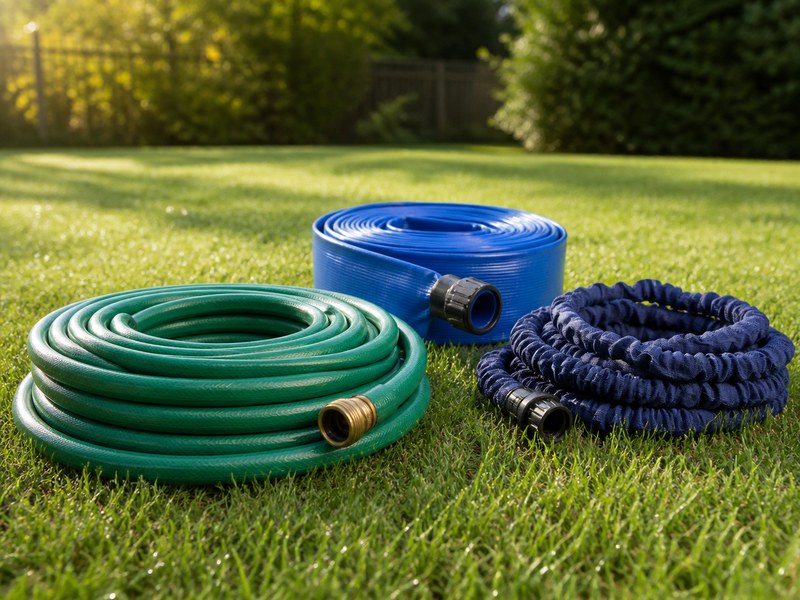
different types of water hoses including a rubber garden hose, a PVC layflat hose and an expandable hose

What Are the Types of Water Hoses? Material, Pressure & Fittings Explained

Most water hoses are a combination of material, construction, and application — matching all three is the key to choosing well. There are many types of water hoses, and choosing the right one comes down to material, construction, application, and pressure rating. The short answer: most hoses combine these four traits, so the best pick depends

What Are the Types of Water Hoses? Material, Pressure & Fittings Explained Read More »

Steel JIC male fitting with a 37 degree flare cone beside a flared tube end and nut on a workbench

What Are JIC Fittings? 37° Flare Hydraulic Fittings Explained

If you are holding a fitting stamped “JIC” and asking what it is, whether it fits your NPT port, or what size you need, here is the short answer: a JIC fitting is a 37-degree flared, metal-to-metal sealing hydraulic connection standardized under SAE J514 – it needs no O-ring, gasket, or thread sealant, and it

What Are JIC Fittings? 37° Flare Hydraulic Fittings Explained Read More »

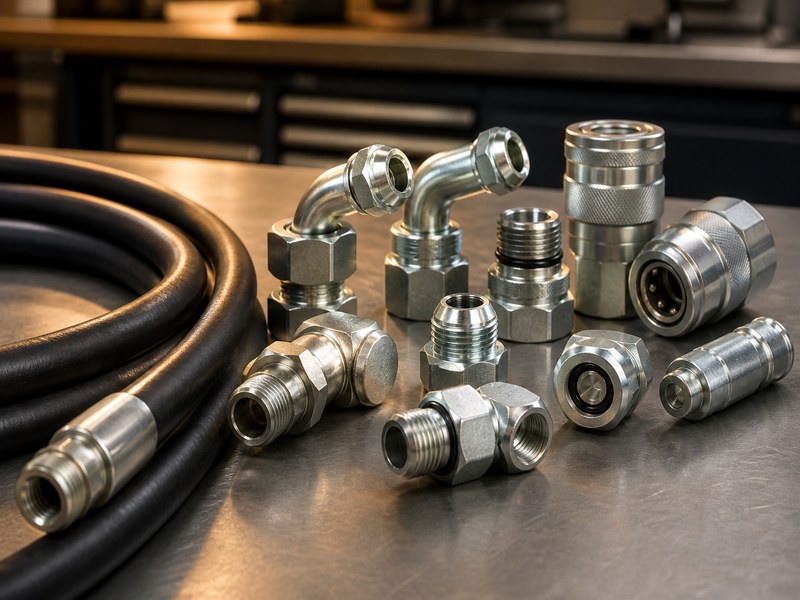
Collection of steel hydraulic fittings including JIC flare, ORFS and quick connect couplings arranged with a hydraulic hose on a workbench

What Are the Types of Hydraulic Fittings? A Complete Guide

Hydraulic fittings are the precision connectors that join hoses, tubes, and pipes to pumps, valves, cylinders, and motors — and the types of hydraulic fittings fall into three practical families: hose end fittings (crimp and reusable), adapters and unions (JIC, ORFS, NPT, BSP, DIN, and metric), and quick connect couplings. Each type is defined by

What Are the Types of Hydraulic Fittings? A Complete Guide Read More »