goodheart786@gmail.com

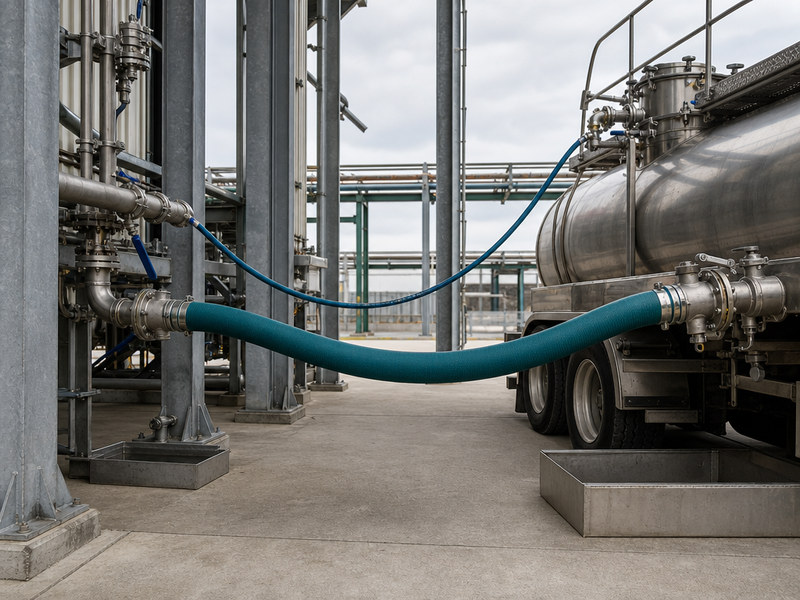
Tank truck hose assembly connected on a chemical tank truck loading rack with a vapor return line

Chemical Tank Truck Loading and Unloading: Tank Truck Hose Best Practices

A tank truck hose, also called a road tanker hose, is the flexible line carrying chemical product between a road tanker and a loading rack, and it succeeds or fails on how that line is supported, sloped, bonded and drained. This guide answers the questions that arise on a road tanker job: rack set-up, the

Chemical Tank Truck Loading and Unloading: Tank Truck Hose Best Practices Read More »

Railcar unloading hose assembly connected to a tank car outlet on a rail siding

Rail Car Chemical Transfer: Railcar Unloading Hose — Equipment and Selection

A railcar unloading hose is the flexible connection between a tank car outlet and the pump, header or storage line that receives the chemical. Choosing one means matching bore, working pressure, liner material and end fittings to the product, the car’s valve arrangement and the unloading method used at the siding. This guide covers the

Rail Car Chemical Transfer: Railcar Unloading Hose — Equipment and Selection Read More »

IBC transfer hose with a blue cover, connected to the bottom outlet of a 1,000 L intermediate bulk container by a cam and groove coupling

Drum and IBC Chemical Transfer: IBC Transfer Hose, Pumps and Safety

An IBC transfer hose is the flexible link between a small container and the equipment that empties it. For a 1,000 L intermediate bulk container or a 200 L drum, three decisions set the outcome: which pump family is used, how the container outlet is connected, and how static charge is controlled. This guide explains

Drum and IBC Chemical Transfer: IBC Transfer Hose, Pumps and Safety Read More »

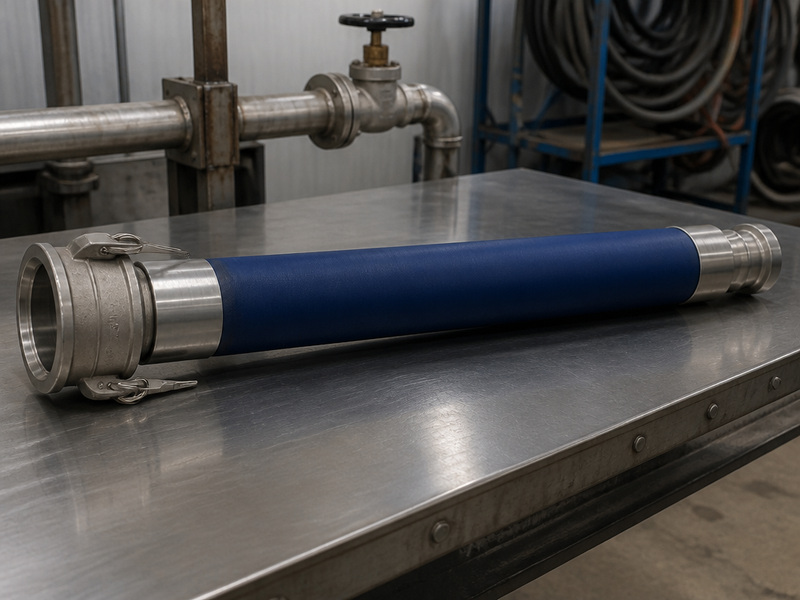
Crimped chemical hose assembly with camlock hose couplings fitted on both ends

Chemical Hose Assemblies: Hose Assembly Fittings — Crimped, Flanged and Camlock End Options

Hose assembly fittings, also called hose ends, are the metal ends that turn a chemical hose into a finished assembly. They set the pressure that the joint can hold and define the interface the plant connects to. This article compares the four attachment methods and three interface types. This article is about termination rather than

Chemical Hose Assemblies: Hose Assembly Fittings — Crimped, Flanged and Camlock End Options Read More »

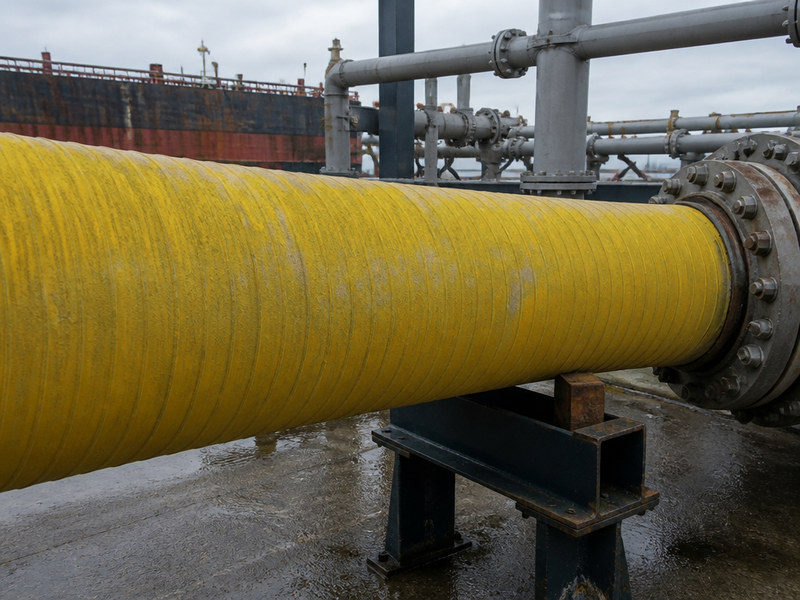
Chemical marine transfer hose with a colored cover made up on a dock manifold at a US terminal

USCG Hose Requirements: Chemical Hose for Marine and Offshore Transfer (USCG-Compliant)

USCG hose requirements govern every chemical hose used at a US marine terminal, barge berth or ship-to-shore transfer point. These are federal rules in Title 33 of the Code of Federal Regulations, and they fix the burst pressure, the working pressure, the permitted end connections, the marking and the annual pressure test. This article explains

USCG Hose Requirements: Chemical Hose for Marine and Offshore Transfer (USCG-Compliant) Read More »

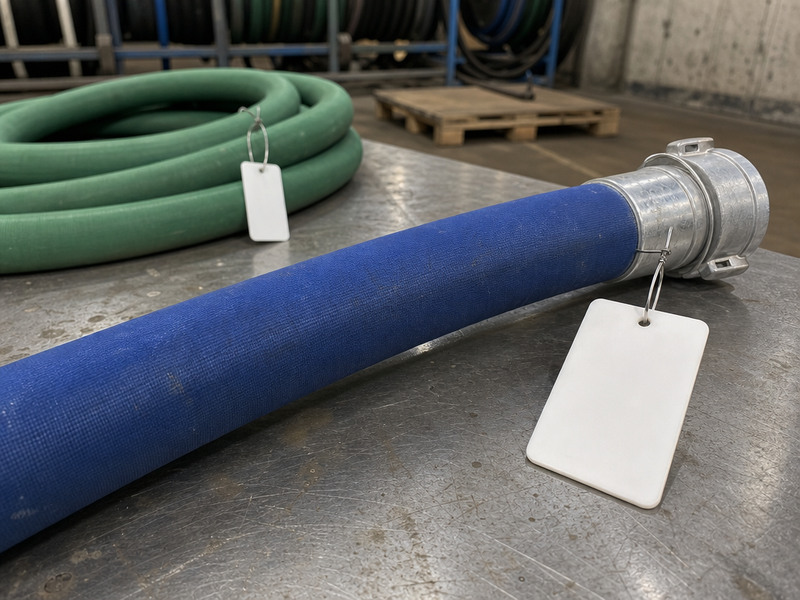
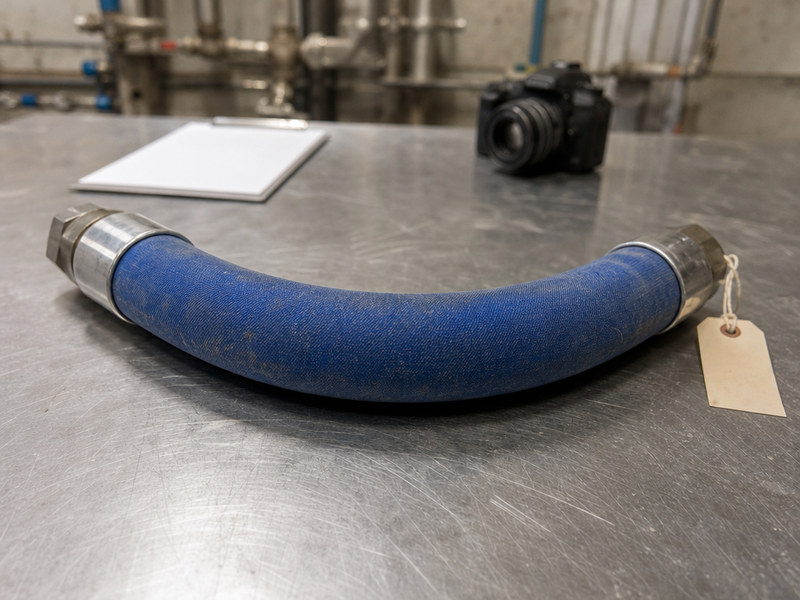
Chemical hose inspection program bench with tagged hose assemblies staged for a static pressure test

Hose Inspection Program: Chemical Transfer Hose Inspection and Reliability

A hose inspection program for chemical transfer is a documented cycle of scheduled visual examination, tagging, and a 1.5 × MAWP (maximum allowable working pressure) static pressure test that proves each assembly is fit for its next transfer. This page sets out what a hose inspection program must prove, how often it should run, what

Hose Inspection Program: Chemical Transfer Hose Inspection and Reliability Read More »

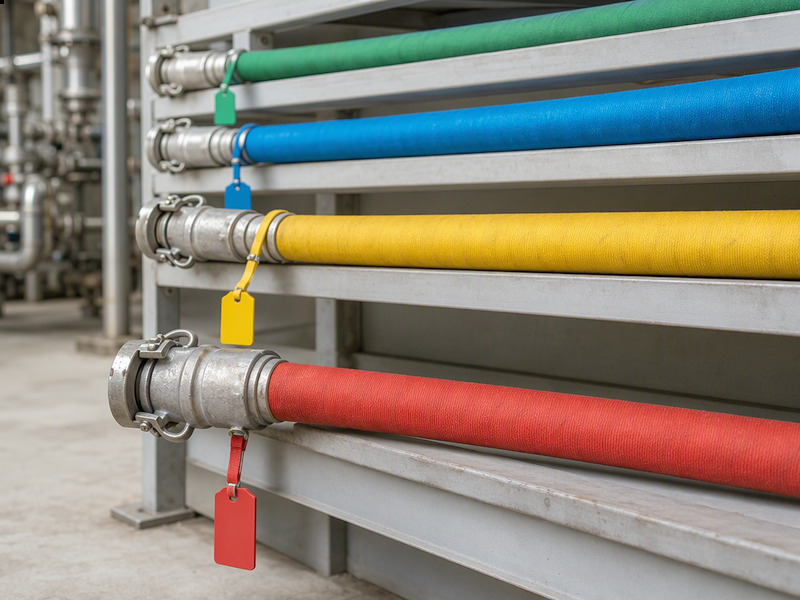
Rows of tagged chemical hose assemblies on a storage rack in a process plant, with cover color that differs by construction

Hose Maintenance in Chemical Plants: Lifecycle Tracking and Cost

Effective hose maintenance in chemical plants is a money discipline, not just a repair activity. It means storing and rotating assemblies correctly, scheduling re-tests, deciding repair or retirement on evidence, and comparing options by cost per year of safe service. This article shows how to track a chemical hose through its whole life and price

Hose Maintenance in Chemical Plants: Lifecycle Tracking and Cost Read More »

Damp darkened cover on a chemical transfer hose that indicates permeation through the tube wall

Why Waiting for a Chemical Hose Leak Is a Costly Mistake (Permeation)

A chemical hose leak rarely announces itself as a drip. Most chemical hoses first move small amounts of the medium straight through the tube wall by diffusion — permeation — driven by a concentration gradient rather than a hole. That transport shows up as odor, a damp or darkened cover and repeated top-ups long before

Why Waiting for a Chemical Hose Leak Is a Costly Mistake (Permeation) Read More »

Failed chemical hose assembly logged on an inspection bench before root-cause work begins

Hose Failure Analysis in Petrochemical Plants: Causes and Prevention

The question after a hose release in a petrochemical plant is never only what broke, but why it broke here and now. Hose failure analysis answers that. The method preserves the failed item, reconstructs its service history, opens the tube for inspection, and compares what it finds against the design intent. This guide sets out

Hose Failure Analysis in Petrochemical Plants: Causes and Prevention Read More »

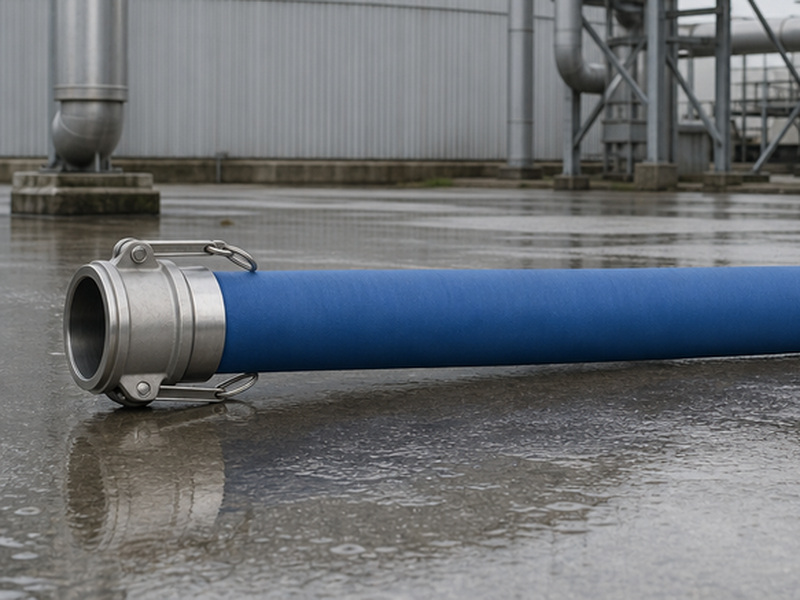
Blue chemical hose with a cam and groove coupling fitted to its end

Chemical Hose Fittings: Types, Materials and Compatibility

Chemical hose fittings are the parts that join a chemical transfer hose to a pump, tank, manifold or second hose. Three decisions govern the choice: the fitting type, the body material and the gasket. This article compares the common types and materials, and explains how to match chemical hose fittings to a specific medium, concentration

Chemical Hose Fittings: Types, Materials and Compatibility Read More »