goodheart786@gmail.com

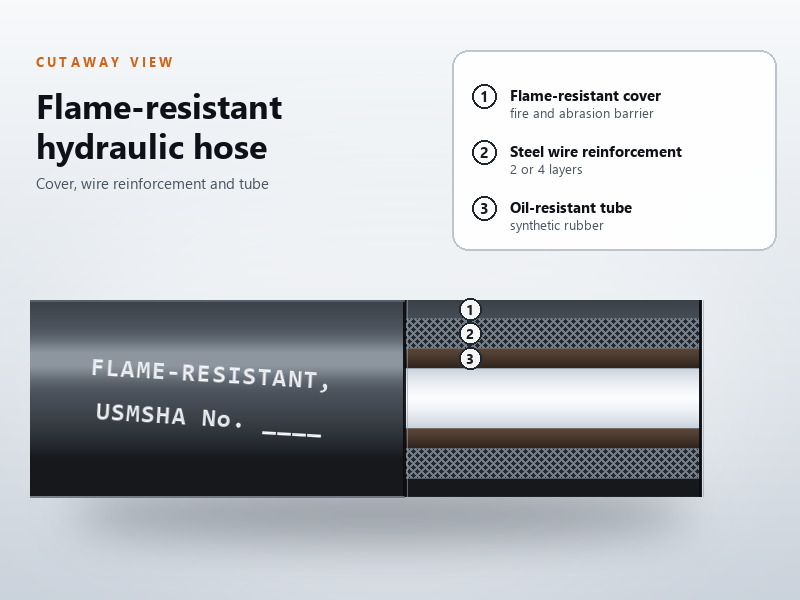
Cutaway of an MSHA accepted hydraulic hose showing the flame-resistant cover, braided steel reinforcement and oil-resistant tube, with the Flame-Resistant USMSHA acceptance marking printed on the cover

MSHA Hydraulic Hose: Certified Flame-Resistant Hydraulic Oil Hose for Mining Applications

An MSHA hydraulic hose is a hydraulic oil hose whose cover is accepted as flame resistant under 30 CFR Part 18.65 by the U.S. Mine Safety and Health Administration. The accepted cover must be marked “Flame-Resistant, USMSHA No. ____” at intervals not exceeding 3 feet. Acceptance covers the flame resistance of the cover and nothing

MSHA Hydraulic Hose: Certified Flame-Resistant Hydraulic Oil Hose for Mining Applications Read More »

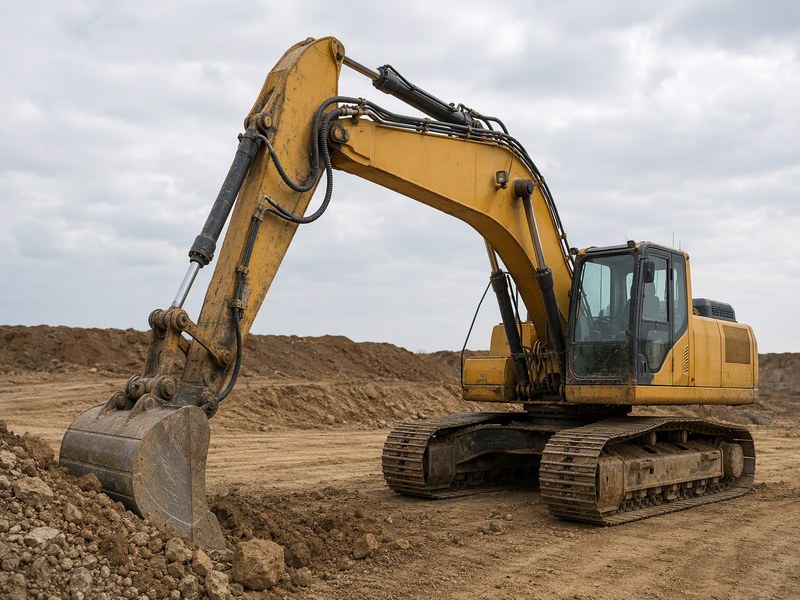
Hydraulic excavator on a construction site with steel wire braided hydraulic hose assemblies routed along the boom and stick to the bucket cylinder

Hydraulic Hose for Construction Equipment and Excavator Applications: Selection, Standards and Replacement Guide

Hydraulic hose for construction equipment is specified by matching one pressure class, one reinforcement construction and one fitting standard to each circuit. Boom, stick, bucket, travel, pilot and return lines are not interchangeable, and treating them as one specification is the most common source of premature failure and of unplanned replacement cost. On a typical

Hydraulic Hose for Construction Equipment and Excavator Applications: Selection, Standards and Replacement Guide Read More »

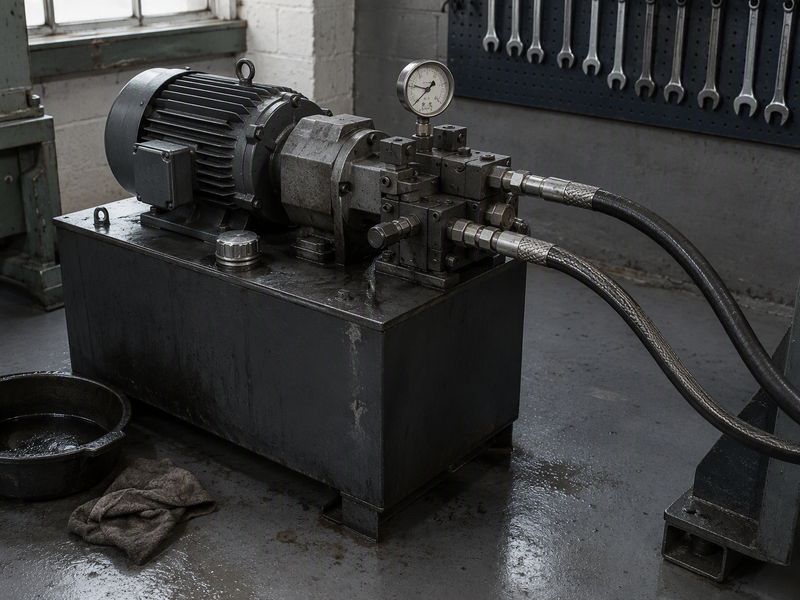
Hydraulic power unit with reservoir, electric motor, piston pump, pressure gauge and steel wire braided hose assemblies installed on a plant workshop floor

Hydraulic System Safety: Common Failures and Prevention

Hydraulic system safety is the discipline of holding stored pressure energy inside the system until it can be released deliberately, and of keeping the fluid and the components that contain it in the condition the designer assumed. Most hydraulic failures are not random: contaminated fluid, overheating, pressure spikes, and damaged hose assemblies account for the

Hydraulic System Safety: Common Failures and Prevention Read More »

Anatomy of a hydraulic hose specification table showing the dash size, inside diameter tolerance, working pressure, proof pressure, minimum burst pressure, minimum bend radius and weight columns

Hydraulic Hose Specifications: How to Read a Datasheet Row in 2026

Hydraulic hose specifications are the set of published values a hose must meet — bore and its acceptance band, construction, working pressure, proof pressure, minimum burst pressure, temperature range, minimum bend radius, weight and fluid compatibility — and the three values that decide whether a line is safe are the maximum working pressure, the minimum

Hydraulic Hose Specifications: How to Read a Datasheet Row in 2026 Read More »

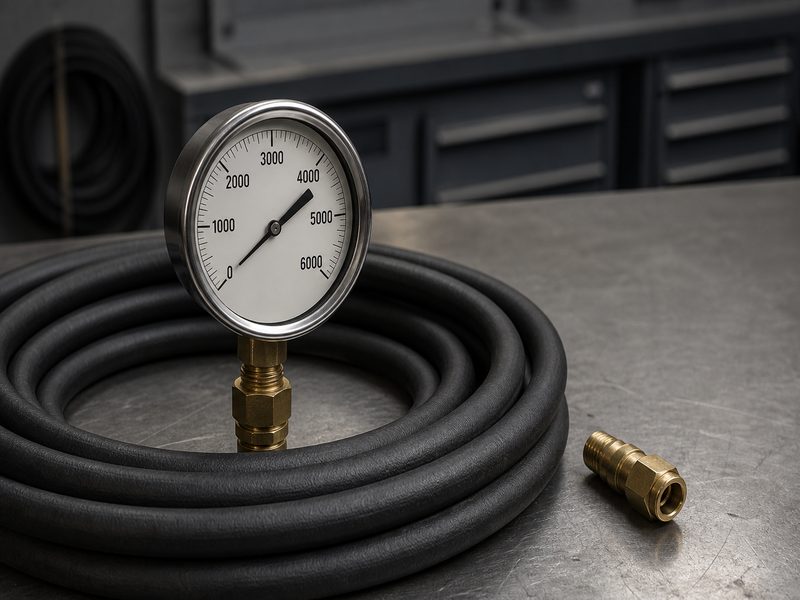
hydraulic hose coil and pressure gauge on a steel workshop bench

Working Pressure vs Burst Pressure: The 4:1 Safety Factor Explained

Working pressure is the highest pressure a hydraulic hose is designed to carry continuously in normal service. Burst pressure is the pressure at which the hose ruptures and fluid escapes. The working pressure vs burst pressure relationship for hydraulic hose is fixed. Minimum burst pressure must be at least four times the working pressure. That

Working Pressure vs Burst Pressure: The 4:1 Safety Factor Explained Read More »