
Steam hose safety rests on three linked activities: inspecting the hose that is in service, selecting the right hose and fittings for the duty, and maintaining both on a defined rule. None of the three works alone — a perfect inspection cannot rescue a hose chosen for the wrong pressure class, and even the right selection degrades fast without maintenance.
This guide treats safe use as one operating loop: inspection decides what stays in service, selection decides what the loop can achieve, maintenance decides when a hose leaves. Two numbers carry most of the risk — the working pressure at the hose and the saturation temperature that follows from it. Two actions carry the rest: the check made cold and repeated hot, and retirement decided on a finding rather than on a leak.
Pressures are gauge pressures. Saturated steam has one temperature at each pressure, so the temperature rating and the pressure rating of a hose are read together, never separately. About 12 min read.

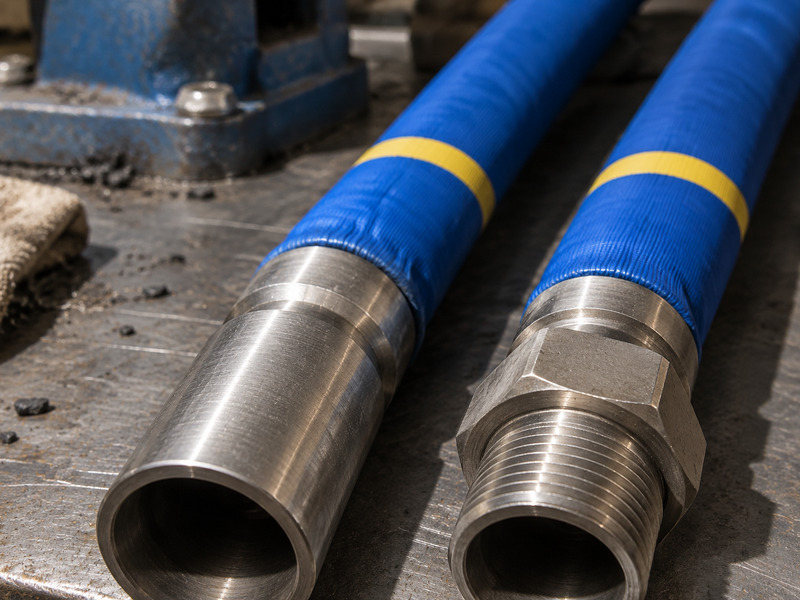
Figure 1. The three things that decide whether a steam hose is safe in service: the assembly itself, the way it is connected, and the record that says when it was last examined.
What Steam Hose Safety Actually Requires
Safe use of a steam hose is a fitness judgment made before every job and re-checked while the line is running. In practice it has four parts:
- The hose is rated for the duty — the working pressure class, the saturation temperature at that pressure, and the oils or chemicals present in the plant.
- The assembly is built for the duty — the end connections suit the pressure class, and the joint has been made to a defined procedure rather than to hand feel.
- The installation respects the hose — support, bend radius, drainage and protection from traffic and hot surfaces.
- The condition is known — an inspection record that travels with the hose and a replacement rule that someone owns.
Break any one of the four and the margin the others provide disappears. A hose rated generously but installed with a kink fails at the kink. A hose installed correctly but never inspected fails at the first cover defect that reaches the reinforcement. This is why steam hose safety is a loop of inspection, selection and maintenance rather than a single control.
Scope: this article covers saturated steam and hot condensate only, the two duties ISO 6134 defines. That standard sets two hose types: a low-pressure type with a maximum working pressure of 6 bar, at a saturation temperature near 165 °C, and a high-pressure type at 18 bar, which corresponds to 210 °C. Superheated steam is a separate duty with its own specification. Those boundaries are set out in our steam hose standard guide, and every decision below sits inside them.
Step 1: Inspection — What to Check and How Often
A steam hose inspection is worth doing only if it produces a decision. That means a short list of findings, each with an accept and a reject condition, and a frequency that matches how hard the hose works.
Five findings cover almost everything that predicts failure, and each one carries an accept condition and a reject condition:
Table 1. Accept and reject conditions for the five cover, reinforcement and joint findings
| Finding | Accept: keep in service | Reject: tag out |
|---|---|---|
| Cover blister, bulge or soft spot (trapped steam) | No bulge when hot or cold | Any bulge, whether or not it flattens when cold |
| Cut, gouge or split | Surface mark, reinforcement intact | Exposed wire or textile |
| Hardening at bend points | Stiff, but no cracks | Cracks, or a section that will not flex |
| Coupling weep or movement | Dry and still after a hot re-check | Weep after re-making, or ferrule movement |
| Restraint condition | Fitted, tight and clear of the cover | Chafing, slack, or absent where required |
Table 2 sets who performs each depth of a steam hose inspection and what that check is allowed to decide. The interval belongs to the hose rather than to a plant calendar: it is set when the hose is first tagged, from how hard that hose works.
Table 2. Who performs each depth of check on a steam hose, and what it decides
| Inspection depth | Who performs it | What it decides |
|---|---|---|
| Pre-shift check | Operator or user of the line | Release the hose for the shift, or tag it out for a defect |
| Post-shutdown check | Operator, during drainage | Anything the hot condition revealed that the cold check did not |
| Tag-date inspection | Maintenance technician | Keep or replace, against the retirement criteria |
| Post-repair inspection | Maintenance technician | Return it to service after a pressure test and a hot re-check |
Two rules make a steam hose inspection reliable. The first is that the check must be done cold and again hot, because thermal expansion is when a marginal joint starts to weep. The second is that the finding must be written down at the moment it is found; a defect remembered at the end of a shift is a defect that gets argued about.

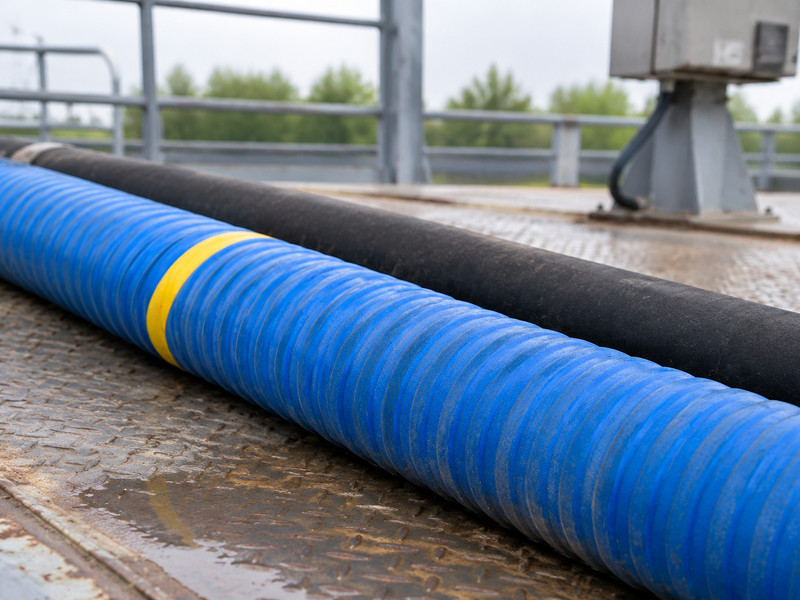
Figure 2. A pre-shift check that produces a decision: cover along the whole length, both couplings, the bend points, and the tag that records the finding.
Step 2: Selection — Reading the Pressure and Temperature Ratings
A steam hose selection that starts from the catalog number usually ends in a hose that is over-specified in one property and under-specified in another. Start instead from the duty, and let the duty pick the class.
The duty is defined by four questions, and all four have to be answered before a bore and a class are chosen:
- What is the working pressure at the hose? Not the header pressure — the pressure at the point where the hose is connected, including any static head and any pump or relief setting that governs the line.
- What temperature follows from that pressure? Saturated steam has one temperature for each pressure, so the temperature is a consequence, not a separate choice.
- What is in the steam besides water? Condensate carries dissolved solids, and plant atmospheres carry oils and chemicals that attack the cover.
- How is the hose used? Permanently installed, coupled and uncoupled daily, coiled for storage, or dragged across a floor.
Table 3. Reading a steam hose pressure rating against the duty, with the check that closes each row
| Duty input | What it decides | Check before ordering |
|---|---|---|
| Maximum working pressure at the hose | The pressure class, with margin above the line figure | Confirm the governing pressure, not the nominal header figure |
| Saturation temperature at that pressure | Whether the hose’s temperature rating covers the duty | Confirm the steam is saturated, not superheated |
| Condensate and trace chemistry | Cover compound and resistance to plant oils | Confirm cover grade suits the atmosphere around the line |
| Handling pattern | Reinforcement type, cover abrasion resistance, weight | Confirm the hose can be moved as often as the job requires |
A steam hose pressure rating is a working-pressure figure, not a burst figure, and the two are related but not interchangeable. A hose running continuously at its rated working pressure has no margin left for a warm-up stage, a pressure fluctuation or a condensate event. We therefore recommend choosing the class with room above the line figure, and reading the difference between the two numbers in our note on working pressure and burst pressure.
The same margin logic applies to the steam hose temperature rating. A hose rated to a temperature that matches the line exactly is a hose with no allowance for a warm-up overshoot or a temporary pressure increase.
Bore selection is the part most often decided by what is on the shelf. It should be decided by flow and drainage. A small bore drains quickly at a given slope but restricts flow; an oversized bore on a short run holds a larger condensate volume at every shutdown. Our hose size selection note covers the calculation, and the practical summary is that the hose should be the smallest bore that carries the flow without a pressure penalty and drains fully at the slope available.
Step 3: Maintenance — What a Safe Replacement Rule Looks Like
Maintenance keeps a correctly selected hose inside its design envelope. The center of that work is a replacement rule that removes a hose on evidence instead of on a leak, because a hose retired early is a cost and a hose retired late is an incident.
A replacement rule has three parts: the findings that trigger it, the person who applies it, and the record that proves it was applied. Table 4 gives the triggers we use in our own assembly reviews. Any single trigger is enough to remove a hose from service.
Table 4. Replacement triggers for a steam hose assembly, with the reason each one is a hard stop
| Finding | Why it is a hard stop |
|---|---|
| Cover damage exposing the reinforcement | The pressure-retaining layer can no longer be judged from outside |
| Blister, bulge or soft spot at any stage | Tube, reinforcement and cover have separated and the defect progresses |
| Localized hardening with cracking | Heat aging is cumulative and irreversible |
| A second leak at a new position after a successful repair | The tube is at end of life, not the joint |
| Coupling damage or movement that cannot be re-made to specification | The assembly’s end connection is part of its pressure boundary |
Two habits make the rule enforceable. First, every hose carries a tag with its last inspection date and finding, so the decision starts from facts rather than from memory. Second, every replacement is logged against the position and the service, so a position that consumes several hoses a year reads as a design problem instead of an unlucky one. The rule slots into any documented routine: the 5 steam hose maintenance tips are the actions, and this is the decision that ends them.
Repair deserves one line of its own. A weeping coupling can usually be re-made to specification if the hose end is sound. A defect that has reached the reinforcement, a blister, or a hardened and cracked section cannot be repaired, and a patch on any of those three hides a defect in the pressure boundary rather than removing it. A re-made joint returns to service only after a pressure test to the assembly’s rated working pressure.
The Three Ratings That Decide Safe Use
Every safe-use decision reduces to three numbers, and each one is read differently.
The pressure class. This is the maximum working pressure the hose is designed to carry. Compare it with the highest pressure the hose can see, including static head and any relief or pump setting that governs the line, and keep margin.
The steam hose temperature rating. This is the temperature the hose is designed to withstand, and for saturated steam it is tied to the pressure. Because the two are linked, a steam hose temperature rating that matches the line’s saturation temperature exactly leaves no allowance for a warm-up overshoot, a short pressure excursion or a superheated pocket. In our own test work we treat a rating that exactly matches the duty as a finding, not as a pass.
The assembly rating. The hose is not the only pressure boundary. The end connection has to be rated for the same class, and the joint has to be made to a procedure. A correctly rated hose with a marginal coupling is still a leak risk, and it is the failure mode most often missed because the hose itself looks perfect.
Table 5. How the three ratings are read and the common misreading of each
| Rating | How to read it | Common misreading |
|---|---|---|
| Pressure class | Maximum working pressure, compared with the pressure at the hose | Using the header pressure and ignoring static head |
| Temperature rating | The saturation temperature at the working pressure | Treating temperature as a free choice independent of pressure |
| Assembly rating | End connections and joint method rated to the same class | Judging the assembly on the hose alone |
Two engineering facts about saturated steam explain why the temperature rating is not a simple number. First, saturated steam has exactly one temperature at each pressure, so a hose rated at 18 bar is rated at the 210 °C that goes with it; the two are the same statement. Second, permeation is continuous: small amounts of steam pass through the tube throughout the hose’s life, which is why the cover is perforated in the first place. Both effects are covered in more depth in why EPDM is the standard for saturated steam, and both bear directly on how long a rating remains valid.

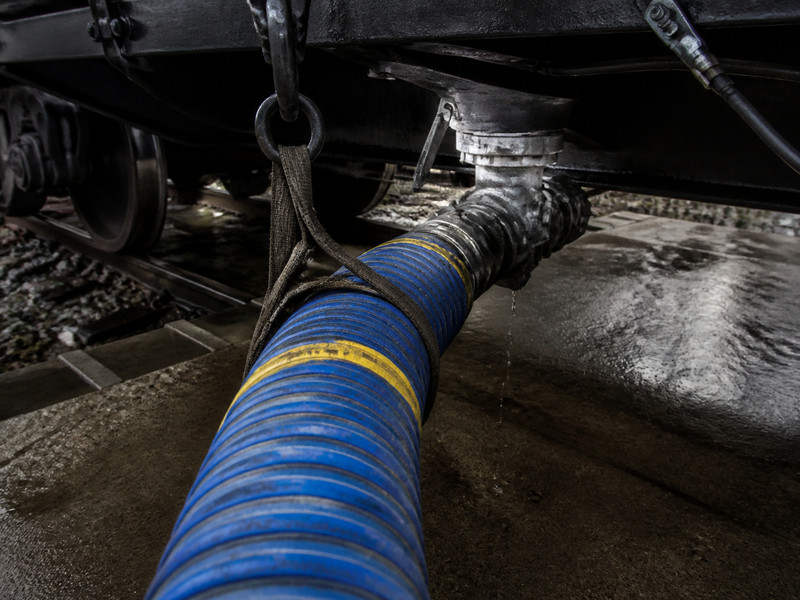
Figure 3. Reading the duty off the line, not off the label: the working pressure at the hose and the saturation temperature that follows from it are the two numbers the selection turns on.
Steam Hose Safety Under Fault Conditions: Warm-Up, Water Hammer and Whip
Most steam hose incidents happen in three predictable conditions rather than in steady running. A safety loop is only as good as its behavior in those conditions:
- Cold start-up. Steam admitted into a cold hose condenses against the tube wall, and the condensate it forms can travel as a slug. The response is procedural: open the drain first, crack the valve, warm the line gradually, and raise pressure in stages.
- Water hammer. The slug of condensate strikes a bend or a coupling and delivers a load the line pressure never shows on a gauge. Water hammer is a drainage and warm-up event, not an overpressure event, and the fix is in the procedure rather than in the equipment.
- Whip after a failed connection. A pressurized hose that separates can move violently. A restraint fitted at the coupling limits how far the failed end travels. The pressure class, the joint and the inspection still carry the safety case.
Table 6. Fault conditions on a steam hose line, with the first action and the prevention
| Kondisi | First action | Prevention |
|---|---|---|
| Cold start-up | Drain, then crack the valve and warm gradually | Written warm-up sequence that every user follows |
| Water hammer | Reduce flow, find the wet low point, drain it | Correct slope, working traps, drip legs at low points |
| Coupling weeping when hot | Isolate, cool, re-make the joint to specification | Defined joint procedure plus a hot re-check |
| Failed connection | Isolate the supply, keep clear, tag out | Restraint fitted and inspected; correct class and joint |
| Cover blister found in service | Remove the hose at the earliest safe break | Perforated cover kept clear; duty kept inside the envelope |
The fault-condition table is also the shortest inspection manual a plant can have, because each row names a finding that inspection should have caught. Checking assemblies against those findings is what the published hose inspection checklist does for industrial hose generally. A steam hose fails in the same ways, with one addition: the perforated cover that stops steam from accumulating under the jacket.
Who Owns Steam Hose Safety: Roles, Records and Training
A safety loop fails most often at the handover between people. The person who uses the hose is not always the person who inspects it, and the person who replaces it is rarely the person who specified it. Three roles and one shared record close that gap:
- The user performs the pre-shift check, follows the warm-up sequence, drains at shutdown, and has the authority to stop and tag a hose without asking permission.
- The maintenance technician performs the tag-date inspection, makes or rejects the replacement decision, and re-makes joints to a defined procedure.
- The engineer or buyer owns the specification: pressure class, temperature margin, bore, end connections and the restraint requirement.
The shared record is a tag and a log. The tag travels with the hose and carries its size, working pressure and last inspection date; the log holds what the inspection found and what was decided. Together they turn individual vigilance into something an organization can audit — and they are the reason a plant can answer the question “how do we know every steam hose on site is safe today?” without inspecting everything again.
Training matters here for one specific reason: the failure signals on a steam hose are quiet. A blister, a hardened section and a slightly weeping coupling all look harmless to someone who has not been shown what they mean. Half an hour with the accept and reject criteria from Table 1 and Table 4 is enough for an operator to make correct calls, and it is the cheapest safety measure available on a steam system.
What Steam Hose Safety Is Not: Four Common Misreadings
Four beliefs cause a disproportionate share of steam hose problems. Each one is a small misunderstanding with a large consequence:
- “A hydraulic hose will do.” Hydraulic hose is built for oil at high pressure and moderate temperature. It has no provision for steam permeation and no perforated cover, so steam that passes the tube accumulates under the jacket. A hose built for the job is cheaper than the failure.
- “The rating only matters at the top end.” A hose at its rating has no margin left for warm-up, water hammer or a superheated pocket. Margin is a safety property, not a luxury.
- “A high temperature steam hose is a superheated-steam hose.” A high temperature steam hose extends the saturated-steam envelope. Superheated duty is a separate specification question with its own requirements, and it belongs with the manufacturer.
- “If it is not leaking, it is safe.” Steam hoses fail from the inside as often as from the outside, and a cover defect that has reached the reinforcement may not leak at all until the moment it does.
Each misreading is really a question about fitness for purpose, which is why selection and inspection have to be owned by the same conversation. A steam hose selection that answers the four duty questions in Step 2 removes most of these misreadings before a hose is delivered.
Steam Hose Safety FAQs
What is the most important steam hose safety rule?
Never admit steam into a cold hose without draining first. Condensate remaining in a line becomes a traveling slug when steam follows it, and that slug delivers loads at bends and couplings that the line pressure never shows on a gauge. Draining first and warming gradually converts the most dangerous minute of a hose’s working day into an ordinary start-up, and it costs nothing but discipline.
How often should a steam hose be inspected?
A pre-shift check by the user, and a full inspection on the interval set when the hose was first tagged. The pre-shift check is short and visual; the full inspection applies the retirement criteria and produces a written decision. Hoses in hard service — coupled and uncoupled daily, dragged across floors, or run at high duty — need a shorter tag interval than a permanently installed hose on a light duty.
Can I use a hydraulic hose for steam?
No. Hydraulic hose is designed for hydraulic fluid at high pressure and moderate temperature, without provision for steam permeation. Steam passing through the tube of a hose not built for it accumulates beneath the cover, and the cover lifts into a blister. Steam service also calls for a perforated cover so that permeated steam can vent; use a hose specified for saturated steam.
What steam hose pressure rating do I need?
Start from the highest pressure the hose can actually see — not the header figure — including static head and any relief-valve or pump setting that governs the line. Then choose a class with margin above that figure. A steam hose pressure rating used at its maximum continuously leaves nothing for a warm-up stage or a pressure excursion, and both are normal events on a steam system.
Why does the temperature rating of a steam hose matter so much?
Because saturated steam has exactly one temperature at each pressure, so the temperature is a consequence of the pressure rather than a separate choice. A steam hose temperature rating that exactly matches the line leaves no allowance for a warm-up overshoot or a short excursion. Read the two figures together when specifying, and treat a hose rated to precisely the duty as under-specified.
What end connections are safe for steam service?
Connections rated to the same pressure class as the hose, made by a defined procedure, and checked when hot. The joint is part of the pressure boundary, and thermal expansion during warm-up is when a marginal joint first weeps. For steam assemblies, bolted safety clamps and properly crimped or swaged ends are the established options; whatever is used must be rated and made for the class, not adapted from another service.
How do I know when to replace a steam hose?
When any retirement trigger is present: cover damage reaching the reinforcement, a blister, bulge or soft spot at any stage, localized hardening with cracking, a coupling that cannot be re-made to specification, or a second leak at a new position after a successful repair. Record the finding and the position, so repeat failures can be traced to the installation rather than to the hose.
Is a high temperature steam hose enough for superheated steam?
Not on its own. A high temperature steam hose extends the saturated-steam envelope and covers duties above the standard range, but superheated steam is a different duty with its own requirements. If your process runs superheated, specify it as superheated from the start and confirm the construction with the manufacturer rather than assuming that a higher temperature figure covers it.
What training do operators need for steam hose use?
Enough to make three decisions: release or tag the hose at the pre-shift check, follow the warm-up sequence without shortcuts, and stop the job when a connection weeps or a restraint fails. Training is complete when the operator can name the reject conditions without the table, and when the record names who was signed off and when. The criteria take half an hour to teach; the sign-off is what makes the training auditable.
What should a steam hose selection start from?
The duty, not the catalog. Answer four questions first: the working pressure at the hose, the saturation temperature that follows from it, what the condensate and the plant atmosphere will attack, and how often the hose is moved. Those four answers decide the pressure class, the cover compound, the reinforcement and the bore, in that order. Bore and length come last because they follow from flow and drainage.
Final Verdict: A Steam Hose Safety Routine in Five Steps
Safe use of steam hoses is a loop, and the loop is short. Set it up once and it runs on a tag, a log and thirty minutes of training:
- Specify from the duty: working pressure at the hose, the saturation temperature that follows, the chemistry present, and the handling pattern.
- Keep margin on every rating, including the pressure class, the temperature and the assembly’s end connections.
- Inspect cold and again hot, against written accept and reject criteria, and tag what you find.
- Warm up by procedure, never by opening a valve and walking away.
- Replace on evidence, log the position, and review the year’s replacements for repeat offenders.
HENGHUA manufactures steam hoses, steam hose assemblies and industrial hose fittings for distributors, EPC contractors and OEM brands around the world. The steam hose range is built on an EPDM tube with textile or steel-wire reinforcement and a perforated, oil-resistant cover. Bore sizes and pressure classes cover both ISO 6134 type envelopes, and the range includes a high-temperature grade for duties above the saturated-steam range.
Assemblies are terminated with bolted safety clamps, crimped or swaged ferrules, flanged ends and cam and groove couplings, in carbon steel, 304/316 stainless steel and brass. Every assembly is tested to its rated working pressure before shipment and marked with its size, working pressure and identification code.
If you are reviewing steam hose safety at your own site, our engineering team can help with the specification, the acceptance criteria and the assemblies themselves. See the full steam hose range atau contact our engineering team for a quotation, samples, or a review of your current hose list.
About the author. Written by the HENGHUA engineering team, which designs and pressure-tests steam hose and industrial hose assemblies and supports plant maintenance departments and distributors with selection, installation and inspection practice. The team’s guidance draws on assembly and test records from the steam hose line and on field reviews with customers in tire, precast concrete, chemical and general manufacturing plants.


 English
 Spanish
 Portuguese
 French
 German
 Arabic
 Russian
 Indonesian
 Japanese
 Korean