

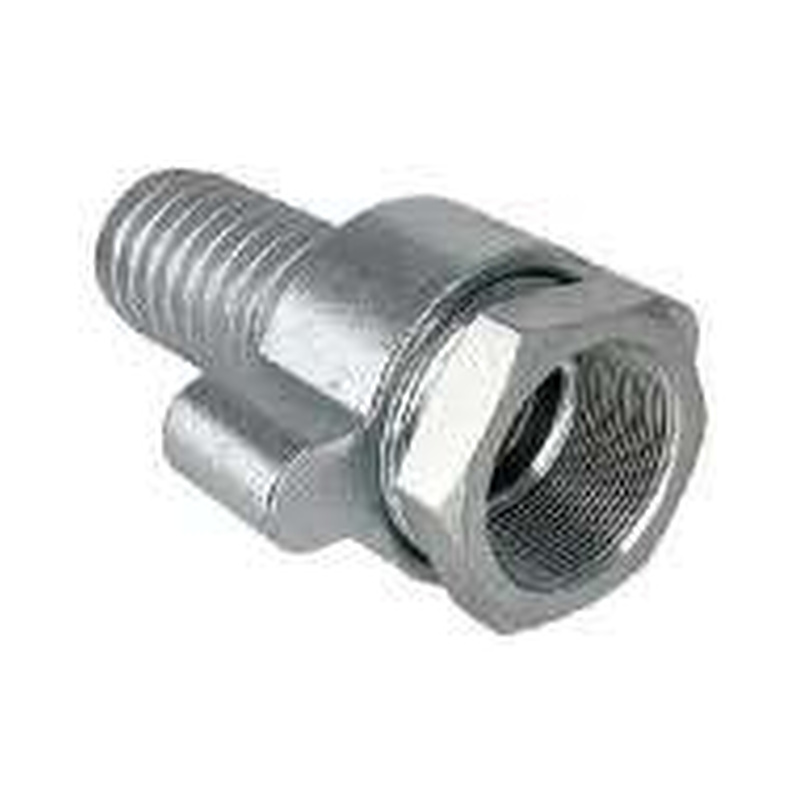
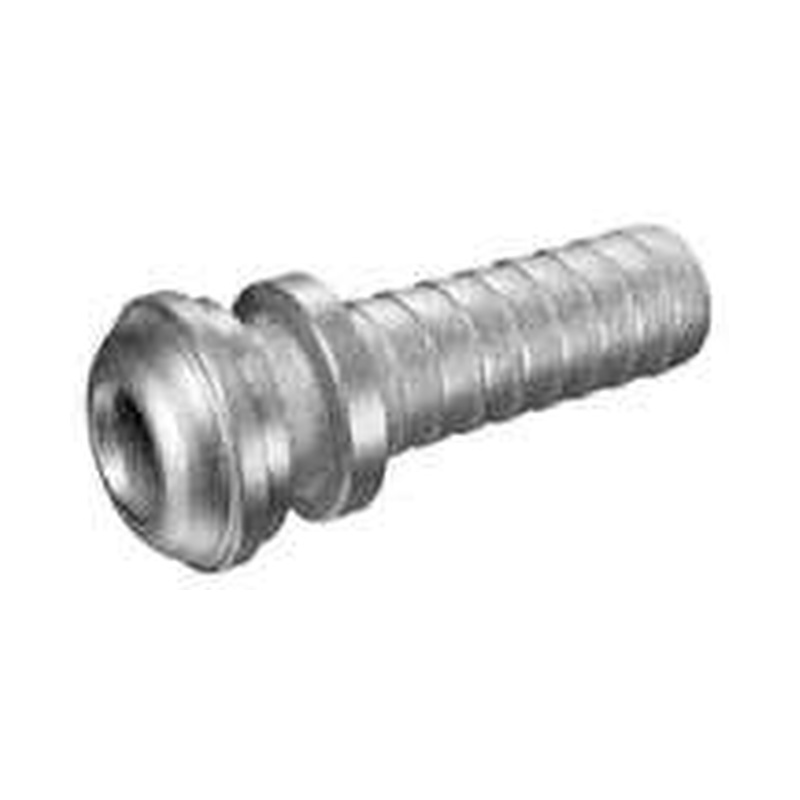
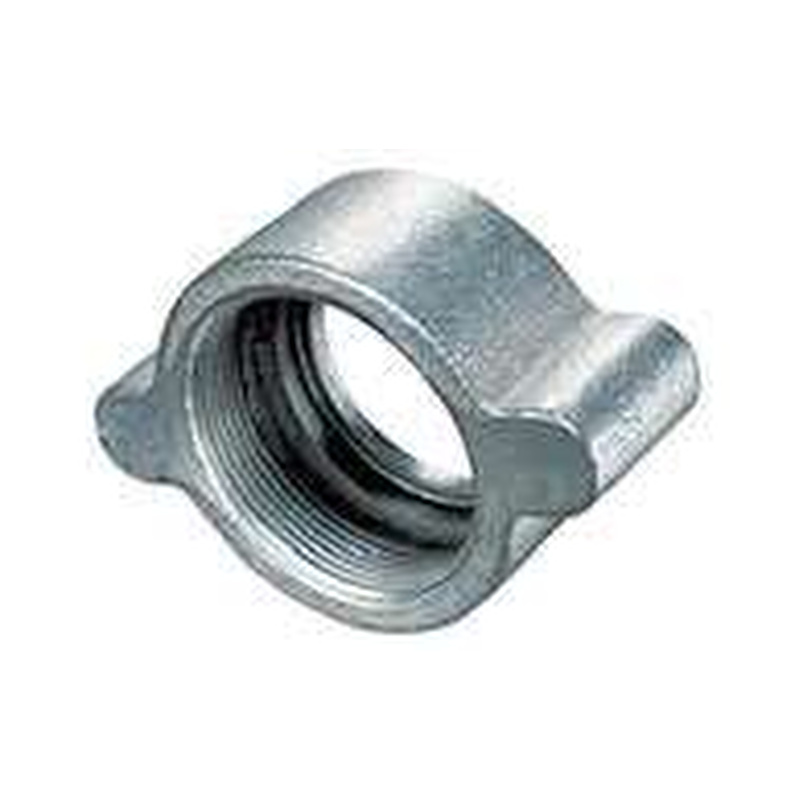
Ground joint couplings seal metal to metal: a machined spherical nose is pressed into a matching seat by the nut, and the two surfaces are ground together until they seal without a gasket. This range covers the hose-end and spud halves in steel and stainless, sized from 1/2 in upward. They are used on steam, air and oil lines where a gasket would fail, and where a joint has to be re-made hot without a spare part.
|
|
|
|
|
Ground joint couplings: the two halves
| Size | Hose end, steel | Hose end, stainless |
|---|---|---|
| 1/2 in | GJCDS050 | GJCDS050-S |
| 3/4 in | GJCDS075 | GJCDS075-S |
| 1 in | GJCDS100 | GJCDS100-S |
| 1-1/4 in | Ask | Ask |
| 1-1/2 in | Ask | Ask |
The part number carries the size in hundredths of an inch and a material suffix, so GJCDS075 is the 3/4 in steel hose end and GJCDS075-S the same part in stainless. Sizes above 1 in are quoted on request rather than listed here, because the range as printed stops at the sizes shown.
How a ground joint seals
There is no gasket. The nose of one half is a machined sphere; the seat of the other is a cone or a matching radius. When the nut is drawn up, the two surfaces meet on a narrow line of contact, and the metal yields slightly at that line so the joint seals. That is why the fitting is described as ground: the two halves are lapped together, and a replacement half has to be lapped to the one it meets.
Three consequences follow, and all three are why this fitting is specified rather than a gasketed coupling. A ground joint holds steam, where a rubber gasket would harden and fail. It cannot be assembled with a gasket in place, because the extra thickness stops the nose reaching its seat. And mixing halves from different makers usually leaks, because the nose radius and the seat angle are not identical.
Ground joint couplings for steam, air and oil
Steam hose is the classic application: the joint runs hot, is re-made while warm, and must not shed a gasket into the line. Air and oil follow, particularly where a small leak is a safety issue rather than an efficiency one. Stainless is chosen where the outside of the joint is wet or corrosive, or where the medium attacks steel.
For water and general transfer, a gasketed coupling is cheaper and more forgiving. The ground joint exists for the cases where a gasket is the weak point.
Assembly and maintenance
Draw the nut up firmly and then check for a leak at working pressure. Overtightening does not improve the seal: it deforms the nose beyond its radius, and after that the joint leaks at every make-up. A nose that has been overtightened can sometimes be re-lapped, but a cracked one cannot.
Keep the two surfaces clean. A particle trapped on the seat line is pressed into the metal and leaves a groove that no amount of tightening will close.
No pressure rating published
The coupling is not sold by pressure band, and no rating is published for the range. A ground joint on steam hose is limited by the hose and by the nut thread rather than by the body, so state the medium, the temperature and the hose, and the assembly is confirmed against those.
Ordering information
- Size in inches
- Half: hose end or spud
- Material: steel or stainless
- Hose bore and tail type, on hose ends
- Thread, where the half is threaded
- Quantity per size
Frequently asked questions
Does a ground joint coupling need a gasket?
No, and it must not be given one. The seal is metal to metal on a lapped nose and seat; a gasket holds the nose off its seat and the joint leaks.
Can I replace one half only?
Yes, but the new half should be lapped to the old one. Halves from different makers often have a different nose radius and will not seal together.
What are ground joint couplings used for?
Steam, air and oil, where a gasket would harden or shed. Not the cheapest choice for water.
What pressure does it hold?
No figure is published. The hose and the nut thread usually set the limit before the body does.
What is the minimum order, and can I get samples?
MOQ, samples and lead time are confirmed per line with the price, because each size is a separate run.
Related reading
- Tank, bulk and specialty
- Hammer union fittings
- King combination nipples
- Industrial hose couplings
Ground joint couplings are quoted by size, half and material, and the two halves are lapped as a pair.
Send the six fields and we come back with the price.


 English
 Spanish
 Portuguese
 French
 German
 Arabic
 Russian
 Indonesian
 Japanese
 Korean