
A hot water hose in a sanitary plant is an EPDM hose aimed at about 95 °C and about 20 bar (planning figure), with a cover that is not perforated and a tube that carries a food-contact declaration. It moves hot water for cleaning, rinse and transfer duty. Steam-in-place and live steam need a separate steam-rated hose.
This article sets out the temperature and pressure band that suits sanitary hot water, the food-contact rules the trade works to, and the duty split between cleaning water and steam. It then covers the extra requirement pharma adds, the hygiene details that decide a line, and why a steam hose is the wrong choice here.
About a 14-minute read at 250 words per minute; every figure is a published value or a planning figure identified as such.
What a Hot Water Hose Does in a Sanitary Plant
The hose on a sanitary line carries the hot water that flushes residue from tanks, pipework and fillers, and the heat that sanitizes vessels between batches. It is the flexible last link between a wall outlet and the point of use, so it sees every cycle the plant runs.
A duty list usually separates three jobs, and a final flush that follows them. Exterior washdown removes soil from floors, walls and equipment surfaces at the end of a shift, usually through a sanitary washdown hose. Rinse and transfer move water between vessels or push product along a line. Cleaning loops send hot water, often with a detergent added, through a spray ball or a set of nozzles inside a closed vessel.
Each job loads the hose differently, and those differences are worth reading before an order is placed. A poor choice shows up as a soft cover, a cracked tube or a leaking clamp long before the hose reaches its rated life.
Table 1. Typical hot water duties in a food, beverage and pharma plant.
| Duty | What the water does | Hose attribute that matters |
|---|---|---|
| Exterior washdown | Removes soil from floors, walls and equipment surfaces | A cover that resists scuffing and wipes clean |
| Closed-vessel cleaning | Sends hot water and detergent through spray balls | A smooth bore and a cover that sheds water |
| Product transfer | Pushes food or beverage between vessels | A food-contact tube with low taste and odor transfer |
| Rinse and final flush | Carries detergent residue away before production restarts | Drainability and a bore that does not shed particles |
Table 1 shows why one plant can need more than one hose. Washdown rewards a tough cover, while transfer rewards a clean bore. Buyers who treat the two as the same article often replace the transfer line early. The food and beverage hose range separates those duties for that reason.

Figure 1. A washdown lance on a stainless steel tank exterior: the cover takes the abrasion while the bore stays clean.
The EPDM Hot Water Hose Band at About 95 °C and 20 bar
EPDM is the default tube polymer for hot water duty in this band. A commonly published limit for water service is about 20 bar at about 95 °C, which is a planning figure rather than a promise. Above that temperature, water turns to steam, and the whole construction changes with it.
Steam service is defined by ISO 6134, which sets Type 1 at 6 bar and 164 °C, and Type 2 at 18 bar and 210 °C. Both pairs describe saturated steam. Neither applies to water, and neither covers the pressure a washdown line needs.
Water at 95 °C sits far below its boiling point at 20 bar, so a hot water line can run above the 6 bar of the low-pressure steam class. That is exactly why a plant cannot simply substitute one article for the other. Temperature is lower on the water side, the rated pressure band is higher, and the food-contact demand exists on one side only. A beverage plant hose often has to satisfy both the pressure and the taste requirement at once.
Table 2. Pressure and temperature bands that separate hot water from steam. psi values calculated at 1 bar = 14.50 psi.
| Layanan | Common published band | Sampul | Food-contact declaration |
|---|---|---|---|
| Hot water, EPDM | About 20 bar (290 psi) at about 95 °C (planning figure) | Not perforated | Expected on the tube |
| Saturated steam, ISO 6134 Type 1 | 6 bar (87 psi) at 164 °C | Perforated or pin-pricked | Not part of the standard |
| Saturated steam, ISO 6134 Type 2 | 18 bar (261 psi) at 210 °C | Perforated or pin-pricked | Not part of the standard |
Table 2 puts the three bands side by side. The water row carries the highest pressure of the three and the lowest temperature, so a steam rating cannot stand in for it. Pressure and temperature must always be read as a pair, never as separate numbers.
Food-Contact Rules a Hot Water Hose Has to Meet
Food-contact status follows the tube material and the paperwork behind it. A hose becomes a food-contact material the moment it touches product, or a surface that product later touches. Color and sales claims do not change that status; the maker’s evidence does. A beverage plant hose on a transfer duty is the clearest example.
In the United States, FDA 21 CFR 177.2600 covers rubber articles intended for repeated use. FDA 21 CFR 177.1520 covers olefin polymers, which matters whenever a polyolefin layer sits in the product path. In the European Union, EU 1935/2004 sets the framework and EU 10/2011 sets the rules for plastic food-contact materials. BfR recommendation XXI, a German recommendation for rubber articles, appears on many European inquiries.
A buyer should ask for three documents. First, a Declaration of Compliance that names the regulation and the parts it covers. Second, the migration test report behind that declaration. Third, a batch material list that ties the hose to those tests. Saying that a hose is a food grade hose is not a substitute for that paperwork, and a declaration on a tube says nothing about the cover or the reinforcement.
Table 3. Food-contact rules and one requirement class a sanitary hose may meet.
| Rule or class | What it covers | What it means for the hose |
|---|---|---|
| FDA 21 CFR 177.2600 | Rubber articles for repeated use | Tube and cover elastomers declared by the maker |
| FDA 21 CFR 177.1520 | Olefin polymers | Relevant when a polyolefin layer touches product |
| EU 1935/2004 | Framework for food-contact materials | Inertness and migration behavior of the assembly |
| EU 10/2011 | Plastic food-contact materials | Applies to the plastic parts of the assembly |
| BfR recommendation XXI | Rubber articles, German recommendation | A further rubber-specific test set |
| USP Class VI (requirement class) | Biocompatibility class used by pharma | An extra requirement that pharma buyers add |
Table 3 is a map, not a ranking. The last row is a requirement class, not a food-contact rule. Each rule answers a different question, and the right one depends on the market the plant ships into. Matching the rule to the audit avoids paying for tests the plant will never be asked to show.
CIP and SIP Duty on the Same Line
Clean-in-place and steam-in-place are the two routine cleaning methods in a sanitary plant. Clean-in-place circulates hot water and detergent through the plant without dismantling it. Steam-in-place uses steam to sanitize the same circuit.
A hot water hose earns its place in the clean-in-place cycle. It feeds the spray device, returns the wash liquid, or links a portable cleaning skid to a vessel. The cycle repeats several times a day, so the hose sees hot water on and off for the whole production window.
Steam-in-place is a different duty. When a circuit must be sanitized with steam, the duty belongs only to a hose marked for steam service, with a perforated cover that vents what passes through the wall. A hot water hose belongs on the clean-in-place water circuit, with a solid cover and a food-contact tube declaration. Used on steam, it blisters and delaminates. Label each hose at the station with the duty it may serve.
Pharma Lines, USP Class VI and Extra Documentation
Pharmaceutical plants add one requirement class to the food-contact debate. USP Class VI is a biocompatibility classification that buyers name when a material may contact a drug product, a process stream, or an item that will later touch either. It is a requirement class, not a certificate that a hose carries on its own.
Pharma buyers also want tighter documentation. They want the material list, the test evidence and the change history behind a hose, because a formulation change is a validation event. A supplier who cannot trace a batch back to its material lot will not clear that audit.
In practice a pharma line is often the same EPDM build as a food one, with extra paperwork and a stricter bore finish. The extra cost buys traceability, not a different polymer.
Hose Hygiene Details That Decide a Washdown Line
Four hygiene details decide whether a washdown hose passes an audit: bore finish, drainability, exposed reinforcement and cover color. The first is the bore. A smooth, non-perforated bore releases residue and dries between shifts, while a rough or fabric-textured bore traps soil.
The second is drainability. A hose that traps water at the end of a shift becomes a reservoir. The assembly should hang free and empty itself, with no low point that holds liquid.
The third is exposed reinforcement. A worn cover that shows textile braid is a defect, not a cosmetic issue. Fibers wick moisture, harbor soil and cannot be cleaned in place. A hose that has reached this state should be replaced, not patched.
The fourth is color. Sanitary plants often reserve one cover color for cleaning hose and another for product hose, so staff can see at a glance which line is which. Color is a plant convention, not a food-contact requirement.
Table 4. Construction of a sanitary hot water line, layer by layer.
| Layer | Material | Function | How to recognize it |
|---|---|---|---|
| Tube | EPDM, smooth | Carries the water and keeps taste and odor clean | A uniform bore with no fabric texture |
| Penguatan | Textile braid or wire braid | Holds the working pressure of the line | Visible mainly at the cut end |
| Sampul | EPDM, not perforated | Protects the reinforcement and wipes down easily | A continuous skin without pin-holes |
| Marking | Printed legend on the cover | Identifies duty, pressure and size | Printed text rather than a separate label |
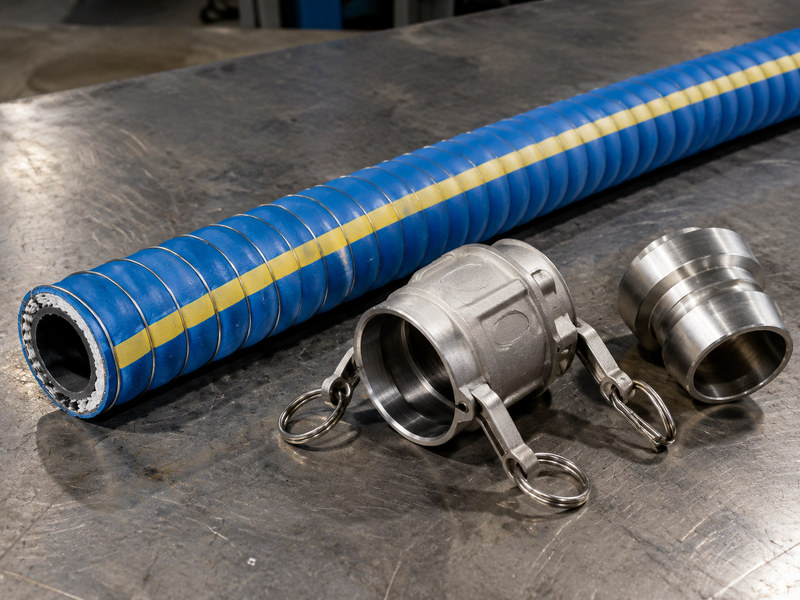
Table 4 and Figure 2 show the same four layers. Read them from the tube outward, because that is the order in which a washdown failure usually travels.

Figure 2. A cut end shows the smooth bore, the braid that holds pressure, and a cover with no pin-holes.
Why a Steam Hose Is the Wrong Choice for Hot Water Duty
A steam hose belongs on steam duty only. Three construction details explain why it fails on a hot water line.
The cover of a steam hose is perforated or pin-pricked. Those small holes vent steam that passes through the tube wall, which stops the cover from blistering under steam duty. On a hot water line the same holes let water reach the reinforcement. The braid corrodes or the cover lifts, and the hose fails from the inside out.
The tube of a steam hose also carries no food-contact declaration. It is formulated for heat and steam, not for taste, odor or migration limits. Using it on a transfer duty puts an undeclared material in the product path.
There is a maintenance angle too. Every steam hose must be drained after use, because residual condensate makes the tube bubble and pop, a failure the trade calls popcorning. On the hot water side the reason is different: standing warm water in the bore is a hygiene risk and ages the tube. Both articles still get the same discipline of drain, hang dry and inspect.
Table 5. Construction differences between a sanitary water hose and a steam hose. psi values calculated at 1 bar = 14.50 psi.
| Fitur | Sanitary water hose | Steam hose |
|---|---|---|
| Tube | EPDM with a food-contact declaration | EPDM or chlorobutyl, no food-contact claim |
| Penguatan | Textile braid or wire braid | Wire braid or wire spiral |
| Sampul | Not perforated | Perforated or pin-pricked to vent steam |
| Common band | About 20 bar (290 psi) at about 95 °C (planning figure) | 6 bar (87 psi) at 164 °C, or 18 bar (261 psi) at 210 °C |
Table 5 answers the substitution question directly. The two products overlap in appearance and in little else that matters. The steam hose range covers the steam side in more detail, including the perforated cover a steam line needs; the saturated steam overview sets out saturated steam duty in full.

Figure 3. Left, a solid cover; right, a pin-pricked cover that vents vapor and lets water in.
Specifying, Installing and Maintaining a Hot Water Hose
Specification starts with size. ISO 1307 covers hose sizes and tolerances, and makers commonly publish a length tolerance of plus or minus 1 percent. Match the bore to the flow the spray device needs rather than to the bore of the old hose, and confirm the end connections before ordering. The hose size selection guide walks through that step in detail.
Installation decides how long the assembly lasts. A clamp or band coupling can pull the assembly working pressure below the rating of the hose itself, a point the NAHAD Industrial Hose Assembly Guidelines make plain. Choose the clamp with the same care as the hose, using the hose clamp selection guide for torque and material data.
Testing closes the loop. Hydrostatic testing follows ISO 1402 and impulse testing follows ISO 6803, and a manufacturer with an in-house laboratory can run both before a batch ships.
Maintenance is simple and easy to skip. Drain the hose after every use, hang it to dry with both ends open, and inspect the cover for exposed reinforcement. A hose that stays full of warm water between shifts ages faster than one that is drained and hung.
Making the Choice
Choose the hose from the duty, not from the warehouse shelf. A sanitary plant needs a hot water hose for washdown, transfer and the clean-in-place water circuit, and a steam-rated hose for steam-in-place and any live steam line. Keep the two apart and label them clearly.
Table 6. Pre-order and handover checklist for a sanitary water hose.
| Step | What to confirm |
|---|---|
| Duty | Washdown, transfer or cleaning loop, and the fluid involved |
| Band | Working pressure and temperature as a pair, against the published rating |
| Compliance | The food-contact rule the plant is audited against |
| Size and ends | Bore, length and coupling type, checked against the drawings |
| Installation | Clamp type and torque, and the assembly pressure after fitting |
| Maintenance | Drain, hang dry and cover inspection between shifts |
Table 6 is the short version of the whole article. Work through it before you order, and again when the hose is handed to the cleaning crew.
Two food-line articles sit at the end of that checklist, a food discharge hose for standard transfer duty and a higher-pressure food discharge hose. Confirm each rating against your own duty before you select one.
Hot Water Hose FAQs
What temperature can a hot water hose handle?
About 95 °C at about 20 bar is the commonly published band for a hot water hose built on an EPDM tube. Read it as a planning figure rather than a guaranteed limit. The limit describes water service. Once the fluid flashes to steam, the duty changes completely and a steam-rated construction is required. Confirm the rating on the maker’s own datasheet before you order.
Can one hose do both hot water and steam duty?
No, not safely. A hose built for hot water carries liquid under pressure, so its tube is a non-perforated EPDM with a food-contact declaration and its cover is a solid skin. A steam hose carries saturated steam at 164 °C or 210 °C under ISO 6134, so it uses a wire-reinforced construction and a perforated cover that vents steam. The two overlap in appearance and little else.
Can a steam hose be used for hot water?
It will work until the duty changes. A steam hose on a hot water line puts a perforated cover in a wet environment, so water reaches the wire reinforcement and the cover starts to lift. Its tube also carries no food-contact declaration, which rules it out the moment product contact is possible. Use a sanitary-grade EPDM hose instead.
What does food grade hose mean in practice?
In practice it means a hose whose tube and cover materials are declared against a named rule, most often FDA 21 CFR 177.2600 for rubber articles used repeatedly, or EU 1935/2004 and EU 10/2011 for European markets. The phrase food grade hose alone is a description, not evidence. Ask the maker for the Declaration of Compliance, the migration test report behind it and a batch material list.
Why does a beverage plant hose need a food-contact declaration?
Because beverage lines are cleaned on a tight schedule, and any material in the product path can carry taste and odor into the drink. A beverage plant hose should arrive with a tube declaration rather than a marketing statement. The declaration names the rule the maker tested against and the parts of the assembly it covers, so the plant can match the hose to its own audit.
Where is a sanitary washdown hose used?
A sanitary washdown hose is the hose on the open end of a cleaning job: floors, walls, tank exteriors, conveyor frames and filler housings. It sees hot water at pressure, repeated bending and steady abrasion against metal and concrete. The cover takes most of that wear, so a sanitary washdown hose needs a tough, smooth skin that wipes clean and does not mark what it touches.
Why is the cover of a steam hose perforated?
Because steam that passes through the tube wall has to escape. In steam duty a small amount of vapor migrates through the rubber. If the cover were solid, that vapor would collect under it and lift the cover away from the reinforcement, which is called blistering. The perforated or pin-pricked cover gives the vapor a path out. On a water line those same holes only let water in.
What is popcorning in a hose tube?
Popcorning is the blistering and bubbling of a steam hose tube caused by condensate left inside the hose between shifts. The trapped liquid works into the rubber, then expands on the next heat cycle and lifts the tube away from the reinforcement. The fix is simple: drain the hose after every use and hang it with both ends open. The drain rule appears on the covers of many steam hoses for a reason.
Does clean-in-place need a steam hose?
Not for its water side. It circulates hot water and detergent through a closed circuit. The feed and return lines are water duty, so a sanitary-grade EPDM hose is the right article. Steam-in-place is different, because it uses live steam to sanitize the circuit. If your plant runs steam-in-place, that hose must be a steam-rated construction with a perforated cover.
What does USP Class VI mean for a hose?
USP Class VI is a biocompatibility classification used in the pharmaceutical industry. Buyers name it when a material may contact a drug product or a process stream. It is a requirement class rather than a certificate a hose carries on its own, so a pharma buyer asks the maker for the test evidence behind the material. For a sanitary line it usually means the same EPDM construction with extra documentation.
About HENGHUA
HENGHUA is a hose and coupling manufacturer supplying distributors, retailers and OEM brands worldwide. Its steam line is built with an EPDM or CR tube, one or two layers of wire braid or four to six layers of wire spiral, and a pin-pricked cover. Bore sizes run from 3/8 in to 4 in, with ratings for saturated steam to 210 °C and superheated steam to 230 °C. A separate food-grade hose series covers food and beverage lines.
The factory site covers 35,000 m² and runs 95 production lines, exporting to more than 70 countries under ISO 9001, IATF 16949 and ISO 14001 quality systems. An in-house laboratory performs hydrostatic testing to ISO 1402 and impulse testing to ISO 6803. Commercial support includes factory-direct pricing, short batch lead times, warranty, OEM and ODM programs, custom lengths to a 1 percent length tolerance, sheath printing and private label. Read more on the about page.
 English
 Spanish
 Portuguese
 French
 German
 Arabic
 Russian
 Indonesian
 Japanese
 Korean