
A composite hose datasheet is a one or two page document that lets a buyer decide, without calling anyone, whether a hose suits a duty. A real one carries twelve fields: type, bore, pressure at temperature, vacuum rating, temperature range, liner grade, helix material, end fitting, assembly rating, marking, test record and the standard it is built to. Most datasheets carry four of them.
This guide lists the twelve fields, explains which ones are usually missing, and shows how to read a pressure value or a bore tolerance so the comparison between two offers is made on the same basis.

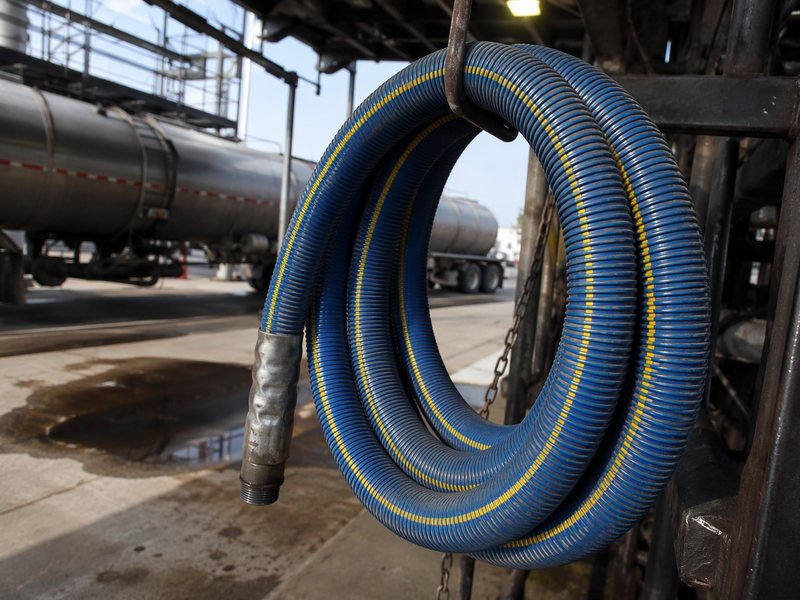
Figure 1. A datasheet is a measuring instrument. If it cannot be checked against the hose with calipers and a marking, it is a brochure.
Why Do Most Composite Hose Datasheet Examples Fail?
Because they are written for a catalogue, not for a decision. A catalogue needs a headline figure per series; a decision needs the figure at the temperature and bore you are buying.
The second failure is missing scope, and the assembly rating is where that gap usually shows. A page that says “working pressure 16 bar” without saying whether that is the hose or the assembly leaves the buyer to assume. The assumption is usually generous, which is why failures at the coupling surprise people.
The third is that the sheet describes the series, not the article, which is why the type guide and the sheet have to be read together. Two hoses from one series with different liners have different chemistry, and one page cannot serve both.
What Are the Twelve Fields?
| Field | Why it matters | Where it comes from |
|---|---|---|
| Type and standard | Sets pressure and temperature band | EN 13765 classification |
| Bore and tolerance | Flow and fit | Product dimension table |
| Working pressure at temperature | The duty limit | Type table plus derating |
| Proof and burst values | Evidence behind the rating | Type test record |
| Nilai vakum | Suction and drain duty | Type table |
| Rentang suhu | Liner and bond limits | Type table plus liner data |
| Liner material and grade | Chemistry | Material declaration |
| Helix material | Corrosion and weight | Construction drawing |
| End fitting type and material | Connection and chemistry | Assembly drawing |
| Assembly rating | The real limit | Assembly calculation |
| Marking and traceability | Audit and claims | Production record |
| Test and certificate scope | What is proven | Test report |
Table 1. The twelve fields of a usable composite hose datasheet. The right-hand column is where a buyer should be able to point when challenged.
The order matters less than the presence. A sheet that covers eight fields in an unusual layout is more useful than one that covers four in a familiar one.
A sheet that covers four fields is still useful as a starting point. Ask for the missing eight in writing, in the order you need them: the four that decide fit first, then the four that decide documentation. A reply that names which fields it cannot supply is more informative than a sheet that fills all twelve with ranges.
Which Fields Are Usually Missing?
Four go missing most often: the assembly rating, the proof and burst values, the derating curve and the scope of the certificate.
The assembly rating disappears because it is uncomfortable. A hose rated at 16 bar with camlocks rated lower is a 10 bar assembly, and publishing that number reduces the appeal of the page.
Proof and burst values disappear because they require a test record rather than a calculation. A supplier who has run the type test publishes them; one who has not, does not.
The derating curve disappears because it needs data at temperature. And the certificate scope disappears because a certificate that names a design family looks better than one that names two bores.
How Should You Read a Pressure Value?
Read it with three qualifiers: at what temperature, for the hose or the assembly, and at what safety factor.
A pressure figure without a temperature is a room-temperature figure, and most chemical transfer runs warmer than the room. The derating curve converts one to the other, and without it the buyer is guessing.
The second qualifier decides which number applies to the installed line. If the assembly rating is lower than the hose rating, the assembly rating governs, and it should be the headline.
The third is behind the scenes. Standard practice sets proof pressure above the working pressure and burst well above it, and the ratio is what gives the hose its margin. A datasheet that publishes working pressure and burst but not proof has left out the number that inspection uses.
What Should the Bore Section Say?
A bore section carries three values: bore, tolerance and the minimum bend radius at that bore. A hose specification sheet and the bend radius data set them out the same way, and those three answer the installation questions.
Tolerance matters more than buyers expect. Two hoses at nominal 3 inch with different tolerances can need different fittings, and a hose that is at the top of its tolerance may not enter a clamp designed at nominal.
Bend radius is the field that prevents most handling damage. A hose bent tighter than its radius kinks at the helix, and a kinked hose loses both flow and life. A datasheet without a radius figure cannot be checked against a route drawing, which is why we treat its absence as a red flag.

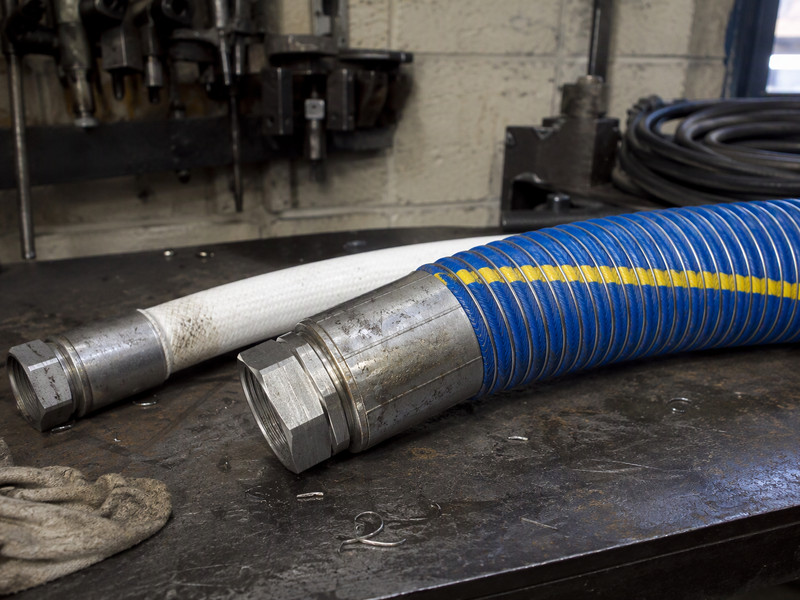
Figure 2. Three ends of different bore on a bench. Tolerance is read at the cut edge.
How Does the Liner Appear in the Data?
The liner should appear as a polymer plus a grade reference, and it should be the liner of the article, not of the series.
Grade matters because two polypropylenes can differ in food contact status, in temperature ceiling and in chemical resistance. A sheet that says “PP” has told you the family and nothing about the grade.
Where the liner is a film bonded into a wall, the bond system deserves a line of its own at elevated temperature. Above about 80 °C, the bond is often the limiting element rather than the film.
What About the Ends and the Assembly?
The end fitting section should name the type, the material, the size standard and the attachment method. Four lines, and each one is a failure mode if omitted.
Type and material cover chemistry and pressure. Size standard covers whether the flange mates with the plant. Attachment covers whether the fitting is swaged, crimped or reusable, which decides the repair policy.
The assembly rating belongs here rather than in the pressure section, because it is the sum of the parts. Put the lowest component rating at the top of the assembly table and the reader will not have to work it out.
How Do You Check a Datasheet Against the Delivery?
Three checks, all quick, and each one produces a line that can be added to a composite hose technical data sheet comparison.
Measure the bore at both ends and compare with the tolerance. Read the marking and compare with the sheet, including the batch reference. Test one assembly to its proof pressure and compare the record with the published value.
A hose that passes all three is documented. The record from that check is what turns a purchase into a file, and the file takes one page. The check takes twenty minutes, and it is the only step that turns a file into evidence, so run it on the first delivery from any new supplier rather than on the fifth. A hose that fails the marking check is undocumented whatever the sheet says, because the sheet describes a product family and the marking identifies the article.
What Should a Specification Sheet Add?
A composite hose datasheet is often confused with the buyer’s document, not the supplier’s. It adds the duty: product, concentration, temperature, pressure, flow, cleaning regime and the standard to be met.
That is the sheet the supplier answers against, and the order checklist is the next step after it. Where the reply and the datasheet disagree, the reply governs, and the discrepancy should be resolved before the order rather than at goods-in.
Keeping the two documents separate is what makes a comparison possible. A hose data sheet that doubles as a specification sheet satisfies neither role. The datasheet describes what is offered; the specification describes what is needed.
What Does a Buyer Ask For Instead?
Most buyers do not ask for a datasheet by name. They ask four questions, and each one is a field from the list above.
What is the pressure at my temperature. Which liner do I need. What is the bend radius for this route. And what paperwork comes with the delivery. Answer those four on one page and the conversation shortens by a week. That is the whole case for a composite hose datasheet.
The four questions also change with the buyer. A maintenance engineer wants the bend radius and the ends. A quality manager wants the certificate scope and the marking. A project buyer wants all twelve fields before the tender closes, because the sheet is the only document that can be compared across three offers.
The lesson for a supplier is that the datasheet is a sales document as much as a technical one. A sheet that answers the four questions wins against a longer sheet that answers none of them.
For a buyer, the lesson is the reverse. If the reply answers only the first question, ask the other three in writing, because the answers are the fields that decide whether the hose fits the route and survives the audit.
How Do You Build a Specification From a Datasheet?
Take the twelve fields, delete the ones that describe the product rather than the requirement, and add the duty. What remains is a hose specification sheet that a supplier can answer line by line.
A hose specification sheet adds seven duty lines: product, concentration, maximum temperature, maximum cleaning temperature, pressure, flow and cleaning regime. Those seven turn a datasheet into a request.
Keep both documents in the order file. A composite hose technical data sheet describes what was offered; the specification describes what was needed. When a hose fails in year two, the pair is the evidence.
A composite hose technical data sheet also has a role before the order, as the input to a comparison. The hose data sheet keeps that role after delivery. If the marking on the hose does not match the data sheet in the file, one of them is wrong, and that discrepancy is worth resolving before the hose goes into service.

Figure 3. Two clipboards and one hose end. The delivery check is the step that joins them.
| Question | Datasheet answer | Specification answer |
|---|---|---|
| Pressure | Rating at temperature | Required at duty temperature |
| Liner | Grade offered | Product and cleaning regime |
| Ends | Type supplied | Plant connection |
| Documents | Test and certificate scope | What the audit requires |
Table 3. The same four questions, answered from each document. A hose data sheet that answers the right column is ready to order.
A datasheet that answers the four questions above is the shortest route to a comparable offer, and it costs the supplier a page.
Two suppliers can both look complete and still describe different things. The page that states its own limits is the one to keep, because it can be checked against a delivery without a conversation. That is the practical test of a document in this category, and it takes five minutes to apply.
Frequently Asked Questions
What is the difference between a datasheet and a specification sheet?
A datasheet describes a product; a specification sheet states a requirement. The first comes from the supplier, the second from the buyer, and the order should reconcile them.
How many pages should a composite hose datasheet be?
One or two. Beyond that it becomes a manual, and the fields that matter get buried. The twelve-field table fits on one page.
Why is the assembly rating lower than the hose rating?
Because the end fittings have their own limits. The assembly rating is the lowest component rating, which is often the coupling rather than the hose.
What does “working pressure at temperature” mean?
The pressure the hose can carry continuously at the stated temperature. At higher temperature it falls, following the derating curve rather than a single figure.
Should a datasheet include burst pressure?
Yes, with proof pressure. Burst alone describes failure; proof describes the test the hose passed, which is what inspection records refer to.
Is a certificate part of the datasheet?
A certificate is referenced by the datasheet rather than reproduced in it. The datasheet names the standard and the approval; the certificate confirms the scope.
Can I compare two suppliers using their datasheets alone?
Only if both cover the same twelve fields. Otherwise the comparison is between two different sets of questions, and the cheaper answer usually wins by omission.
About HENGHUA
HENGHUA issues a datasheet per build rather than per series, with the twelve fields filled from the production record. Where a value cannot be supported by data, the sheet says so instead of quoting a range.
Send your specification sheet and we will return the datasheet for the build that matches it, including the assembly rating and the marking scheme.


 English
 Spanish
 Portuguese
 French
 German
 Arabic
 Russian
 Indonesian
 Japanese
 Korean