goodheart786@gmail.com

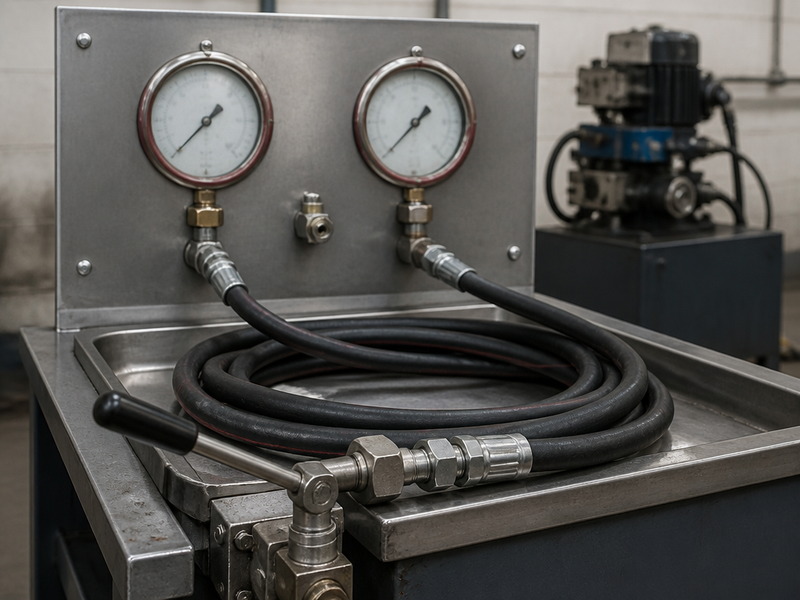
Hydraulic hose assembly with a pressure gauge showing 4,000 PSI working pressure on an industrial workshop bench

Hydraulic Hose Pressure Rating: Working vs Burst Pressure

The hydraulic hose pressure rating that governs whether a line is safe to run is its working pressure — the highest pressure the hose is designed to see continuously in normal service. Burst pressure is a different number: it is the destructive test result at which the hose actually ruptures, and SAE J517 requires a

Hydraulic Hose Pressure Rating: Working vs Burst Pressure Read More »

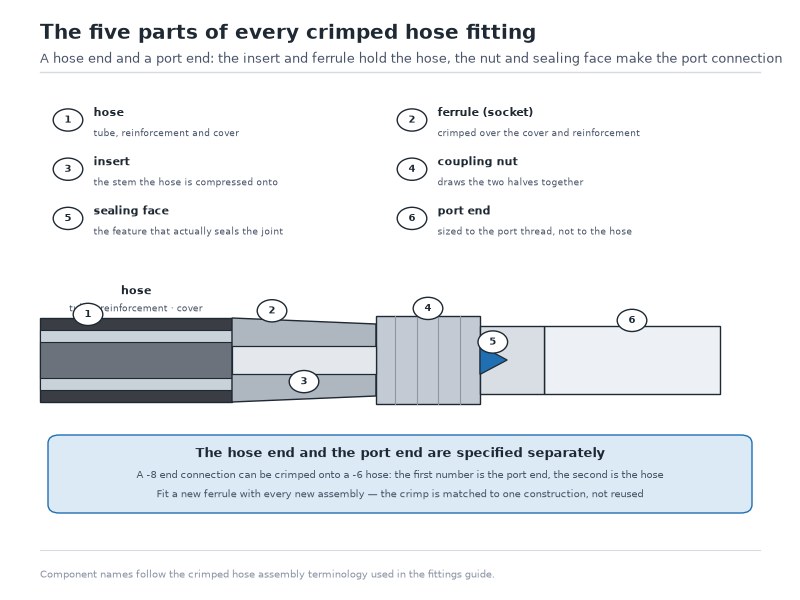
Cutaway view of a hydraulic hose fitting showing the insert, ferrule, coupling nut and sealing face, with the hose end and the port end labelled

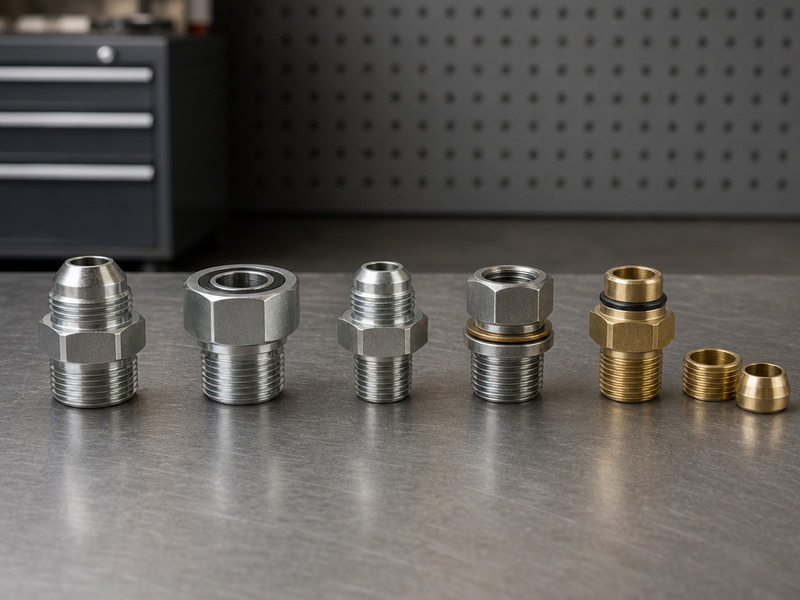
Hydraulic Hose Fittings: The Ultimate Guide to Identification & Selection

Identifying a hydraulic hose fitting comes down to three measurements and one visual check: thread outside diameter, threads per inch (or metric pitch), whether the thread is straight or tapered, and the shape of the sealing face. Take those four readings and almost all hydraulic hose fittings resolve into one of eight end-connection families —

Hydraulic Hose Fittings: The Ultimate Guide to Identification & Selection Read More »

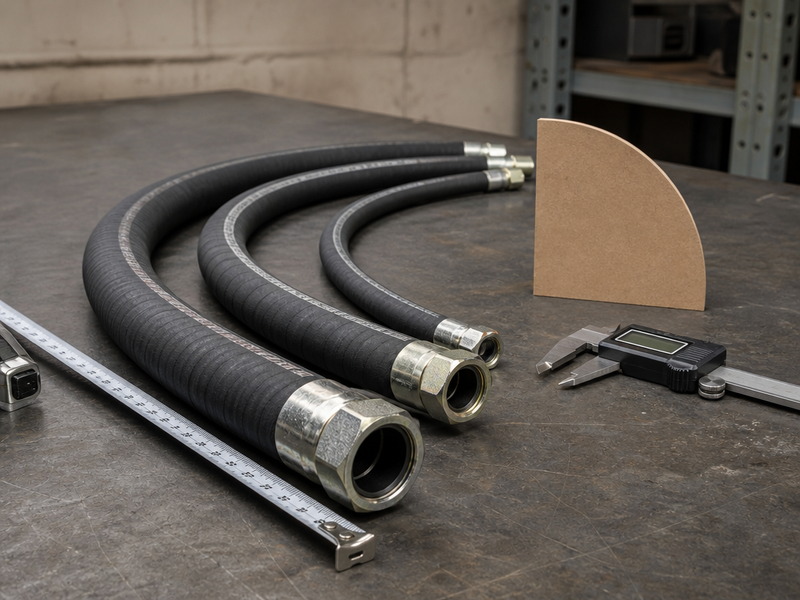
Hydraulic hoses of several dash sizes curved on a workshop bench with a tape measure, caliper, and cardboard radius template, illustrating how bend radius is checked before installation

Hydraulic Hose Bend Radius: How to Calculate & Why It Matters

Hydraulic hose bend radius is the smallest radius a hose can be bent to without kinking, collapsing its bore, or fatiguing the steel reinforcement that carries the pressure. Calculate it in three steps: read the minimum bend radius for your hose type and dash size from the data sheet, convert that radius into the hose

Hydraulic Hose Bend Radius: How to Calculate & Why It Matters Read More »

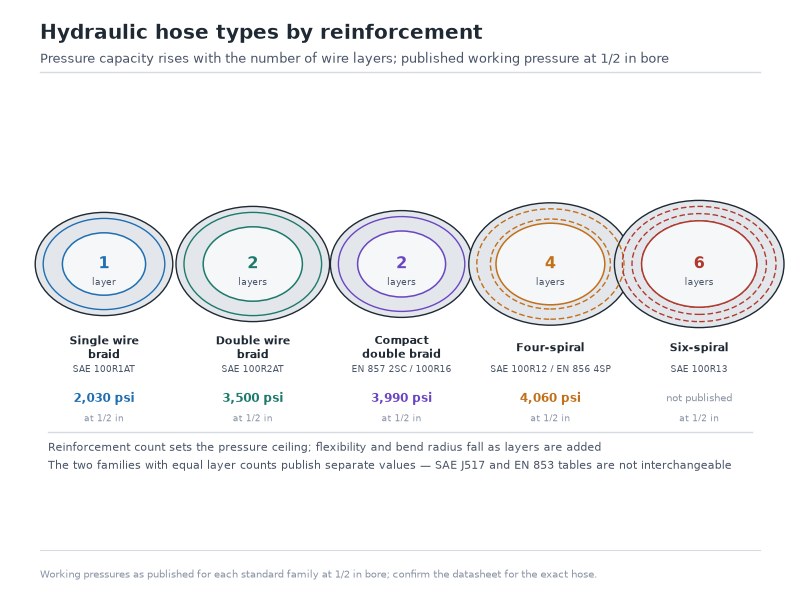
Comparison of hydraulic hose types by reinforcement: single wire braid, double wire braid, compact double braid, four-spiral and six-spiral construction

Hydraulic Hose Basics: Types, Laylines and Pressure Ratings

A hydraulic hose layline is the printed line of text and numbers running along the hose cover that identifies its manufacturer, standard, size, working pressure, temperature range, and date of manufacture — and in most cases it is the only reliable way to identify a hose before you replace it. A complete layline carries up

Hydraulic Hose Basics: Types, Laylines and Pressure Ratings Read More »

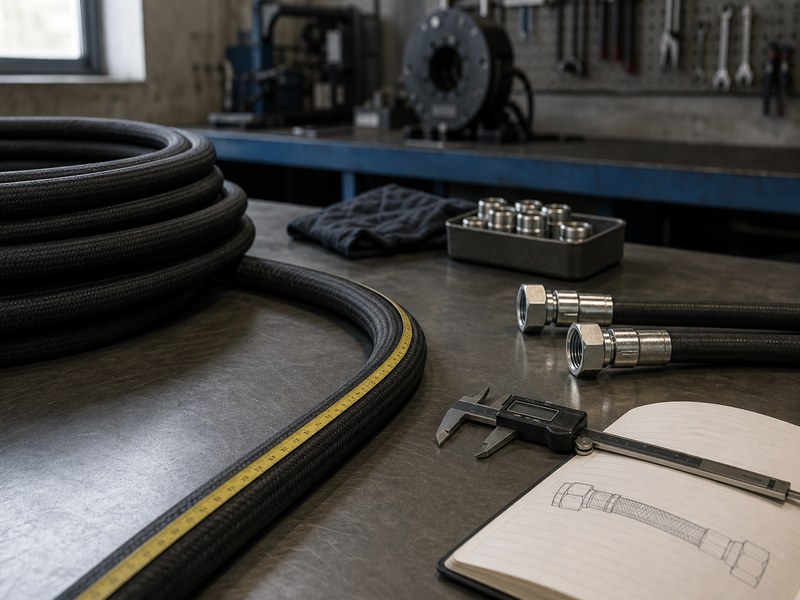
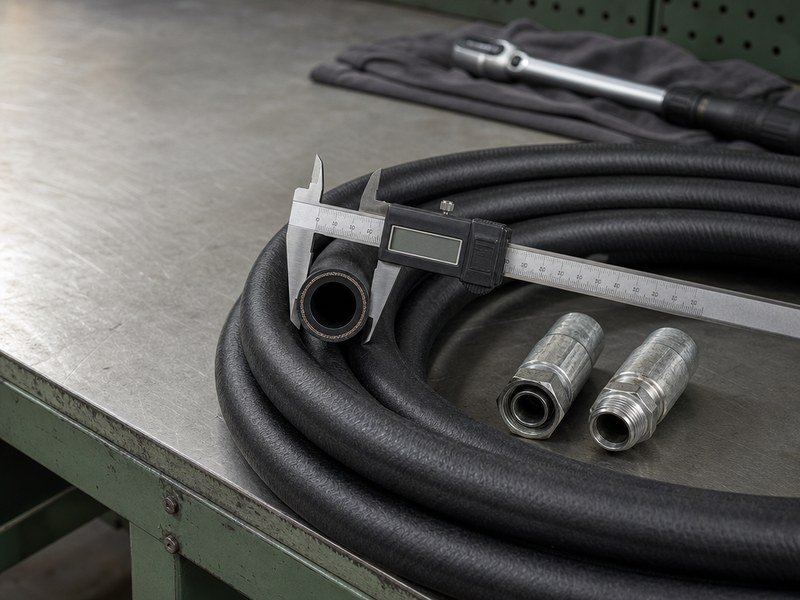
Hydraulic hose measuring station on a workshop bench with a coiled hose, tape measure, digital calipers and crimped assemblies

How to Measure a Hydraulic Hose: Length, ID and Fittings

Here is the short answer: how to measure hydraulic hose comes down to three separate numbers — overall length, inside diameter (ID), and the end connection. Length is measured end-to-end between the extreme ends of the two couplings, or from sealing face to sealing face when the ends are O-ring face seal, and always through

How to Measure a Hydraulic Hose: Length, ID and Fittings Read More »

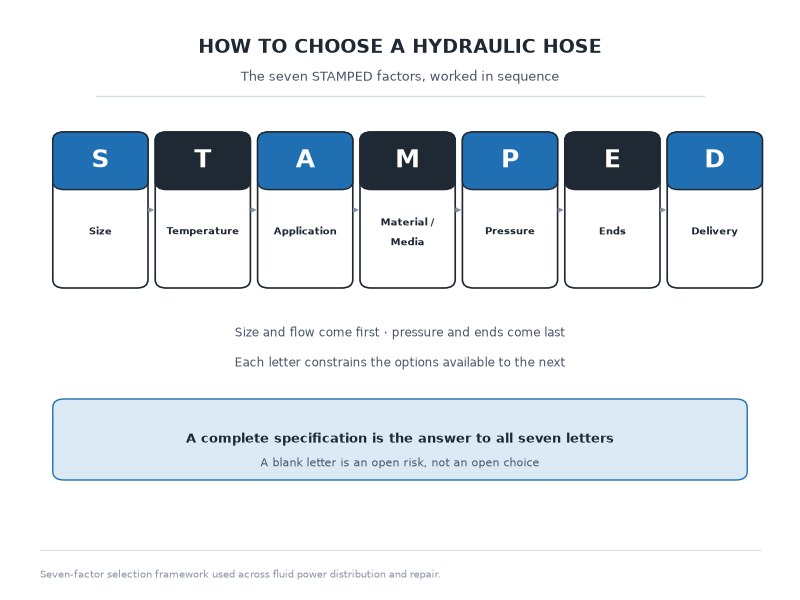
How to choose the right hydraulic hose using the STAMPED method: size, temperature, application, media, pressure, ends and delivery

How to Choose the Right Hydraulic Hose: The STAMPED Method

Knowing how to choose a hydraulic hose comes down to working through seven questions in a fixed order — Size, Temperature, Application, Material/Media, Pressure, Ends, and Delivery — the industry framework known as STAMPED. Answering all seven before you order prevents the most expensive mistake in hydraulics: a hose that satisfies one requirement while quietly

How to Choose the Right Hydraulic Hose: The STAMPED Method Read More »

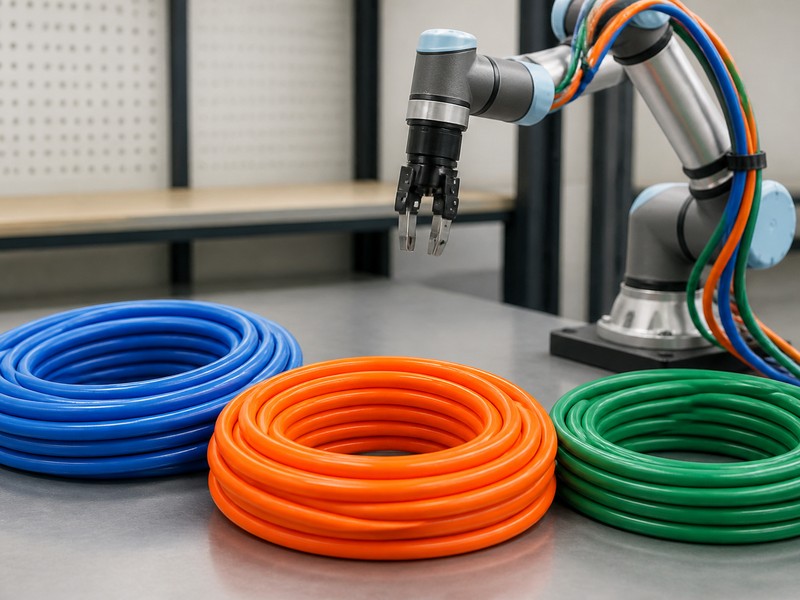
Des bobines de flexibles thermoplastiques pour carburant et huile, de couleur bleue, orange et verte, à côté d'un bras robotisé léger dans un atelier

Tuyaux thermoplastiques pour carburant et huile : une alternative légère au caoutchouc

A thermoplastic fuel hose is a lightweight alternative to rubber for oil and fuel lines: instead of a rubber tube wrapped in steel wire, it uses a polymer tube, synthetic-fibre reinforcement, and a polyurethane cover, which cuts weight by roughly 30-50% at an equivalent pressure rating. The savings show up where rubber is weakest: tight

Tuyaux thermoplastiques pour carburant et huile : une alternative légère au caoutchouc Read More »