
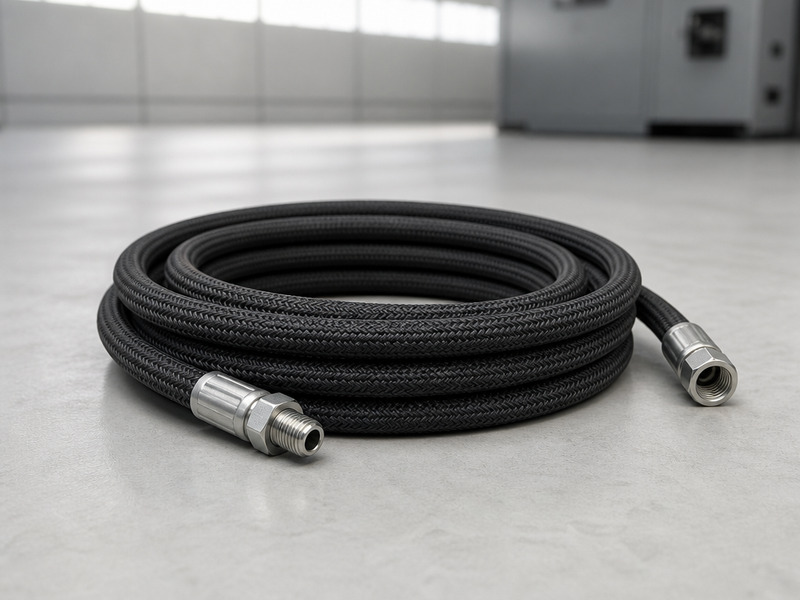
An air hose buyer’s job is not to choose a hose — it is to buy a specification that arrives, batch after batch, exactly as quoted. That means writing a specification sheet instead of a product name, pricing construction rather than brand, agreeing MOQ and lead time before samples, and demanding test reports instead of promises. Get those four things right and the cheapest quote and the safest quote usually turn out to be different suppliers — and only one of them is still your supplier in year three.
This guide is written for buyers sourcing air hose for retail, distribution, or OEM production. It covers the specification sheet, what actually drives price, price bands by construction, MOQ and lead-time structure, the certificates worth asking for, a fast supplier audit, and the quotation lines worth questioning.
About a 15-minute read at 250 words per minute; rated ranges follow ISO 5774:2023 and ISO 2398:2024.
Most pages titled “air hose guide” answer *which hose do I need*. That question is already covered by our how to choose an air hose guide, our air hose size chart, and our air hose material comparison.
This page answers the buyer’s questions instead: *how do I specify it, how is it priced, what does the factory owe me, and how do I know I will get the same hose next year.*
This air hose buyer’s guide is written for the person who signs the purchase order rather than the person who uses the hose. A specification-led approach changes the conversation with a supplier from “what do you have” to “can you hold these limits”, and that is the difference between a repeatable product and a one-off shipment. Use it in sequence: specification first, then price, then terms, then documentation.
The Specification Sheet You Should Send to Suppliers
Send a numbered specification, not a description. Every item below is a pass/fail criterion, which is what makes a specification enforceable.
- Inner diameter, with tolerance — for example 3/8 in (9.5 mm) ±0.5 mm.
- Outer diameter or wall thickness, if the hose must fit a reel or a coil.
- Length, with tolerance and whether it is measured with or without fittings.
- Tube compound — PVC, hybrid, PVC/PU blend, SBR/EPDM, or nitrile. Specify the polymer family, not the color.
- Renfort — textile braid, textile spiral, or wire braid; number of layers.
- Cover compound and finish — smooth, ribbed, or matte; abrasion grade if relevant.
- Pression de service and, if applicable, burst pressure, with the test method. Do not accept “high pressure”.
- Plage de températures, both ends, in °C and °F.
- End fittings — type, thread standard (NPT, BSP, JIC), material, and whether crimped, barbed, or reusable.
- Marking — what must be printed on the cover: size, pressure, temperature, standard, your brand.
- Color to a reference sample or Pantone number, plus a color tolerance statement.
- Packaging, and the label content required by your market.
Our air hose working pressure vs burst pressure and air hose fittings guide go deeper on the pressure rating and the end fittings.
Add one clause that saves arguments later: the standard the product is manufactured to, for example ISO 5774:2023 for textile-reinforced thermoplastic air hose or ISO 2398:2024 for rubber air hose.
What Drives the Air Hose Price
Table 1. Cost drivers in an air hose quotation, in order of how much they move the final price.
| Cost driver | Effect on price | What to watch |
|---|---|---|
| Tube compound | Largest single factor | Pure PVC to rubber can roughly double material cost; verify the compound, not just the word on the label |
| Reinforcement type and layers | Very large | Textile braid, spiral, one or two wire layers — each step is a different product |
| Working pressure class | Large, via reinforcement | A higher rating is not a thicker tube; it is more reinforcement |
| Fittings and assembly labor | Large at short lengths | Two crimps can cost more than the hose on a short assembly |
| Length | Proportional to material | Compare price per meter, not price per piece |
| Color and cover finish | Modéré | Non-standard colors need a minimum run |
| Marking and private label | Moderate, mostly setup | Cover printing is amortized over the run — MOQ sensitive |
| Packaging | Modéré | Retail packaging often costs more than the hose |
| Testing and documentation | Small | Cheap relative to the risk it removes; insist on it |
The practical consequence: quote comparisons are meaningless unless the specification is frozen first. A 20% lower price on a 3/8-inch air hose is usually a lower pressure class, one fewer reinforcement layer, or a lower-grade compound. It is not a better deal.
Air Hose Buyer’s Guide: Price Bands by Construction
Absolute prices move with polymer, steel, and freight indices, so treat the bands below as relative, not as quoted figures. Confirm with an actual quotation against your frozen specification.
Table 2. Relative price bands for 3/8-inch air hose by construction. PVC is set at 1.0 as the baseline. Indicative only — obtain a firm quotation for your specification, volume, and destination.
| Construction | Relative price | Typical rating | Typical market |
|---|---|---|---|
| PVC, textile braid, 1 layer | 1.0 (baseline) | 200–300 PSI | Retail entry level, light indoor use |
| Hybrid, textile braid, 1 layer | 1.2–1.5× | 200–300 PSI | Retail mid-tier, cold-climate markets |
| PU, textile braid | 1.6–2.2× | 250–400 PSI | Professional, cold store, food |
| PU coiled hose, heat-set | 1.5–2.5× | 150–200 PSI | Bench and bay, tool kits |
| Rubber, textile braid | About 2.2× | 300–500 PSI | Industrial, workshop (oil-rated compound for oil exposure) |
| Rubber, spiral or wire reinforced | 2.5–5× | 1,000 PSI + | Hydraulic, high-pressure air, OEM machines |
The three numbers this page cannot supply
No air hose buyer’s guide can give you a price, a lead time, or a warranty term that applies to your market — those come from a quotation against your own specification. What an air hose buyer’s guide can do is tell you which numbers to demand and in what form. Ask every potential supplier for the same air hose price breaks, the same air hose MOQ statement, and the same air hose lead time breakdown, then compare like with like.
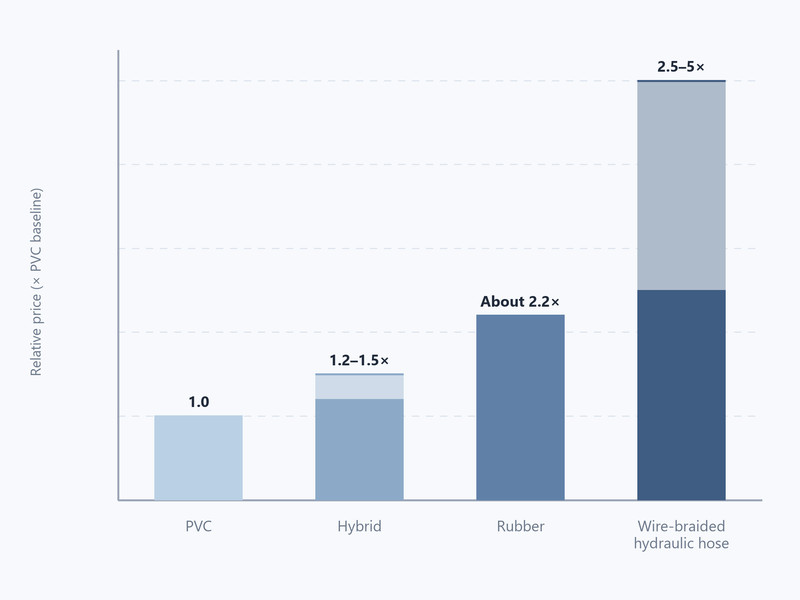
Figure 1. Price bands by construction, in constant units of the same bore and length: the step from PVC to hybrid is small, and the step to wire-braided hydraulic hose is large. That is why the specification is worth fixing before the price is compared.
Air Hose MOQ, Lead Time, and Order Structure
Four order terms to settle in writing before you discuss price. Typical industry practice is given, but the terms your supplier offers matter more than the norms.
- MOQ by line item. Standard black goods often start lower than custom colors or printed covers. Ask for MOQ per size and per color, not one blanket figure.
- MOQ for private label. Cover printing, custom packaging, and branding setup produce the highest MOQ — plan a first order that covers the setup cost.
- Lead time, split into stages. Ask separately for sample lead time, raw-material readiness, production lead time, and transit time. A single “30 days” answer hides which stage you can influence.
- Price-validity and indexation. Raw-material prices move. A quote is meaningless without a validity period and a stated basis for any adjustment.
Also confirm how partial shipments and mixed-size containers are handled. For a distributor, shipping one size per container is rarely the right commercial shape.
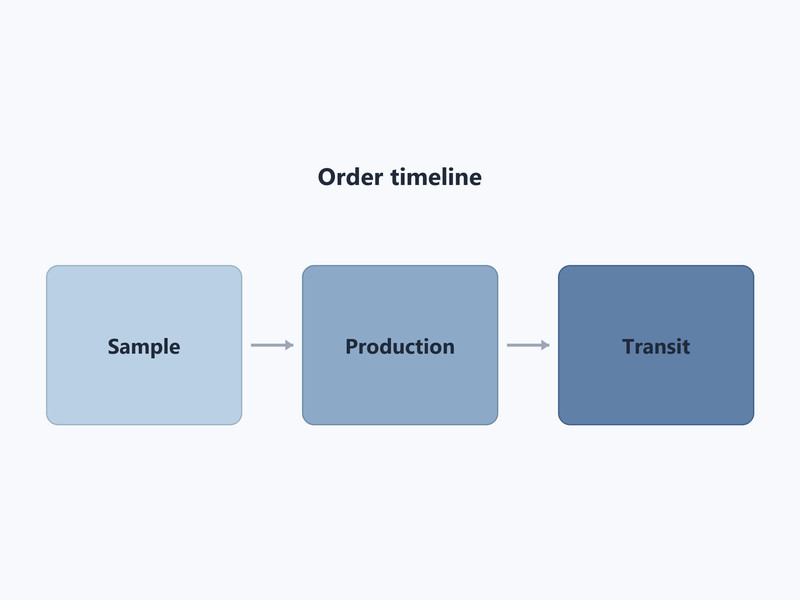
Figure 2. An order timeline split into sample, production, and transit stages. Suppliers who quote a single lead time usually mean production only, which is where first orders go wrong.
Certificates, Documents, and How to Audit a Supplier
Documentation is the cheapest supplier test available. Ask for these before placing a first order:
- Quality management certification — for example ISO 9001 for the manufacturing site, with a certificate number you can verify.
- Third-party test reports — burst pressure, adhesion between layers, and tensile or elongation on the tube. Reports should name the batch and the standard used.
- Material safety or composition declarations — REACH and RoHS statements where you sell into the EU or UK, plus any phthalate or PAH declarations your market requires.
- Material certificates for tube and fitting metals if your customer base is regulated.
- Factory audit or inspection report, if your customers require one.
- A sample retention statement — how long the factory keeps the reference sample from your approved batch.
A supplier who will not produce these is telling you something useful.
You cannot audit a factory in half an hour, but you can decide whether to visit. Ask four questions:
- “Which processes are in-house?” Compounding, braiding, extrusion, crimping, and testing done under one roof is a different risk profile from an assembler buying everything in.
- “How is every batch tested, and what happens to a failure?” Look for a described routine test and a described disposition procedure.
- “Who are three customers I can talk to?” Reference customers on comparable specifications, not the largest names only.
- “What was your last batch failure rate, and what was it the year before?” A supplier with a number and a trend is a supplier with a quality system.
Reading a Quotation: Six Lines to Question
- “Air hose, 3/8 inch” — no compound, no reinforcement, no pressure class. Undefined.
- “High pressure” without a figure. Ask for the working pressure and the burst pressure.
- “Same as your sample” — unless your sample was sealed, labeled, and retained by both sides.
- A burst figure exactly 4× the working figure on every size. Plausible, but ask for the test report rather than the arithmetic.
- Price valid for 90 days with no material basis. Fine on the surface; confirm how renewals will be handled at volume.
- FOB, CIF, and DDP quoted without specifying packaging and pallet configuration. Freight is where the price difference often hides.
What You Can and Cannot Customize
Table 3. OEM/ODM customization feasibility for flexible air hose.
| Article | Customisable | Constraints |
|---|---|---|
| Length and bore | Yes | Practically unlimited within extrusion capability |
| Tube compound | Yes, to a point | Compounding changes affect pressure and temperature ratings |
| Reinforcement type and layers | Yes | Each change needs a new pressure rating and test |
| Cover color | Yes | Color matching needs a reference sample; MOQ applies |
| Cover printing and branding | Yes | Setup cost and minimum run per size |
| Fittings and threads | Yes | Standard threads are faster; special threads need tooling |
| Packaging and retail display | Yes | Often the largest setup item on a first order |
| Changing a pressure rating without new testing | No | Ratings come from testing, not from label design |
| Meeting a claim the compound cannot meet | No | Any factory that agrees to this is a risk, not a partner |
How the Air Hose Buyer’s Guide Compares Air Hose Supplier Quotes and Warranties
A workable hose warranty names four things. It states what is covered (manufacturing defects in tube, reinforcement, cover, and crimp) and what is excluded (abrasion, cut damage, exceeding the rated pressure or temperature, and misuse). It also states the remedy (replacement or credit, and who pays freight) and the claim window with the evidence required.
Be skeptical of two things. A warranty with no exclusions is not a warranty; it is a marketing line that will collapse at claim time. And a warranty that requires you to disprove misuse without a batch traceability record is unenforceable in practice — which is why traceability, not warranty length, is the buyer’s real protection.
Three suppliers, one specification, three different prices. The difference is rarely in the hose — it is in what each quote quietly includes or omits. Work through the same six questions on every quotation:
- Where does the air hose price step change? Ask each supplier for unit price at three quantity breaks, not one. The shape of the curve tells you where their setup costs sit.
- What is the air hose MOQ per size and per color? A single MOQ figure across a mixed order usually means the supplier is averaging, and you will find the real minimum when you place the order.
- How is the air hose lead time split? Ask for sample lead time, production lead time, and transit separately. A supplier who can break it down is a supplier who plans production.
- Is the air hose specification frozen in writing? Anything not written into the quotation is variable at production time.
- What testing is included, and what costs extra? Routine pressure testing should be standard. Third-party burst and adhesion reports may be quoted separately, which is reasonable — but you need to know before you compare.
- What are the payment and shipping terms exactly? Incoterm, packaging, pallet configuration, and who arranges freight. Freight and packaging differences routinely exceed the unit price difference between competing air hose suppliers.
Table 4. Quote comparison worksheet: the line, what to normalize, and what to verify.
| Quote line | Normalize to | Verify by |
|---|---|---|
| Unit price | Same specification, same quantity break | Asking for three quantity breaks, not one |
| Tooling and setup | One-off cost stated separately from unit price | Whether it is charged again on repeat orders |
| Sampling | Sample cost, sample lead time, and who pays freight | Whether the sample charge is credited against the order |
| Incoterm | One named Incoterm for every supplier | Which party carries freight, insurance, and duty |
| Payment terms | Same deposit and balance split | The cost of the balance if it is paid against a copy document |
Normalize all three quotes to the same Incoterm and the same specification before comparing a single number. In practice, the cheapest quote and the cheapest total cost are frequently different suppliers. For the technical side of the specification itself, see our complete guide to air hoses.
Red Flags in an Air Hose Supplier Conversation
Certain answers should end a supplier evaluation early. These are the ones we see buyers regret ignoring.
- A pressure rating that changes when you ask twice. Ratings come from testing. A supplier who adjusts a figure to win the order has no test data behind it.
- A willingness to print any rating you ask for. A factory that will put a 500 PSI mark on a 200 PSI hose is not a partner; it is a liability that will follow you to your customer.
- No answer on batch testing. If no one can describe what happens between production and packing, nothing is being checked.
- A quote with no validity period. In a market where polymer and steel prices move, an open-ended price is not a price.
- Reluctance to send samples from actual production. Samples made specially for you tell you nothing about the batch that will arrive.
- No traceability. Without a link between the delivered goods and an approved reference sample, no warranty claim is winnable.
None of these red flags requires technical expertise to spot. Each one is a question with a bad answer.
Building and Running a First Order Safely
Once the specification and the supplier are agreed, five commercial items should be confirmed in writing before the first production run begins.
- Approved sample, sealed and dated by both parties. This is the reference for every subsequent batch, and the single most valuable document in the relationship.
- Packaging artwork and label content. Approve the physical label, not a description of it. Retail compliance failures are usually label failures.
- Inspection arrangement. Agree who inspects, at what stage, and against what criteria.
- Documentation package. Confirm which certificates, test reports, and declarations accompany each shipment.
- Change control. Agree that any change to compound, reinforcement, fitting, or packaging is notified and re-approved before it ships.
That last item is the one buyers most often skip, and the one that causes the most disputes two orders later. A change-control clause turns “this is not what we approved” from an argument into a documented breach.
Putting this air hose buyer’s guide to work
A first order is the audit of everything the air hose buyer’s guide describes. If the specification was frozen, the sample approved, and the documentation agreed, the first shipment is a formality. If any of those three steps was skipped, the first shipment is where the gap appears — usually as a color mismatch, a pressure class one step lower than quoted, or an air hose lead time that slipped without notice.
A first order with a new air hose supplier should be structured to limit exposure without signaling distrust.
- Start with samples, then a trial production quantity. Validate the specification in production conditions, not just on the sample bench.
- Test the shipment rather than trusting the certificate. Pressure-test a sample from the delivered batch. Suppliers who test properly expect this.
- Retain a reference sample from the first shipment. Labeled, dated, stored. It is the baseline for everything that follows.
- Review the documentation package. If the certificates are missing or generic, the batch was not really inspected.
- Order the second shipment before the first runs out. Lead time problems appear on the second order far more often than the first, when attention is highest.
Treat the first two orders as an audit of the relationship rather than a transaction. The information you gain is worth more than the margin on either shipment.
Air Hose Buyer’s Guide FAQs
What should an air hose specification include?
Inner diameter with tolerance, length, tube compound, reinforcement type and layers, cover finish, working and burst pressure, temperature range, end fittings with thread standard, cover marking, color, packaging, and the manufacturing standard. Without all twelve, quotes are not comparable. Send it as a numbered table rather than prose, so that each line can be quoted and checked off in turn.
Why are air hose quotes so different for the same size?
Because “the same size” is usually not the same product. Differences in tube compound, reinforcement layers, pressure class, fitting material, and packaging can move cost by several multiples before commercial terms are considered. Two quotes for a 3/8-inch hose can differ on every one of those lines, so ask for the specification line by line before comparing a single price.
What is a normal MOQ for a custom air hose?
Industry practice varies widely with the degree of customization. Standard colors generally start lower; custom cover printing, non-standard colors, and private-label packaging push the MOQ up because each requires a setup. Confirm both minimums, in writing, before you build an order quantity around a single figure. The per-size rule is the one that changes your order most often.
How long does an air hose order take?
Ask for a staged answer: sample, production, and transit stages measured separately. Then ask which stage the quoted figure covers, and whether the sample must be approved in writing before production starts. Typical factory production runs are measured in weeks rather than days, and the sample approval stage is the one buyers routinely fail to plan for.
Should I buy on price or specification?
Freeze the specification first, then compare price against it. Comparing price against a vague description is how buyers end up with a hose that meets the drawing but not the requirement. Treat the lowest quote as a question rather than an answer, and ask what was removed to reach it.
What documents should ship with an air hose order?
At minimum: a packing list with quantities and lengths, a certificate of conformity naming the specification, and the batch or lot reference for traceability. On request, add third-party test reports and a material declaration. If a supplier cannot produce a batch reference, the certificate is worth very little.
Can I mix sizes in one order?
Usually yes, and mixing sizes is often the cheapest way to reach a minimum order quantity. Ask how the MOQ is counted: some suppliers count the order as a whole, others apply a minimum to each size and color separately, and the two rules give very different order quantities.
What should a sample order cost?
Expect to pay for samples and freight, with the sample charge often credited against the first production order. A free sample from a supplier who then charges heavily for tooling is not a saving. Ask for the sample cost, the lead time, and whether the charge is credited, and get all three in writing.
How do I verify a pressure rating claim?
Ask for the test report behind it: burst pressure and proof or hold pressure, with the standard used and the date. A rating that cannot be tied to a report is an estimate. Then confirm the printed marking on the delivered goods matches the specification line you approved.
About HENGHUA
HENGHUA manufactures air hoses and reinforced hose assemblies for distributors, retailers, and OEM brands worldwide, with compounding, braiding, extrusion, crimping, and pressure testing under one roof. We build textile-braided and spiral-reinforced air hose from 1/4 to 1/2 inch, rated 200–500 PSI, in PVC, hybrid, PU, and rubber compounds, supplied with factory-crimped brass or steel fittings and your own cover marking.
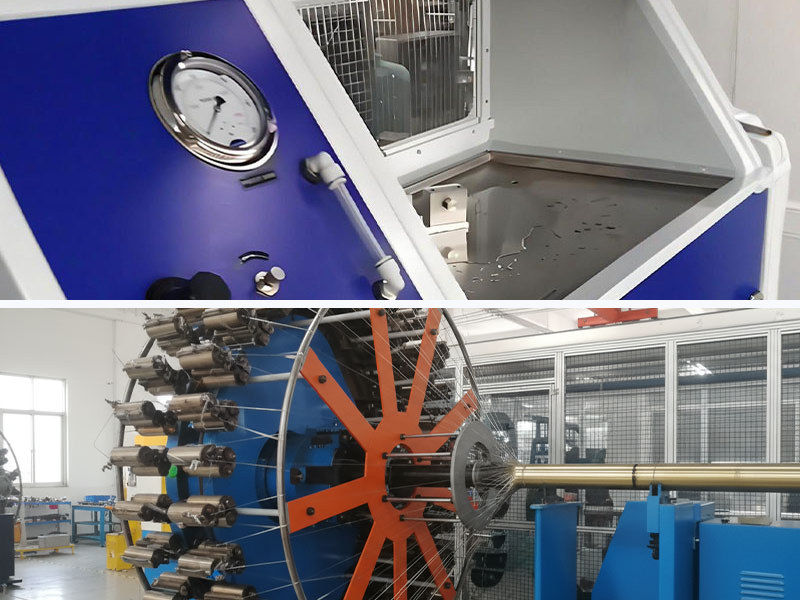
Figure 3. HENGHUA production floor. Because braiding and pressure testing are in-house, the specification you approve is the specification that ships.
What you get from a manufacturer rather than a trading company is accountability. That means a specification you can hold us to and batch traceability against your approved sample. It also means third-party test reports on request, and a straight answer when a requested rating is not achievable in the compound you asked for. Custom lengths, colors, cover printing, packaging, and OEM/ODM branding are available with factory-direct pricing. Send us your specification sheet — or your target market and price point, if you would rather we draft one — and contact our engineering team for a quotation and samples.
Written by the HENGHUA Engineering Team — the engineers who compound, build, and pressure-test the hoses we manufacture — with input from sourcing managers and distributors in the US and Europe. HENGHUA manufactures air hose and hose assemblies from 1/4 inch to 1/2 inch, rated 200–500 PSI, with OEM/ODM branding available.






 English
  Spanish
  Portuguese
  French
  German
  Arabic
  Russian
  Indonesian
  Japanese
  Korean