goodheart786@gmail.com

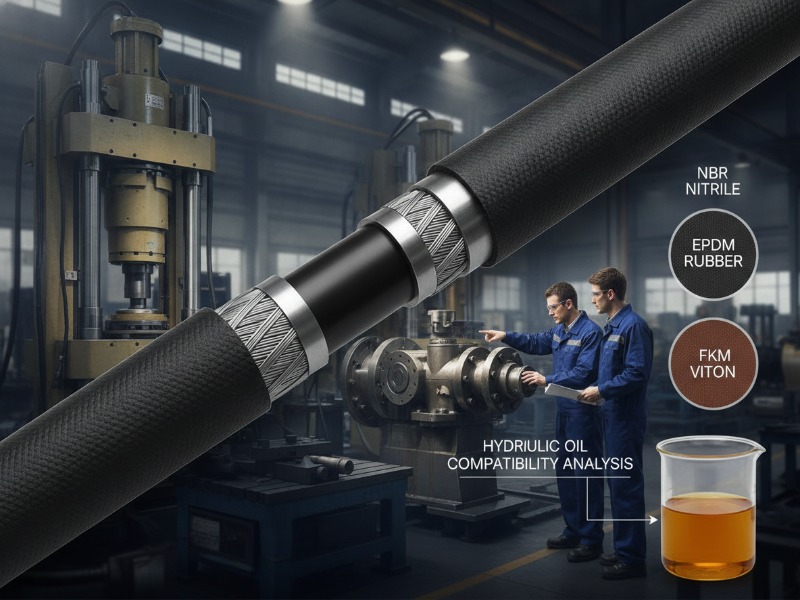
Ultra-realistic industrial hydraulic hose engineering scene, a high pressure hydraulic hose shown with a detailed cutaway cross section revealing the inner tube, steel wire reinforcement layers and outer cover, three elastomer materials comparison concept labeled NBR nitrile, EPDM rubber, and FKM Viton, hydraulic oil compatibility analysis theme, modern hydraulic machinery workshop background, industrial engineers inspecting hydraulic equipment, realistic manufacturing environment, oil and gas and heavy equipment application, technical photography style, clean composition, cinematic lighting, sharp focus, professional engineering documentation style, 8k resolution, no municipal infrastructure, no sewer pipes, no urban construction

Hydraulic Hose Fluid Compatibility Chart: NBR vs EPDM vs FKM Inner Tube Selection Guide

There is no universal hydraulic hose material compatible with all fluids. The correct inner tube material depends on the hydraulic fluid chemistry, temperature, and operating conditions. This hydraulic hose material compatibility guide explains how NBR, EPDM, Neoprene, and FKM inner tubes perform with different hydraulic fluids. The best hydraulic hose inner tube material is determined by fluid […]

Hydraulic Hose Fluid Compatibility Chart: NBR vs EPDM vs FKM Inner Tube Selection Guide Read More »


Engineers in blue overalls monitor high-pressure hydraulic hose impulse testing equipment within an industrial quality control laboratory, featuring extensive piping and digital displays.

Why Impulse Life Testing Determines the Durability of OEM Hydraulic Hoses

Impulse life testing evaluates the durability of hydraulic hoses by subjecting them to repeated pressure pulses—typically at 133% of rated working pressure—to simulate real-world fatigue conditions. According to SAE J343 and ISO 6605 standards, hoses are tested for 200,000 to 1,000,000+ cycles to predict fatigue life, identify failure points, and verify long-term reliability in OEM hydraulic

Why Impulse Life Testing Determines the Durability of OEM Hydraulic Hoses Read More »

An engineer monitors a high-pressure burst test of steel braided hydraulic hoses in a detailed industrial ISO 9001 certified laboratory setting.

Understanding Working Pressure vs. Burst Pressure in High-Pressure Hydraulic Hoses

What Is the Difference Between Working Pressure and Burst Pressure? The working pressure of a hydraulic hose is the maximum pressure it can safely handle during continuous operation. Burst pressure is the minimum pressure at which the hose fails during laboratory testing. According to SAE and EN standards, burst pressure must be at least four

Understanding Working Pressure vs. Burst Pressure in High-Pressure Hydraulic Hoses Read More »

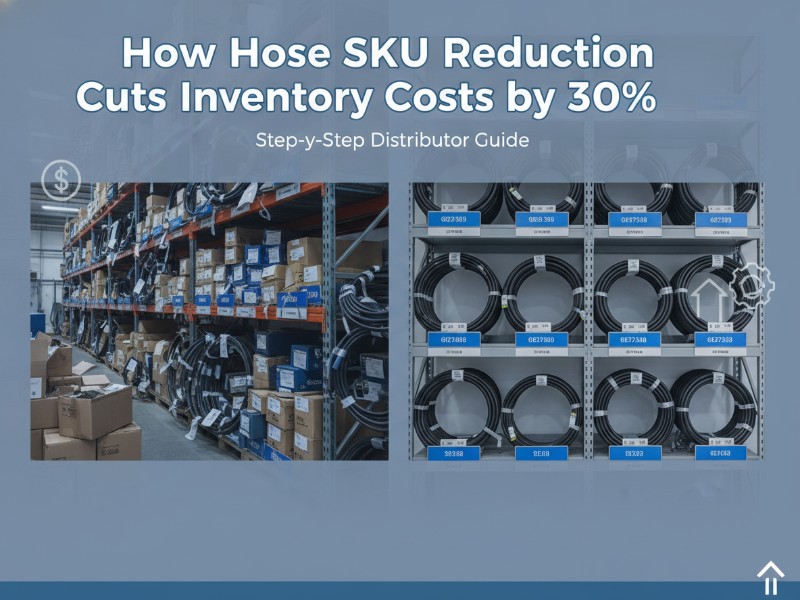
Split-screen industrial warehouse showing crowded, complex hose inventory on the left and simplified, organized hose products on the right, illustrating SKU reduction efficiency.

Reduce Hose Inventory Costs by 30%: SKU Rationalization Guide for Distributors

Hose distributors today face rising inventory costs, slow-moving SKUs, and increasing pressure to improve service levels while reducing working capital. One of the most effective strategies is hose SKU reduction—also known as inventory rationalization. Hose SKU reduction is not about stocking fewer products—it is about stocking the right products. This comprehensive guide provides data-backed strategies

Reduce Hose Inventory Costs by 30%: SKU Rationalization Guide for Distributors Read More »

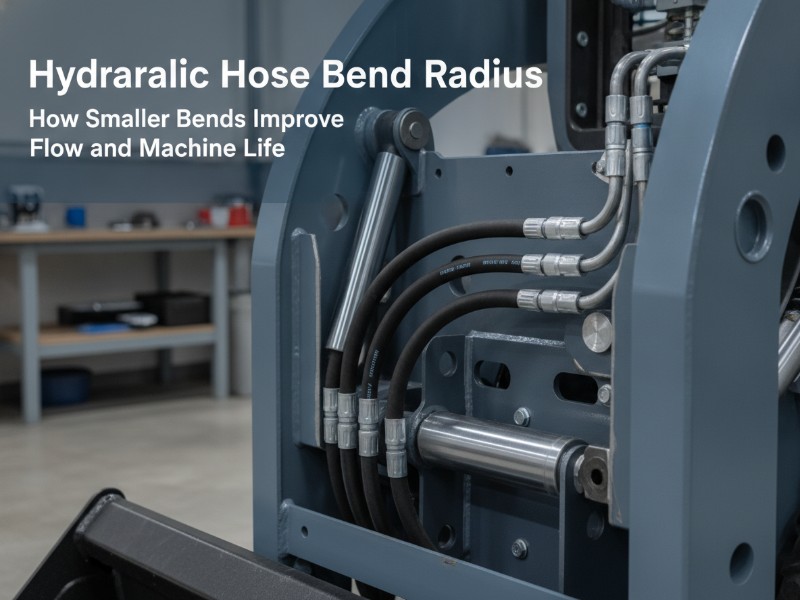
Black reinforced hydraulic hoses with steel fittings connected to a compact machine's blue-gray chassis in a clean, brightly lit workshop setting, illustrating bend radius.

Hydraulic Hose Bend Radius: How Smaller Bends Improve Flow and Machine Life

How reducing hydraulic hose bend radius improves flow, space, and durability in compact machinery. SAE 100R2 vs 100R12 data, routing design tips, and FAQs. What is hydraulic hose bend radius?Hydraulic hose bend radius is the minimum radius a hose can be bent without kinking, restricting flow, or damaging its internal reinforcement. It is measured along

Hydraulic Hose Bend Radius: How Smaller Bends Improve Flow and Machine Life Read More »

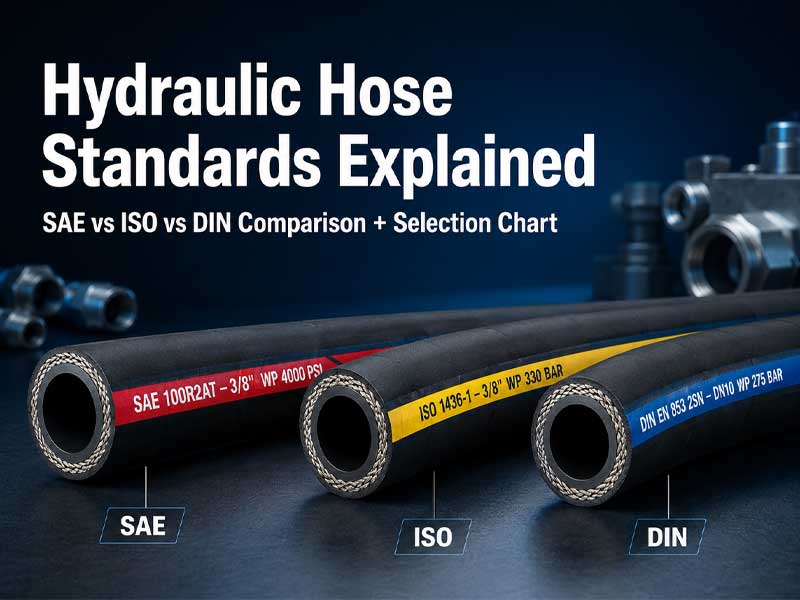
hydraulic hose standards sae iso din comparison

Explicación de las normas sobre mangueras hidráulicas: comparación entre SAE, ISO y DIN + tabla de selección

How to Choose Hydraulic Hose This guide compares SAE J517, ISO 1436, and DIN EN 853 standards with real pressure ratings, bend radius data, and a step-by-step selection workflow. What Are Hydraulic Hose Standards? Hydraulic hose standards are internationally recognized specifications (SAE, ISO, DIN) that define a hose’s pressure rating, construction type, bend radius, and performance

Explicación de las normas sobre mangueras hidráulicas: comparación entre SAE, ISO y DIN + tabla de selección Read More »

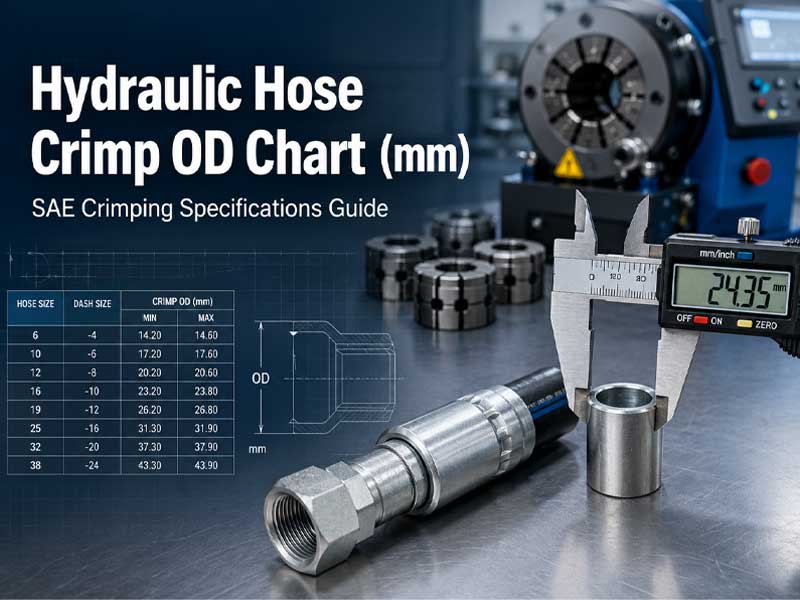
crimp od chart sae specifications

Hydraulic Hose Crimp OD Chart (mm) + SAE Crimping Specifications Guide

Hydraulic hose crimp OD is the final outside diameter of the ferrule after compression, which determines the holding force between the fitting and hose reinforcement layers. What Is the Correct Hydraulic Hose Crimp OD? A hydraulic hose crimp OD is the final outside diameter of a ferrule after compression by a crimping machine. According to

Hydraulic Hose Crimp OD Chart (mm) + SAE Crimping Specifications Guide Read More »

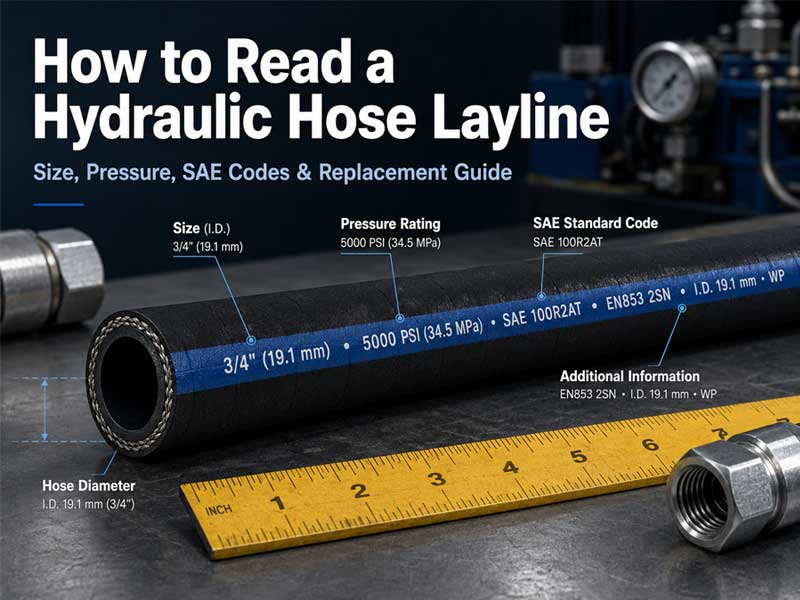
How to Read a Hydraulic Hose Layline: Size, Pressure, SAE Codes & Replacement Guide – Close-up of black hydraulic hose with visible layline markings

How to Read a Hydraulic Hose Layline: Size, Pressure, SAE Codes & Replacement Guide

Hydraulic hose failures are often caused by incorrect replacement due to misreading specifications. The hydraulic hose layline provides all the key data needed to identify the correct hose, including size, pressure rating, and construction type. Understanding how to read this marking is essential for safe operation and accurate ordering. What Is a Hydraulic Hose Layline? 

How to Read a Hydraulic Hose Layline: Size, Pressure, SAE Codes & Replacement Guide Read More »

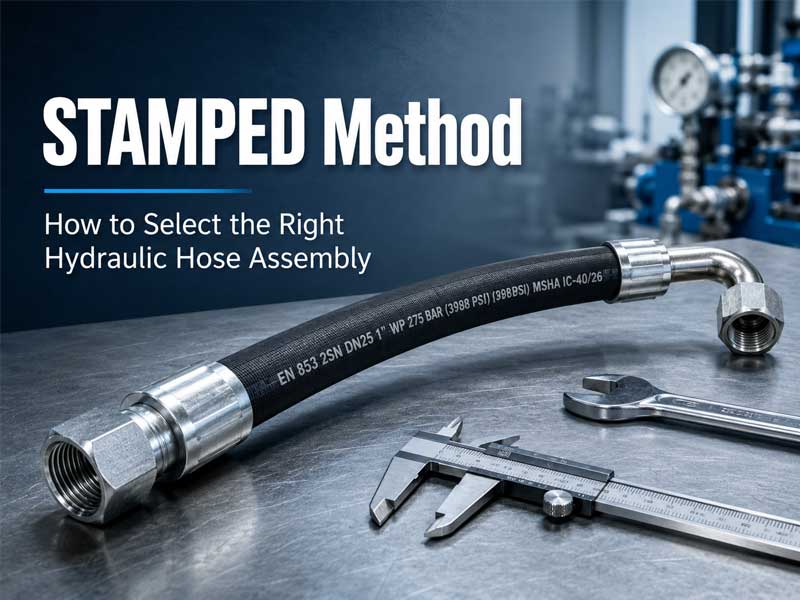
hydraulic-hose-selection-stamped-method

How to Select a Hydraulic Hose Assembly Using the STAMPED Method

The STAMPED method is a 7-step framework used to select hydraulic hose assemblies by evaluating Size, Temperature, Application, Media, Pressure, Ends, and Delivery. It helps engineers prevent hose failure, reduce downtime, and ensure compatibility with system pressure, fluid type, and operating environment. What Is the STAMPED Method? The STAMPED method is an acronym that forces

How to Select a Hydraulic Hose Assembly Using the STAMPED Method Read More »

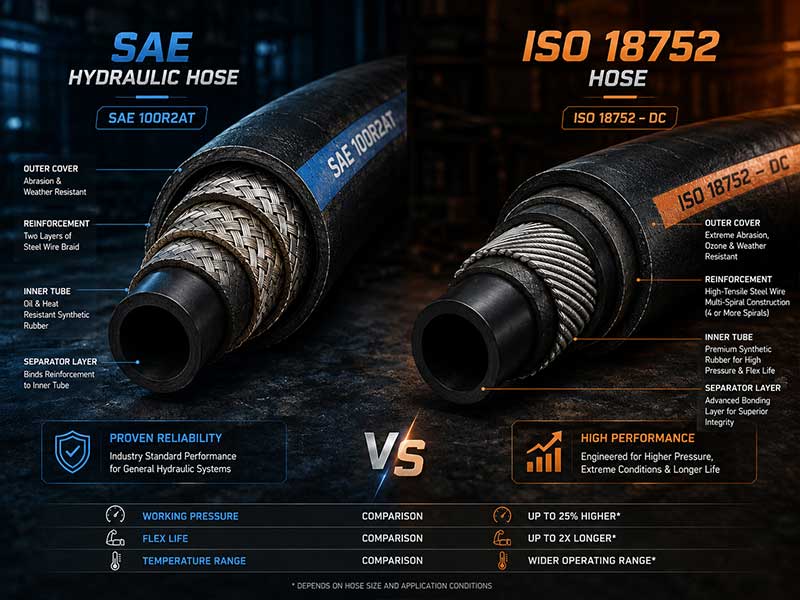
ISO 18752 vs SAE Hydraulic Hose

ISO 18752 vs SAE Hydraulic Hose: What’s the Difference & Which Is Better?

ISO 18752 hoses are constant pressure hydraulic hoses designed to deliver the same working pressure across all sizes while meeting specific impulse cycle requirements (200k to 1M+ cycles). Unlike SAE J517 which defines construction, ISO 18752 defines performance, resulting in longer service life, smaller bend radii, and up to 60% inventory reduction. What is the main difference

ISO 18752 vs SAE Hydraulic Hose: What’s the Difference & Which Is Better? Read More »