
An lng hose has to move a liquid at about −162 °C, and the standards that govern it are not the chemical ones. A composite hose built for ambient duty becomes brittle at that temperature, leaks heat through the wall and fails at a weld.
Two constructions dominate cryogenic duty: corrugated stainless steel, usually with a braid, and purpose-built cryogenic hoses that use a flexible non-metal core inside specialised insulation. An lng composite hose in that second family is a system component rather than a catalogue item, and the two solve the same problem with different failure modes.
This comparison sets out how each is built, where each is stronger, and which questions decide the choice. It is a technical overview rather than a product recommendation.
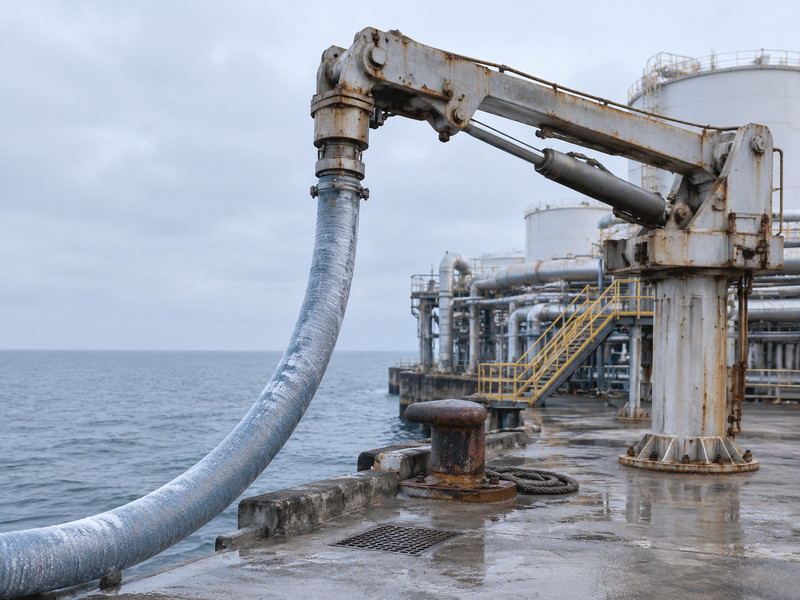
Figure 1. A jetty string. The hose is one component in a transfer system, and the system approval is what governs the installation.
Why Is LNG Duty Different From Chemical Duty?
Because the temperature changes the materials rather than the pressures.
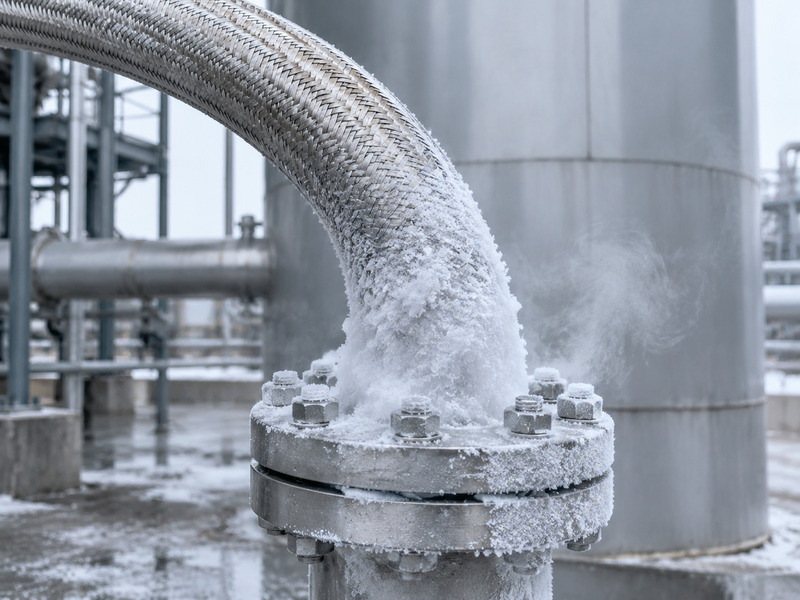
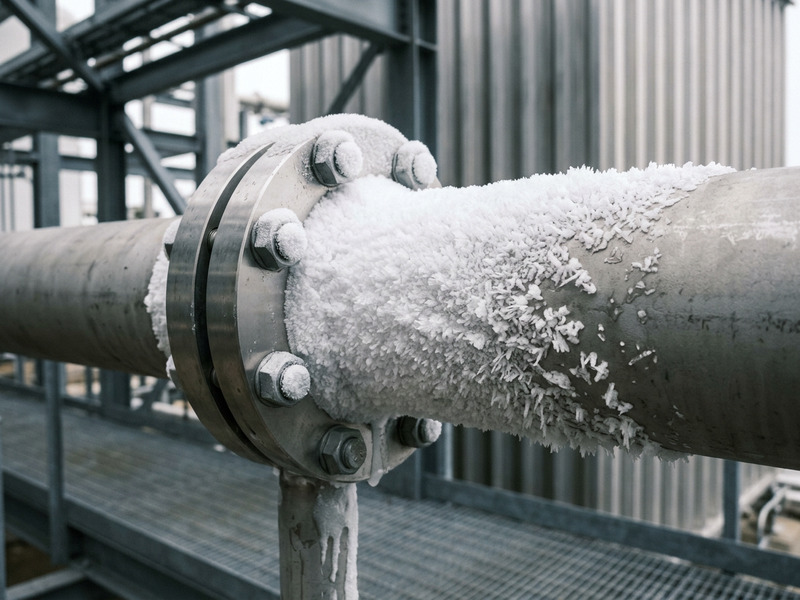
At −162 °C, ordinary carbon steel becomes brittle, most elastomers become glassy, and water in the air freezes on any surface. The duty sits about 180 °C below a 20 °C ambient, which is why every surface in the circuit runs below the dew point. A hose that carries LNG has to be built from materials that stay ductile, and it has to be insulated so that the product does not boil away.
Pressure is usually modest by comparison, which is why a hose specified on pressure alone misses the actual engineering problem. The engineering problem is thermal, not mechanical, and that is why the constructions look different from a chemical composite hose.
How Is Each Construction Built?
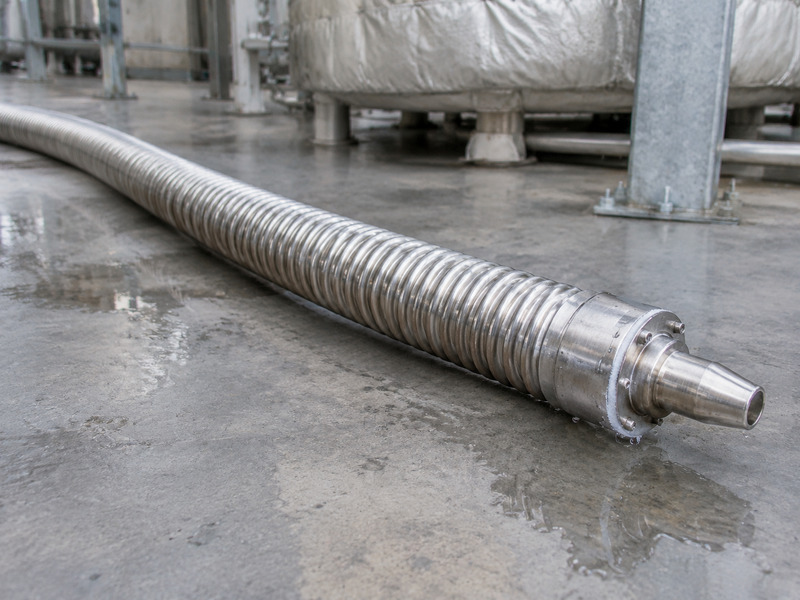
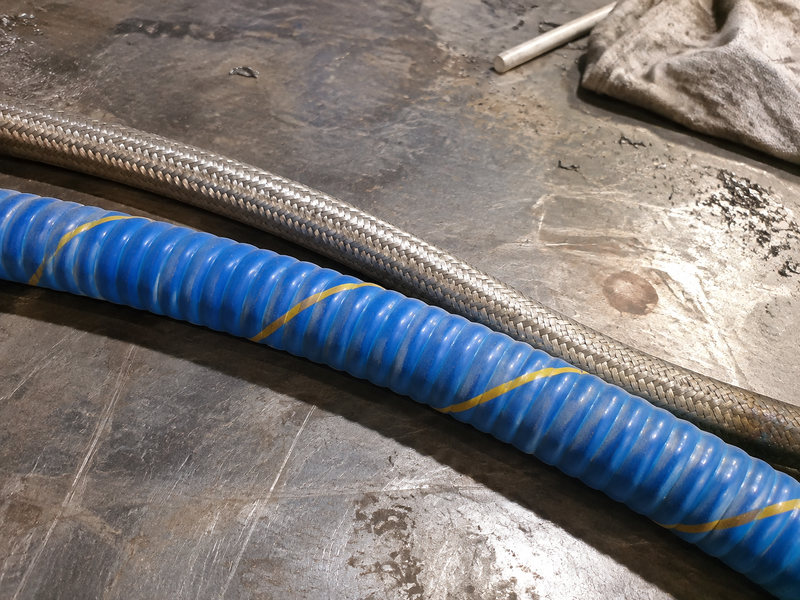
Corrugated stainless hose uses a thin-walled tube with annular or helical corrugations, which provide flexibility without a sliding seal. A braid carries the pressure load and limits extension. The assembly is metal end to end, with no polymer in the product path.
A cryogenic hose with a non-metal core uses a flexible barrier inside a layered wall, wrapped in high-performance insulation and an outer jacket. Some designs are described as composite because the wall is not a single metal tube.
An lng composite hose in that second category relies on the insulation as much as on the core, because the jacket is what keeps the product cold between transfers.
How Do They Compare?
| Attribute | Corrugated stainless | Cryogenic composite type | Chemical composite hose |
|---|---|---|---|
| Temperature | Cryogenic | Cryogenic | Ambient to moderate |
| Permeation | None through metal | Very low | معتدل |
| المرونة | Moderate, fatigue limited | Insulation dependent | مرتفع |
| الوزن | مرتفع | مرتفع | Low |
| Failure mode | Corrugation fatigue | Jacket or connection | Film or bond |
| Insulation | Added externally | Often integrated | Not applicable |
| Governing document | Metal and cryogenic standards | Cryogenic and LNG system standards | Composite hose standard |
| Exception | A short vapour return at low pressure | Not for liquid transfer: jacket damage loses the vacuum | Out of scope: the standard excludes LNG |
Table 1. Constructions compared. The third column is included because buyers often arrive with a chemical hose specification and need to see where it stops.
The table explains the practical split. Metal hose dominates where permeation must be zero and where the temperature is extreme; insulated cryogenic hoses dominate where boil-off and handling dominate.
Where Does Fatigue Decide?
In metal hose, the corrugations flex every time the assembly moves, and the metal work-hardens at the crests. That is why corrugated assemblies have a finite cycle life and why installation geometry matters.
A metal hose that is bent in service at a point not designed for movement will fail there, usually as a crack at a corrugation crest. The failure is detectable by inspection before it becomes a leak, which is one advantage of metal.
A cryogenic composite hose moves the fatigue question to the connection and the jacket. The core is designed to flex; the interfaces are where the stress concentrates.
What Does Boil-Off Require?
Insulation, and a figure for it.
In a cryogenic line, any heat that reaches the liquid turns product into gas, which changes composition and raises pressure in a closed system. An LNG transfer system therefore specifies insulation performance rather than a material.
That is why a jacket matters commercially. A hose with poor insulation is cheaper to buy and more expensive to operate, because the boil-off, the product that evaporates while the line is cold, is lost on every transfer.
Where transfers are short and infrequent, a simpler insulation may be adequate. Where they are long or frequent, vacuum insulation usually pays.

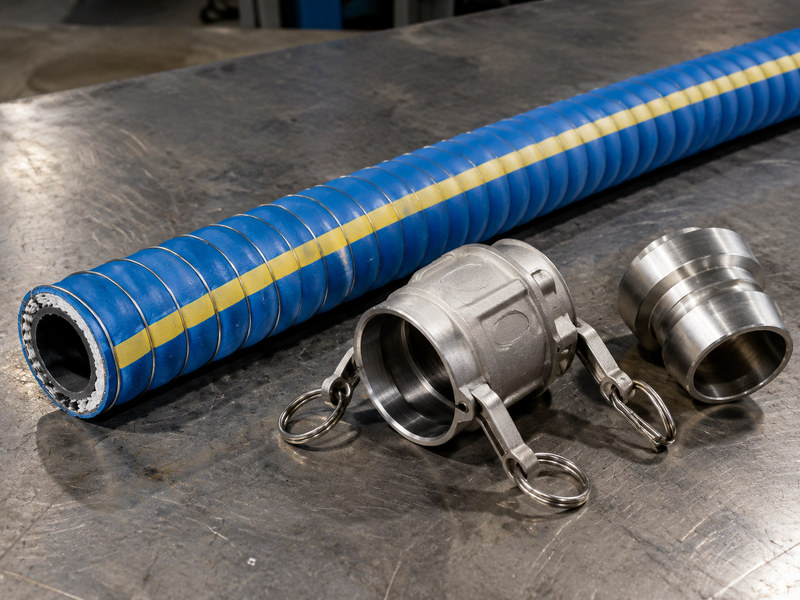
Figure 2. Two hose ends on a bench. One relies on metal for both flexibility and containment; the other separates the two jobs between core and insulation.
Which Standards Apply?
Three, and they answer different questions.
The LNG system standard addresses the design and testing of the transfer system, including the hose strings within it. The cryogenic hose standard addresses flexible cryogenic hose performance. The metal hose standard addresses corrugated metal assemblies.
A chemical composite hose standard is not in that list, and that omission is deliberate: it excludes LNG duty.
How Do You Choose?
Four questions, in order.
Is the duty liquid transfer or vapour return, and is the hose fixed or moved each time? The two have different bores and different insulation needs.
Is the installation fixed or does the hose move every transfer? Movement favours the construction with the better fatigue record for that geometry.
Is permeation a safety requirement or a commercial one? Zero permeation points to metal; low permeation may be acceptable in a vented area.
And what does the system approval require? That question usually settles the rest, because the hose is approved as part of a system.
| Decision | Metal favours | Cryogenic composite favours |
|---|---|---|
| Zero permeation | نعم | Low, not zero |
| Very high cycle count | Depends on geometry | Core dependent |
| Insulation integration | Added | Built in |
| Field handling | Rigid, needs support | Jacket is vulnerable |
| Repair | Replace section | Replace assembly |
| Inspection | Visual and pressure | Frost and vacuum check |
| Exception: repair in the field | Neither: replace the section | Neither: a jacket cannot be re-sealed on site |
Table 2. Decision drivers by construction. The rows are the questions a project actually argues about.
What Should a Buyer Ask?
Four things, and none of them is a price.
The standard the product is tested to, with the edition. The test temperature, which should be at or below the duty. The insulation performance, with its conditions. And the inspection and cooldown procedure.
An lng hose offered without those four is an offer that will need a second round, and the second round is where schedules slip.
How Does Installation Change the Answer?
Both constructions are sensitive to geometry, and in different ways.
A corrugated stainless hose is rigid compared with a polymer hose, so the installation has to accommodate its stiffness. Supports are needed along the run, and the bend radius at each end has to be respected. A metal hose forced into a curve it does not want will fatigue at the crests near the fittings.
A cryogenic composite hose is more flexible and more delicate. The jacket is the vulnerable part: it can be scuffed, punctured or pulled away from a fitting, and any breach reduces insulation performance immediately.
That asymmetry explains a pattern on terminals. Metal strings dominate where the route is fixed and the hose is supported; insulated cryogenic hoses appear where the route moves or where the insulation has to travel with the hose.
For an lng hose string, the installation drawing is therefore part of the specification, not a site detail. The geometry decides the fatigue life in both cases.
How Do You Handle a Vapour Return Line?
The vapour line is specified separately and often badly. A boil-off line is not a liquid line with a smaller bore, and treating it as one produces an over-insulated, over-weight assembly.
It carries gas rather than liquid, at low pressure and still at cryogenic temperature. Its bore is set by the vent rate, and its insulation by the acceptable warm-up rather than by a transfer time.
A corrugated stainless hose works well here, because permeation is zero and the pressure is low. An insulated cryogenic hose also works, provided the insulation is rated for continuous cold rather than for intermittent transfer.
The common error is to duplicate the liquid line and reduce the bore. That produces a line that is over-insulated, over-weight and often the wrong length, because the vapour connection is rarely where the liquid connection sits.
What Does a Project File Need?
Six documents, and the hose maker supplies three of them.
The system design and its approval, which belongs to the project. The duty envelope, which belongs to the process engineer. The hose datasheet, the test record and the insulation performance, which belong to the maker.
The sixth is the inspection routine, which should be agreed before commissioning rather than after the first frost. An inspection agreed after an event is a negotiation; one agreed before is a procedure.
A project that holds those six can answer a regulator, an insurer and a maintenance planner with the same file. The insulation comparison covers the third document in detail, and the temperature review covers the duty envelope. One that holds a catalogue page cannot.
Where Do LNG Enquiries Go Wrong?
Four places, and each is avoidable.
Asking for a hose rather than for a system component, which produces offers that cannot be compared. Quoting an LNG transfer system requirement to a chemical hose supplier, who will either decline or, worse, accept.
Comparing insulation by material name rather than by performance figure. And leaving the vapour return out of the enquiry, so it is bought later from a different supplier against a different standard.
A buyer who specifies an lng hose by temperature alone will receive offers that differ by a factor of two and cannot be compared.
How Do You Compare Two Offers?
Build a table with the six rows above and fill it from the two datasheets. An lng hose offer that cannot fill a row is an offer with a gap, and the gap is usually insulation or approval.
Then check the system. A transfer system approval names the hose, the fittings and the operating envelope, and an offer that does not reference it is a component offer rather than a system offer.
Finally, compare the operating cost rather than the purchase price. An lng hose with better insulation costs more and loses less, and the crossover is quicker than most projects assume.
For the ambient lines around the cold side, the type guide and the standards map apply unchanged, and keeping the two families separate in the specification is what makes both answers usable. Write the four questions into the enquiry before it goes out, and the answers that come back will be comparable.
Frequently Asked Questions
Is an LNG hose always metal?
No. Corrugated stainless is the established construction, and insulated cryogenic hoses with non-metal cores exist for duties where their properties suit.
Can a chemical composite hose carry LNG?
No. The composite hose standard excludes LNG, and the wall materials are not specified for the temperature.
What temperature is LNG?
About −162 °C at atmospheric pressure. The exact figure depends on composition, which is why the duty should state the range rather than a single number.
Why is boil-off a commercial issue?
Because it is product lost. Insulation performance decides how much, and that is a cost per transfer rather than a purchase price.
Which construction lasts longer?
It depends on the duty. Metal hose has a cycle life defined by corrugation fatigue; a cryogenic composite depends on jacket integrity and connection design.
Is a vapour return line the same specification?
No. It carries vapour at low pressure, and its bore and insulation are set by the vent rate rather than by the transfer rate.
What governs the approval?
The LNG transfer system standard, with the hose maker supplying data into the system file.
About HENGHUA
The range is composite hose for ambient chemical, petroleum and food service; LNG and cryogenic hose are outside it. We say so plainly, because a standard composite build is the wrong product for a cryogenic line regardless of how the enquiry is worded.
For projects that include both cold and ambient lines, we can specify the ambient side and will point to the standards that govern the rest.

 English
 Spanish
 Portuguese
 French
 German
 Arabic
 Russian
 Indonesian
 Japanese
 Korean