
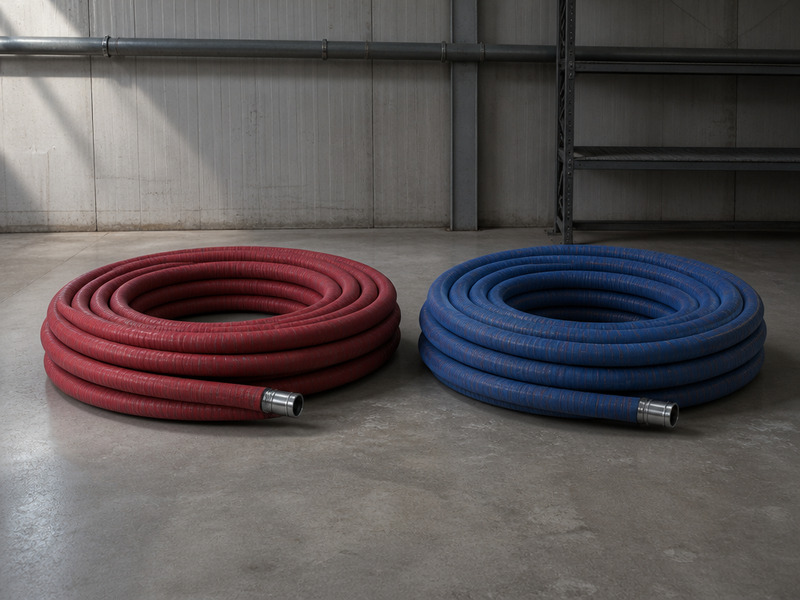
Which rating you need: match the grade to the steam condition, never to the higher number. A steam hose temperature rating states the highest continuous steam temperature a hose may carry, so the 170 °C grade and the 230 °C grade answer two different jobs. The steam hose 170 °C grade covers saturated steam to about 7 bar g, and the steam hose 230 °C grade reaches about 26 bar g. This guide reads both grades against the saturation curve, then shows which one your line really needs.
Match the Grade to the Steam Condition, Not to the Higher Number
The 170 °C grade and the 230 °C grade share one pressure class, so the real choice is a temperature decision. Each is rated 250 psi (17 bar) working pressure with a 2,500 psi (about 172 bar) burst pressure, a 10:1 safety ratio and a −40 °C cold limit. The difference sits in the continuous ceiling: 170 °C for one grade, 230 °C for the other. Choose the grade whose continuous limit stays above the hottest steam the hose will see for most of its working hours.
The steam hose 170 °C grade is the general-purpose option for standard steam lines. Its continuous limit is 170 °C and its intermittent limit is 210 °C. The steam hose 230 °C grade is built for the top of the rubber envelope, with a 230 °C continuous limit and a 250 °C intermittent limit.
Read any steam hose rating as two numbers that travel together: a working pressure and the steam temperature at which that pressure applies. A pressure alone is not a steam hose temperature rating, because the tube softens as the steam gets hotter. That is why the pressure versus temperature derating rule matters on a steam line.
What the 170 °C and 230 °C Ratings Actually Cover
Each grade publishes four numbers that decide a job: a continuous temperature, an intermittent temperature, a working pressure and a burst pressure. Table 1 sets the two grades side by side. The pressure figures are identical for both, so the whole choice turns on temperature.
| Grade | Continuous steam temperature | Intermittent steam temperature | Working pressure | Burst pressure | Safety ratio |
|---|---|---|---|---|---|
| Steam hose 170 °C grade | 170 °C | 210 °C | 250 psi (17 bar) | 2,500 psi (172 bar) | 10:1 |
| Steam hose 230 °C grade | 230 °C | 250 °C | 250 psi (17 bar) | 2,500 psi (172 bar) | 10:1 |
Identical pressure does not mean interchangeable hose. The continuous temperature separates the grades, and the steam hose material behind each one is compounded for a different heat load. The 170 °C tube is cured for steady steam below its ceiling. The 230 °C tube uses a peroxide-cured, wrapped cover for the hottest duty. That difference is why the 170 °C grade and the 230 °C grade cannot be swapped on price alone.
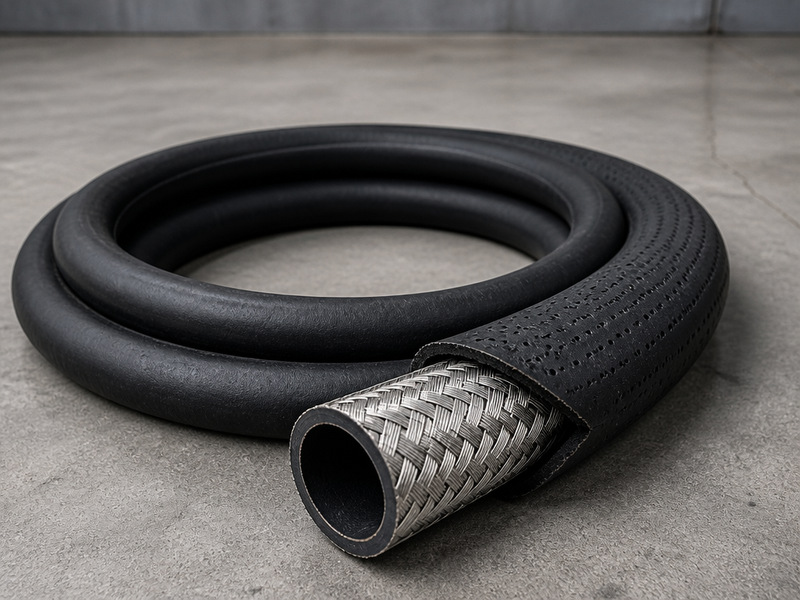
Both grades share a seamless EPDM tube and a pin-pricked cover in red or blue, over one or two steel wire braid layers. The bore range for both runs from 3/8 inch to 4 inch (10 mm to 102 mm), and every length is proof-tested at 1.5 times working pressure. The 230 °C hose construction explains the peroxide cure, and the EPDM steam hose 170 °C range lists the standard bores and lengths.
A steam hose temperature rating is a continuous figure first. The intermittent number is a short-term allowance, not a normal working condition. A hose rated for 210 °C intermittent and 170 °C continuous should still be specified at or below 170 °C for daily service. Treat the higher number as a cushion for warm-up and for short upsets, never as the design point. That habit alone prevents most premature replacements.
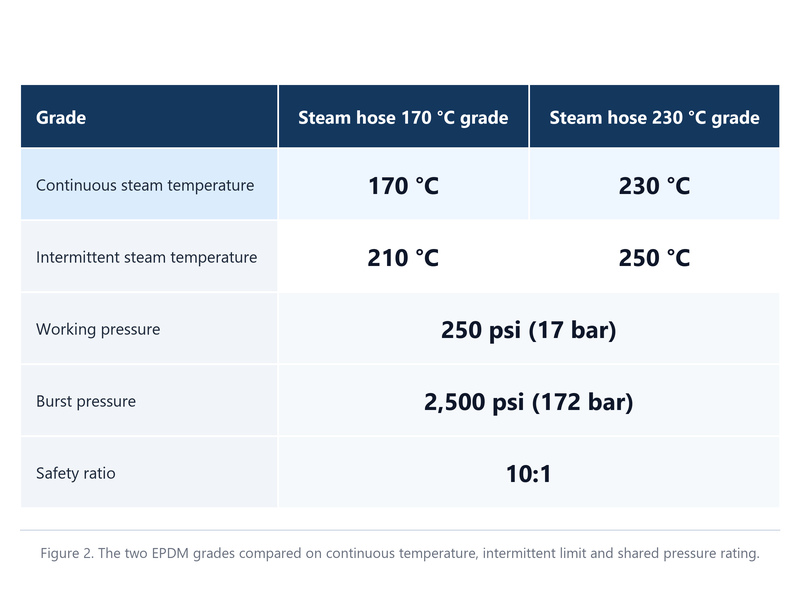
Figure 2. The two EPDM grades compared on continuous temperature, intermittent limit and shared pressure rating.
Steam Hose Temperature Rating Against Saturated Steam Pressure
For saturated steam the temperature is fixed by the pressure, so one column drives the choice. Table 2 pairs gauge pressure with temperature and names the grade that carries it continuously. Values follow the IAPWS-IF97 steam tables and sit inside the ISO 6134 envelope.
| Gauge pressure (bar g) | Saturated steam temperature | Grade needed |
|---|---|---|
| 1 | 120 °C | 170 °C grade |
| 3 | 144 °C | 170 °C grade |
| 5 | 159 °C | 170 °C grade |
| 6 | 165 °C | 170 °C grade |
| 7 | 170 °C | 170 °C grade, at the limit |
| 8 | 175 °C | 230 °C grade |
| 10 | 184 °C | 230 °C grade |
| 12 | 192 °C | 230 °C grade |
| 14 | 198 °C | 230 °C grade |
| 16 | 204 °C | 230 °C grade |
| 17 | 207 °C | 230 °C grade |
| 18 | 210 °C | 230 °C grade |
| 20 | 215 °C | 230 °C grade |
| 25 | 226 °C | 230 °C grade |
The boundary is easy to remember. The 170 °C grade covers gauge pressure to about 7 bar g, where the steam sits near 170 °C. Above that line the 230 °C grade takes over and carries the same duty to about 26 bar g. A steam hose rating printed on a label holds only while the steam stays at or below the ceiling for that grade. The steam hose temperature rating that matters is the continuous one, not the peak.
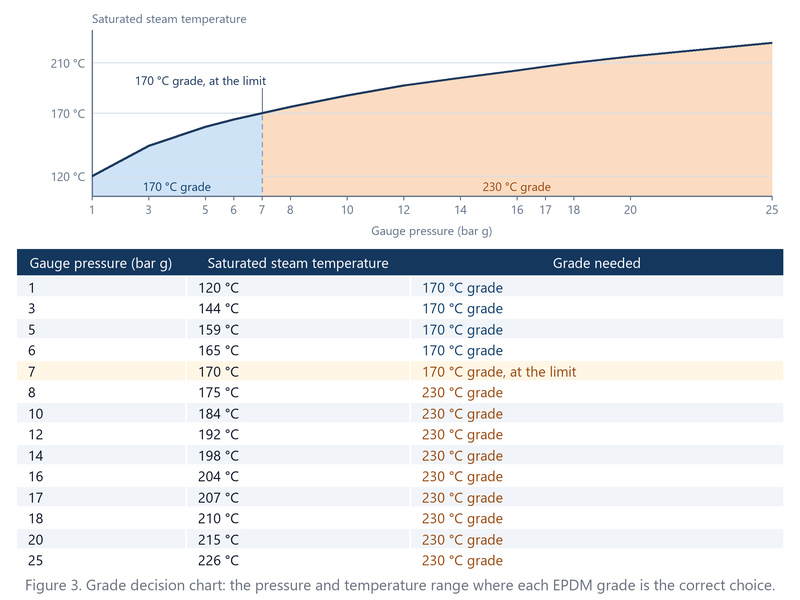
Figure 3. Grade decision chart: the pressure and temperature range where each EPDM grade is the correct choice.
Why 17 Bar Saturated Steam Rules Out the 170 °C Grade
Seventeen bar g of steam sits at about 207 °C. That is far above the 170 °C continuous limit, so the 170 °C grade cannot carry it, even though both grades share a 250 psi (17 bar) working pressure. The duty keeps the pressure but breaks the temperature, and a steam hose failure on heat is the usual result. Heat, not strength, is what ends the hose.
A steam hose working pressure is a limit at a stated temperature, not at any temperature. The 250 psi (17 bar) figure applies at the rated steam temperature for the grade. Push the steam hotter than the ceiling and the tube ages fast, the bond weakens, and the assembly may burst well below its nominal pressure. That is the whole steam hose safety margin, spent by heat rather than by pressure. The steam hose material, not the pressure class, sets the ceiling.
The steam hose temperature rating of a grade is the number a buyer should compare, not the burst pressure alone. Two hoses can share a 2,500 psi (about 172 bar) burst figure and still behave very differently above 170 °C. The tube compound and the cure set that limit, and the rating is simply the visible result of both. When a supplier quotes only the burst figure, ask for the continuous temperature as well.
ISO 6134:2024 draws its own ceiling for the standard. Type 1 hose is rated 6 bar at 164 °C with textile reinforcement, and Type 2 hose is rated 18 bar at 210 °C with steel wire reinforcement. A 17 bar duty sits inside Type 2 territory, which points to steel wire braid and the hotter grade. The saturated and superheated steam comparison explains why the same pressure can still need the higher grade.
Four Questions That Decide Between 170 °C and 230 °C
Four questions settle the choice on most plants. Ask them in order and the answer usually falls out on its own.
- What is the hottest continuous steam temperature? — Start with the continuous figure, not the peak. A line that runs near 204 °C needs the hotter grade.
- Is the duty continuous, intermittent or occasional? — Intermittent use allows a higher peak, but continuous service must stay under the continuous ceiling.
- What is the steam hose working pressure on the line? — A pressure at the top of the range leaves less room for temperature, so confirm the pair before ordering.
- How much margin does the grade need? — A grade run at its exact ceiling ages faster than one with headroom, so allow for the hottest day the plant expects.
When two answers still point to the same grade, the tie-breaker is the worst condition, not the average. The steam hose 170 °C grade stays the economical choice while the line never passes 7 bar g. The steam hose 230 °C grade exists for everything above it. If the answers disagree, ask for the steam hose temperature rating as a pair and order against the harder number.
Superheated Steam, Dry Heat and Radiant Heat: Where the 230 °C Grade Applies
Wet steam is not the only hot load a hose can meet. Superheated steam is heated above its saturation temperature at the same pressure, so it carries more heat with less mass. That extra heat shortens service life on any rubber hose. The steam hose 230 °C grade is the practical minimum for a superheated line, and many plants step up to a PTFE-lined hose or a metal hose beyond it.
Superheated steam also changes how a line behaves at start-up. It reaches full temperature quickly and holds it, so the hose sits at its hottest condition for longer than a wet line would. Where a plant cannot confirm the real steam condition, the safer move is to specify the hotter grade rather than assume the cooler duty. Margin is cheaper than a shutdown.
Where Dry Heat and Radiant Heat Change the Answer
Dry heat and radiant heat behave differently again. A hose resting near a furnace, a press platen or a hot manifold sees heat with no steam inside to balance it. The cover then runs hotter than the steam, so the steam hose material must cope with the surface temperature, not just the fluid. In those spots a protective sleeve buys margin that a higher grade alone cannot.
Scope for the 170 °C grade: wet steam that keeps the tube cooler. Dry heat and radiant heat call for the 230 °C grade plus a protective sleeve, because that heat cooks the compound from the outside. A steam hose failure of that kind shows up as a cracked or blistered cover long before the reinforcement gives way.
Cost, Service Life and Availability: The Commercial Side of the Choice
The 170 °C grade and the 230 °C grade differ in price, and the cheaper one is not always the lower-cost choice. A 170 °C hose costs less per meter. If the line runs above its ceiling, though, it will be replaced far sooner. The extra cost of the 230 °C grade is repaid the first time it avoids one early failure.
Ask about the steam hose material and the cure behind the quote. Then quote the steam hose working pressure at the temperature the line actually runs, never at a generic figure. A quote that names pressure but not temperature is not a quote you can compare, and the same rule applies to a renewal order. Compare the 170 °C grade and the 230 °C grade on cost per year of service rather than on price per meter. The cooler grade retires earlier on any line that crosses its ceiling.
How Lead Time and MOQ Affect the Choice
Lead time and order quantity also matter. Both grades share the same press, the same braider and the same crimp line, so a manufacturer can quote either grade from the same tooling. Bulk lengths reach 100 m, with 40 m or 20 m in the largest bores, which keeps a plant stocked without a special run. Price and order terms sit with the hose price and MOQ guide.
Buy the grade for the duty, not the duty for the grade. A line that is genuinely light can run the 170 °C grade for years and save on every meter. A line that occasionally spikes above 170 °C is not a light line, and the hotter grade is the honest match once the peak is understood.
For continuous steam, a typical service life is about two to four years, and for intermittent use five to seven years. Those figures assume the hose runs inside its rating and its bend radius. Bend radius is grade-specific as well. For 3/4 inch bore, the 230 °C grade publishes 80 mm and the 170 °C grade publishes 70 mm. The 170 °C grade and the 230 °C grade are not interchangeable on a tight route either.
Steam Hose Safety When the Grade Is Marginal
A grade that sits exactly at the working temperature leaves no room for error. Steam carries stored energy, so a failure releases scalding vapor and a pressure wave at the same moment. That is why steam hose safety depends on the grade and the end connection together, not on the hose alone.
The end connection is part of the rating. ISO 6134:2024 requires a fitting that lets the clamp force be adjusted, which points to bolted safety clamps. The standard prohibits quick-release couplings on steam service, because an accidental release under pressure is a serious hazard. The pin-pricked cover, which vents gas that permeates into the layers, is a requirement rather than a defect.
A marginal grade also punishes poor habits. Warming the line slowly for two to three minutes lets the tube expand before full pressure arrives, and it reduces the shock on the assembly at start-up.
A steam hose temperature rating only protects a line while the rest of the assembly matches it. A correct grade joined with an under-rated clamp or a worn fitting fails just as fast as the wrong grade. Keep the rating intact from the header to the nozzle, and check the steam hose safety margin at every joint rather than at the hose alone. The fitting is where most leaks begin.
Scope: the EPDM tube serves steam and hot condensate. Mineral oil, diesel and gasoline are outside that scope, so oil-bearing duties call for NBR/PVC or FKM hose instead.
Inspection Points Before You Accept a Marginal Grade
Check the date code, the cover and the joints before the hose goes back into service. Any steam hose with a cut cover, a bulging lining, a stiffened section, a leaking joint or a missing date code must be withdrawn and replaced, not repaired. Patch, tape and re-clamp never restore the tested safety margin, and steam will find the weak layer on the next cycle. The rule is simple: replace, never repair.
Steam Hose FAQs
Which grade do I need for 10 bar steam?
Ten bar g of steam sits at about 184 °C, which is above the 170 °C continuous ceiling. The 230 °C grade is the safe choice for that duty, and it carries the same 250 psi (17 bar) working pressure with the same 10:1 safety ratio. Confirm the real gauge pressure on the line before you order.
Can the 170 °C grade handle 17 bar steam?
No. Seventeen bar g of steam is about 207 °C, so it breaks the 170 °C continuous limit. The pressure would be allowed, but the temperature would not. That duty belongs to the 230 °C grade instead, because heat, not strength, is what ends a marginal hose.
Do both grades really share the same 250 psi (17 bar) rating?
Yes. Both grades carry the same pair of numbers: a 250 psi (17 bar) working pressure and a 2,500 psi (about 172 bar) burst pressure. That 10:1 margin is wider than the 4:1 common on hydraulic hose and the 3:1 on pneumatic hose, and it applies at each grade’s own temperature ceiling. What changes is the temperature at which that steam hose working pressure applies, and that single number decides the correct grade.
What separates the steam hose material in the two grades?
The tube compound and the cure. The 170 °C grade is built for standard steam duty. The 230 °C grade uses a peroxide-cured, wrapped cover that holds up at the top of the rubber envelope. Both share a seamless EPDM tube and steel wire braid, so the difference is the heat the compound can take, not the pressure.
How long should a hose last on continuous steam, and how long on intermittent duty?
Two to four years is a realistic life on continuous steam, and five to seven years on intermittent duty. Running a grade above its continuous ceiling cuts both figures sharply. The estimates also assume the hose stays inside its bend radius and is handled with care, so a tight route can shorten life even inside the temperature limit. Match the steam hose temperature rating to the duty, and the service life follows.
If both grades fit my line, does the 230 °C grade cost much more?
The 230 °C grade usually costs a little more per meter, because of the hotter compound and the peroxide cure. That premium is small next to the cost of one early failure and the downtime that comes with it. When both grades fit the duty, price decides; when only one fits, the decision is already made.
What causes a steam hose failure at the wrong grade?
Heat, most often. A grade run above its ceiling ages fast. The tube hardens, the bond to the braid weakens, and the cover can crack or blister. The assembly may then burst below its nominal pressure. A steam hose failure of that kind is preventable, because the saturation curve tells you the right steam hose rating before the hose is ever ordered.
When should I leave EPDM behind altogether?
When the steam sits above the rubber envelope. Superheated steam, or a duty well above 230 °C, needs a PTFE-lined hose to about 260 °C or a corrugated metal hose. Those options cost more and bend differently. Between the two EPDM grades, though, the saturation curve almost always points to one clear answer.
Get Both Grades Quoted Against Your Duty
HENGHUA manufactures reinforced industrial hose and complete hose assemblies for plants, distributors and OEM brands. Our EPDM steam hose range covers 3/8 inch to 4 inch bore, rated 250 psi (17 bar) working pressure with a 10:1 burst safety factor.
The construction is a smooth steam-resistant EPDM tube, one or two layers of high-tensile steel wire braid, and a pin-pricked cover that vents permeating gas instead of blistering. Every length is proof-tested at 1.5 times working pressure before it leaves the plant, and each batch is date-coded. Because compounding, extrusion, braiding, vulcanization and crimping all happen in one plant, bulk lead times stay short. Send us the working pressure, the steam temperature, the bore and the end connection, and we will quote against them.
We supply cut lengths, crimped ends, protective sleeves, colour coding and OEM branding. Get a quote and free samples
Final Verdict: Steam Hose Temperature Rating Follows the Saturation Curve
The grade you need is the one whose continuous ceiling sits above the hottest steam the line will meet. Read the steam hose rating as a pair, then read the steam hose working pressure and the steam temperature together, because neither number means anything alone.
Pick the grade from the saturation curve rather than from the price list, and the steam hose safety margin stays intact from the header to the application. For the full assembly picture, the how to choose a steam hose guide and the EPDM 230 °C product page show both routes. Send us the steam condition and we will quote the grade that fits.
Written by the HENGHUA engineering team, with input from plant maintenance and steam-system reliability teams across North America, Europe and South East Asia. HENGHUA manufactures reinforced industrial hose and hose assemblies, including an EPDM steam hose range from 3/8 inch to 4 inch bore. Those assemblies are rated 250 psi (17 bar) working pressure with a 10:1 burst safety factor, and are supplied as cut lengths or as fully crimped assemblies. Fittings, protective sleeves, colours and OEM branding are available on request.

 English
  Spanish
  Portuguese
  French
  German
  Arabic
  Russian
  Indonesian
  Japanese
  Korean