
A chemical compatibility database is a first screen, not a verdict. It narrows a long list of tube compounds down to the two or three worth investigating for a given medium. It cannot see your concentration, your temperature, your contamination or your cleaning chemicals. Matching hose material to media is therefore a short, ordered job, and the order matters more than the tool. This guide sets out the work order of a real selection job and the honest limits of each compound family. It then covers what a database can and cannot answer, the six inputs a supplier needs, and a screening workflow a plant can run with no tool.
1. What a Chemical Compatibility Database Is For
A chemical compatibility database exists to shorten a shortlist, not to approve a purchase. You enter a medium, read the handful of compounds flagged as compatible, and then move to the questions that actually decide the job. Used that way it saves hours. Used as a verdict, it is the most common route to a wrongly specified chemical hose material.
Every rating inside a chemical compatibility database is a snapshot. It was measured at one concentration, one temperature and one exposure time. Change any one of those and the rating no longer describes your service. That is why a database is step one and verification is the last step, not an optional extra.
Media compatibility is a property of the pair, not of the compound alone. Two plants can run the same hose against the same chemical and report very different service lives, because their concentrations and temperatures differ. A screen that ignores the pair is always an approximation.
The rest of this page assumes the database has already done its only job: turning a hundred compounds into three candidates. From here you are matching a compound to a medium, and that work runs on process data, not on lookup tables. No lookup table can carry a chemical hose material decision on its own. If you need the wider material landscape first, the site’s overview of types of flexible hose materials is the right starting point.
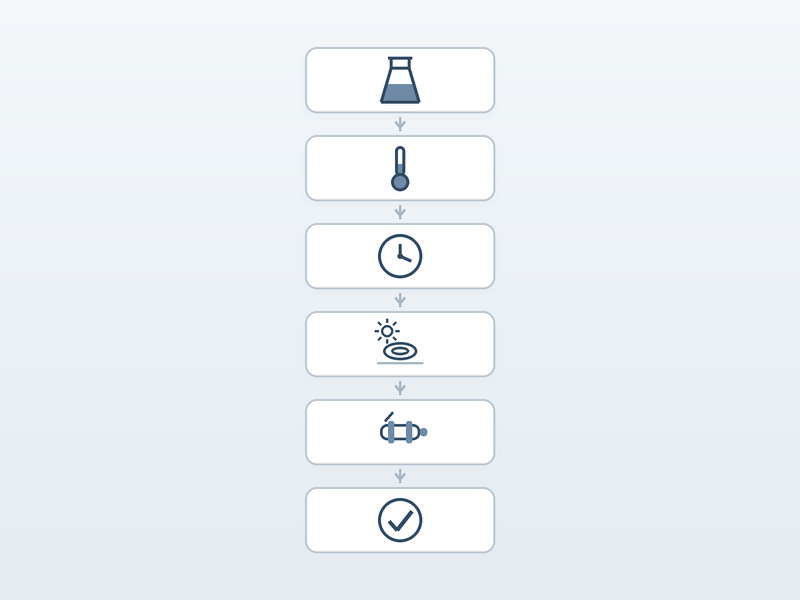
Figure 1. A database shortlist is only the first screen; the work order in section 2 stands between it and a purchase order.
2. What Order Does a Hose Material Selection Job Follow?
The hose material selection job has a fixed order, and it runs before price or delivery is discussed. The same order serves the engineer specifying a new line and the plant replacing a hose that has already failed. Skip a step and you do not remove the risk, you postpone it until the hose fails in service. Record the answer to each of the six questions below, because a supplier will ask for all of them anyway.
Table 1. The six-step work order for matching a tube compound to a medium.
| Step | Question you must answer | Why it changes the decision |
|---|---|---|
| 1 | Which medium, at what concentration? | A dilute and a concentrated solution of the same chemical are different selections. |
| 2 | What is the temperature range, including upsets? | Heat raises the rate of attack, and a cleaning cycle can exceed normal service. |
| 3 | Continuous or intermittent contact? | A splash and a permanent immersion are not the same exposure. |
| 4 | What is on the outside of the hose? | The cover sees spill, splash, abrasion and sunlight, not the medium. |
| 5 | What are the fittings and gaskets made of? | The joint often fails before the tube does. |
| 6 | How will you verify the choice? | A shortlist is not a qualification until it is tested or witnessed. |
The six-step order is deliberate. Concentration comes before temperature because the same acid at a low and a high concentration is a different chemical problem. Temperature comes before duty cycle because heat changes the rate at which any attack happens. Both come before the cover, because the tube is what touches the medium while the cover protects the tube. That sequence is also what lets a plant screen its own materials without waiting for an external answer.
Most hose material selection failures begin with a fast answer to step one. Writing the concentration down forces the discussion onto the process, where the real variables live, and it usually exposes a missing cleaning chemical before an order is placed.
Step 1: identify the medium and its concentration
Write the full chemical name and the concentration, not a trade description. “Caustic wash” and “waste acid” are not media; sodium hydroxide at a stated percentage is. If the route carries more than one chemical, list every one, because mixtures behave differently from their components.
Step 2: note the temperature range and any upset condition
Record the normal operating temperature and the worst credible excursion. A steam-in-place cycle, a hot flush or a blocked line can push a hose well past its daily duty. The compound you pick must survive the upset, not just the routine shift.
Step 3: decide continuous versus intermittent contact
A hose that holds medium permanently ages differently from one that is drained after each transfer. Continuous contact effectively acts as an immersion test, while splash and drain-down are closer to transient exposure. State which one applies, because the two cases do not share a limit.
Step 4: check the cover as well as the tube
The tube touches the medium, but the cover touches the world. Ozone, UV, abrasion, drag and chemical spill all attack the outside. A perfect tube inside a cover that cracks in a year is still a failed hose, so screen both layers separately.
Step 5: confirm the fitting and gasket material
The connection is part of the wetted path. A stainless coupling with an unsuitable gasket, or a plated fitting in a wet corrosive atmosphere, can corrode or leak long before the tube shows any change. Specify the fitting material and the gasket compound together with the tube.
Step 6: verify before you commit
A shortlist is a hypothesis. Verification means a real answer from the maker, a witnessed test, or a controlled trial, judged against the exposure you wrote down in step one. Only after that step should a purchase order follow.
3. Which Compound Family Suits Which Medium?
After the first screen you are choosing between compound families, and the families behave differently against the same medium. Choosing the chemical hose material is the second screen, and it still needs the exposure data from section 2. Each family has a published envelope and an honest limit. The comparison of NBR, EPDM and FKM in the site’s fluid compatibility chart for inner tube selection is a useful companion for the rubber families.
A published material envelope is not a promise. A published limit describes the best case the maker will stand behind, and it is always set against a stated exposure. Your duty may sit well inside that line or just outside it, and only the exposure data tells you which.
Table 2. Compound families, the media HENGHUA publishes for them, and their honest limits.
| Compound family | Media it is published for | Published limit or condition | Honest limit |
|---|---|---|---|
| EPDM | Hot water, steam, brake fluid, dilute acids | Steam up to +165 °C | Aqueous duties only |
| FKM (fluorocarbon) | High-temperature oils and aggressive chemicals | Up to +200 °C | Each medium still needs its own check |
| PTFE | Nearly all chemicals | -70 °C to +260 °C | Its limits are usually mechanical, not chemical |
| NBR | Mineral oils, diesel, hydraulic fluids | Petroleum-based service | Many polar solvents and concentrated acids sit outside its scope |
| Polyolefins: UHMWPE, XLPE, polypropylene | Acids, bases and many aqueous chemicals | Treated qualitatively here; no single published temperature | Sensitive to hydrocarbons and halogenated solvents |
EPDM: hot water, steam and dilute acids
HENGHUA publishes EPDM for hot water, steam up to +165 °C, brake fluid and dilute acids, and states plainly that it is not for oils. Its published scope is the aqueous duty, at high temperature. Mineral oils, fuels and non-polar solvents sit outside that scope, and those exclusions matter as much as the approvals.
FKM (fluorocarbon): heat and aggressive chemicals
HENGHUA publishes FKM for high-temperature oils and aggressive chemicals up to +200 °C. It is the family to consider when temperature and chemical severity rise together. It is not a universal answer, though, so treat it as a strong candidate rather than a default and give each new medium its own check.
PTFE: the widest chemical envelope
HENGHUA publishes PTFE as suitable for nearly all chemicals across -70 °C to +260 °C. That breadth is why PTFE appears on almost every shortlist for aggressive service. Its usual limits are mechanical rather than chemical: pressure, flex fatigue and how the liner is attached to the fitting matter more than the medium itself.
NBR: oils, diesel and hydraulic fluids
HENGHUA publishes NBR for mineral oils, diesel and hydraulic fluids. It is a strong fit for petroleum-based service and a poor fit for many polar solvents and concentrated acids. Re-screen the medium from the start before applying an NBR choice to a solvent duty.
Polyolefin options: UHMWPE, XLPE and polypropylene
Treat UHMWPE, XLPE and polypropylene as one family rather than three separate decisions. Polyolefins are non-polar, so they resist acids, bases and many aqueous chemicals well, which makes them a common choice for aggressive inorganic service. That same non-polar character makes them sensitive to hydrocarbons and halogenated solvents, which is where they fail. The wider material set, and how it shapes hose material selection, is set out in the site’s flexible hose materials guide.
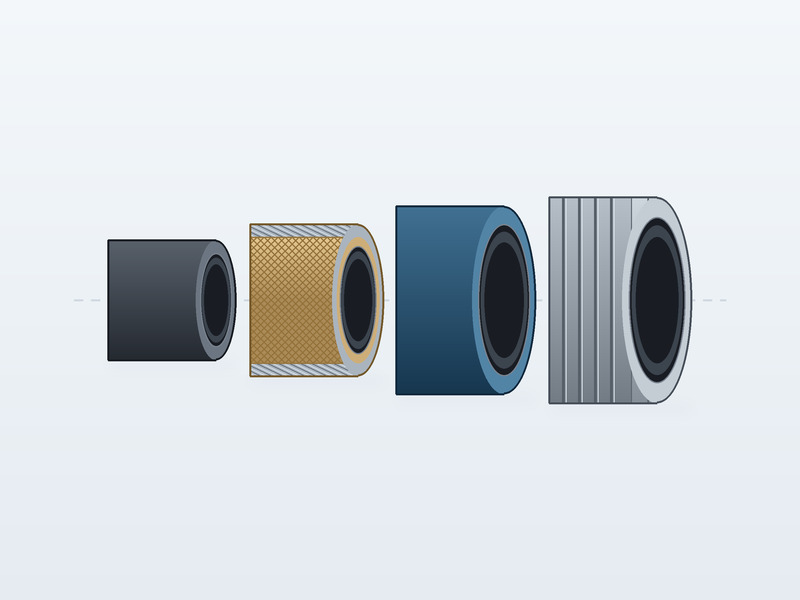
Figure 2. Four components in one assembly; the cover, reinforcement and fitting each fail for their own reasons.
4. What a Chemical Compatibility Database Cannot Answer
A chemical compatibility database cannot answer the questions that most often decide a failure. In practice, media compatibility turns on four inputs a summary verdict cannot carry: the strength of the solution, the process temperature, any trace contamination, and the cleaning chemistry. Four blind spots run through almost every rating on the market:
- Concentration. A screen is run at one strength, so a weaker or stronger solution can behave differently.
- Temperature. The same medium at ambient and at process temperature can move a compound from usable to unsuitable.
- Contamination. Trace acid, trace solvent and entrained solids sit outside the published rating.
- Cleaning chemicals. The CIP or flush chemistry is a second medium that sits outside the original screen.
The same caution applies to a database written for a different product family or a different wetted path: the verdict describes the surface it was tested on, while a hose tube adds its own reinforcement, cover and fitting. An empty cell usually means the pair was never tested, so read it as missing data rather than as a failure. Where a table inherits one reference condition for every row, a verdict measured at that condition is untested above it.
There is a second gap worth naming. Immersion tests such as ASTM D471 for rubber and ASTM D543 for plastics report volume swell, hardness change and tensile or elongation change. A database rating does not report any of those numbers. The rating is a summary verdict, while the underlying test holds the data you would actually want when the margin is thin.
Ask a maker for the underlying test data when the margin is thin. The numbers those immersion standards produce say far more than a single word such as resistant, and they let you judge how much life is left rather than whether the pair is acceptable at all. A supplier who can quote them is answering your question rather than a generic one.
5. What Six Inputs Does a Supplier Need for a Real Answer?
A supplier cannot replace the database with a real answer unless you give six inputs. Without them, the reply is a generalization, and a generalization is no safer than a chart. Provide all six in writing, and ask for the answer to quote the exposure they are assuming.
Table 3. The six inputs a supplier needs before a compatibility answer is real.
| Input | What to give | Why the maker cannot guess it |
|---|---|---|
| 1. Medium | Full chemical name and concentration | A trade name does not identify the compound being handled |
| 2. Temperature | Normal range plus the worst upset | The limit moves with temperature |
| 3. Exposure | Continuous or intermittent, and duration | Time under contact changes the outcome |
| 4. Pressure | Working pressure and any vacuum | Pressure decides construction, not just the tube |
| 5. Environment | Outdoor or indoor, spill, abrasion, UV | The cover is selected from the outside conditions |
| 6. Connection | Fitting and gasket material, and standard | The wetted path continues past the tube |
When you send those six, add the verification method you expect. A maker can confirm a compound against a stated medium and condition, and can state the pressure and temperature envelope. Ask for both in the reply, so the answer is tied to your numbers rather than to a generic table. That is how a chemical hose material question becomes a specific answer instead of a general reassurance. If the shortlist still feels uncertain, review the wider flexible hose material options before you request a sample.
6. How Do You Screen Without a Chemical Compatibility Database?
A plant can screen a candidate without a chemical compatibility database at all, using the worksheet behind Figure 3. The method is to convert each unknown into a known before spending any money. Run your medium through the triage in Table 4 and see whether it is ready for a supplier inquiry or needs more data first.
Table 4. Screening triage: decide whether a candidate is ready for a supplier inquiry.
| Check | Ready for inquiry | Stop and gather data |
|---|---|---|
| Concentration | Stated as a percentage on the route sheet | Known only as “wash” or “weak” |
| Temperature | Normal and upset values recorded | Only an ambient guess |
| الاتصال | Continuous or intermittent, and stated | Unknown how long the hose sits wet |
| Cleaning | Flush or CIP chemistry listed | Cleaning chemicals not considered |
| Connection | Fitting and gasket material named | Fitting material assumed |
The screening step is cheap and repeatable. Group your media by chemical family, write the published limit beside each one, and mark the exposure. Rank the candidates by risk, then send only the top two to a supplier. Keep the worksheet with the hose record, because the next person to review the line will need the same reasoning.
Keep two habits in the worksheet. First, record the exposure beside every decision, because a verdict without its condition cannot be reviewed. Second, re-check the screen when any input moves, since a new concentration or a hotter cycle changes the answer. A logged screen is the difference between a decision and a guess.
Once a candidate clears the screen, match it against the product data on the chemical hose range, where the working pressures are published. The working pressures and the design safety factor are published there, so the screen can be matched against a rated assembly rather than against a compound alone.

Figure 3. A paper screening sheet records the five triage checks before any inquiry.
7. Where a Chemical Compatibility Chart Still Fits
A chemical compatibility chart and a database are both first screens, and both stop at the same boundary. A chart is often the faster of the two when many media must be compared at once, while a database gives a single-medium lookup with more supporting text. Neither one knows your process. Use whichever suits the question to build the shortlist, then close the gap with the work order in section 2.
That division of labour is the whole point. The tool that starts the search is never the tool that ends it. A chemical compatibility chart is a summary, and a summary is only as good as the conditions behind it, so treat any single media compatibility verdict as a prompt rather than a conclusion. When the medium is a plastic-solvent mix, the plastic behavior of a liner matters as much as its rubber chemistry, and the site’s comparison of PVC, TPR and PU hose explains how those flexible compounds differ in service.
If the candidate still looks marginal after screening, take the question to the technical team. Send the six inputs from section 5 and ask for the compound, the pressure and the temperature in one reply. You can contact the technical team with the route sheet and the exposure, and match the answer to the published product data before you order.
FAQ
What is a chemical compatibility database used for?
It is used to build a shortlist. You enter a medium and it flags which tube compounds are generally compatible, so you can stop considering the clearly unsuitable ones. It is a screening aid, not a decision. Treat its output as three candidates to investigate, not as a finished specification.
Can a chemical compatibility database approve a hose for me?
No. A database works from one published condition, so the four inputs that decide most failures sit outside it: how strong the solution is, how hot the process runs, what contamination rides along, and what the cleaning step adds. It can rule candidates out quickly, but it cannot rule one in. Qualification comes instead from the maker’s answer or from a trial run against your own exposure.
Why is concentration missing from most compatibility ratings?
A rating is normally attached to one strength of solution. The same chemical at two different strengths can behave differently against the same compound, so a single printed verdict cannot cover both. Once your figure differs from the one behind the rating, that verdict stops describing your duty.
Does the cover material matter as much as the tube?
The two layers answer to different environments: the tube is selected from the medium, while the cover is selected from the weather, the abrasion and the spill it meets outside. A cover that fails first ends the hose life, so treat the outside conditions as a separate selection input with an answer of its own.
How do I choose between EPDM and FKM for a mixed duty?
Work from the duty first rather than from a family name. An aqueous hot duty such as water, steam, brake fluid or dilute acid points at EPDM; an oily hot duty such as fuel or hydraulic fluid points at FKM. Where the duty is both hot and oily, or where a cleaning chemical joins the route, keep both on the list and let the six inputs in section 5 break the tie.
What are the six inputs a supplier needs from me?
Give the medium with its concentration, the temperature range including any upset, whether contact is continuous or intermittent, the working pressure and any vacuum, the outside environment, and the fitting and gasket material. With all six in writing, a maker can answer against your condition rather than a generic table.
How do I screen chemicals without any database at all?
Work from the route sheet rather than from memory. Sort the media into chemical families, put the published limit next to each one, and record the exposure the limit assumes. Then apply the five triage checks in section 6: when all five carry an answer, the candidate can go to a supplier; when one is blank, collect it first.
What does a chemical compatibility chart tell me that a database does not?
A chart shows many media against many compounds at once, so it is fast when you need a visual overview. A database answers one medium at a time and adds supporting text around that answer. Neither knows your process. Both are starting points, and both end where your own process data begins: they cannot see your concentration, temperature, contamination or cleaning chemicals.
Why do fittings and gaskets fail before the hose does?
The connection is specified last, so it often gets the least attention while carrying the same medium as the tube. Two failure paths are common: a coupling whose gasket compound does not suit the chemistry, and a fitting surface that corrodes in a wet atmosphere. Treat the fitting and gasket as part of the wetted path and select them in step five.
How often should a compatibility decision be revisited?
Revisit it whenever the process changes. A new concentration, a hotter cycle, an added cleaning chemical or a different medium all invalidate the earlier screen. A shortlist is only valid for the exposure it was built against, so log the exposure with the decision and re-check when any input moves.
We are replacing a failed chemical hose: what should we record before ordering?
Start with the failure rather than with a replacement order. Photograph the hose and note where it failed, because a cover crack, a swollen tube and a corroded fitting point to three different causes, and each cause sends you back to a different input. Add that evidence to your inquiry, so the replacement is specified against the condition that actually failed.
About HENGHUA
HENGHUA manufactures industrial hose for distributors, chemical plant operators, EPC contractors, tank-terminal operators and OEM programs. The chemical range includes chemical discharge hose rated at 150 psi and chemical suction and discharge hose at 150 psi and 250 psi, alongside steam, water, oil, material-handling and multipurpose lines. Program sizes run from 3 mm to 102 mm bore (1/8 in to 4 in) with a site-wide 4:1 design safety factor.
The plant covers 35,000 m² across 95 production lines, with 320+ employees, 45 QC inspectors and 25 R&D engineers holding 30+ patents. Capacity is 20 million meters a year, 90 km from Shanghai port, with exports to 70+ countries. Quality systems are ISO 9001, IATF 16949 and ISO 14001, and the in-house test lab runs burst testing to ISO 1402 and impulse testing to ISO 6803. OEM, custom branding and cut-to-length programs are supported.






 English
  Spanish
  Portuguese
  French
  German
  Arabic
  Russian
  Indonesian
  Japanese
  Korean