goodheart786@gmail.com

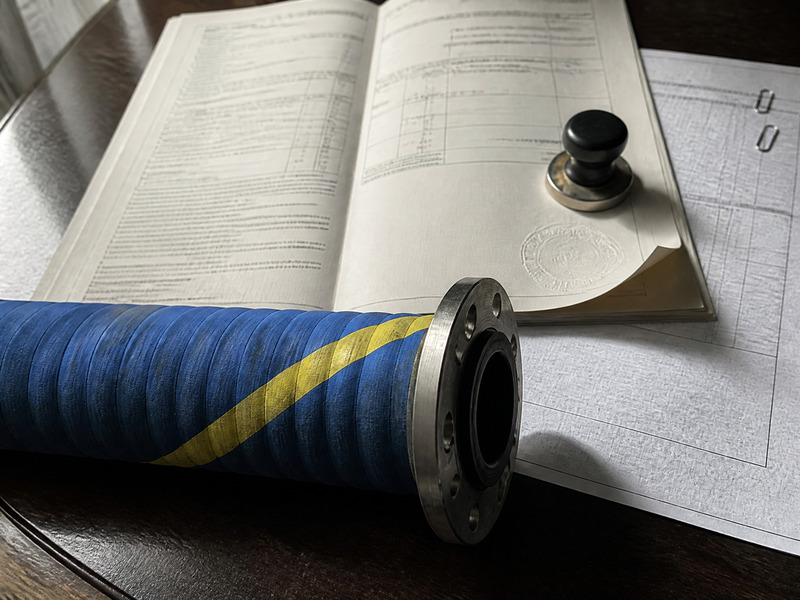
Old British standard document beside a modern composite hose assembly, opened to the scope page

BS 5842 vs EN 13765: Which Standard Still Applies?

BS 5842 is the 1980 British Standard for thermoplastic hose assemblies used at docks, on road tankers and on ships, and it has been withdrawn. EN 13765 is the European specification that now governs the same field, with the 2018 edition classifying hose into four types by pressure and temperature. A buyer holding a BS

BS 5842 vs EN 13765: Which Standard Still Applies? اقرأ المزيد »
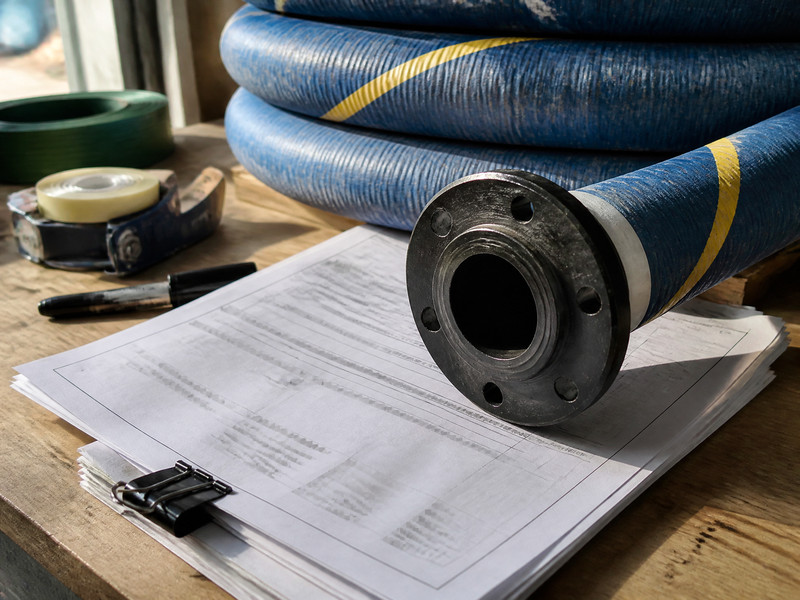
Partially redacted type approval certificate on a desk, with the issuer block and scope page visible

How to Read an EN 13765 Type Approval Certificate

An EN 13765 type approval certificate is a third-party document showing that a hose or assembly design has passed the type tests in the standard. It should name the edition, the types covered, the bore range and the test results. The standard itself defines the tests in Clause 9 and Annex K; it does not

How to Read an EN 13765 Type Approval Certificate اقرأ المزيد »

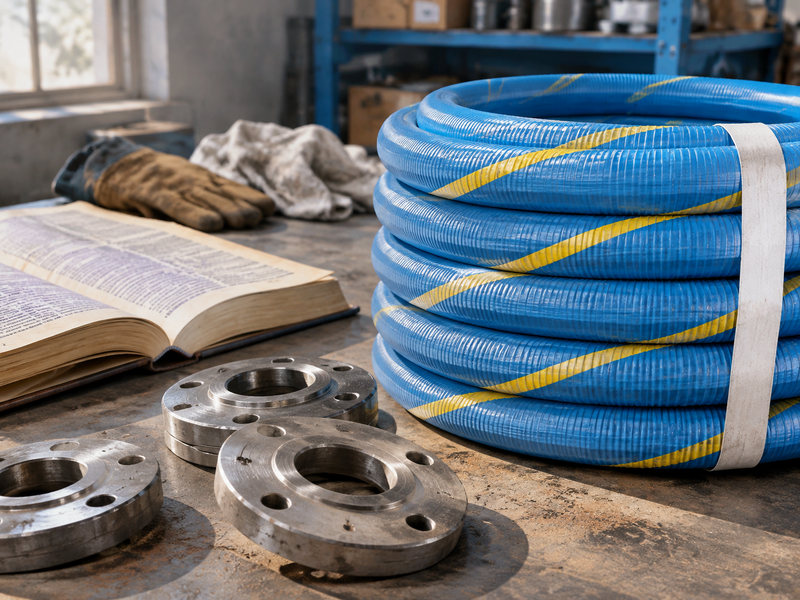
Coiled composite hose with a loose flange resting beside an open dictionary

Composite Hose Glossary: 40+ Terms for Engineers and Buyers

This composite hose glossary defines the terms that appear on datasheets, certificates and purchase orders, from helical shank and leak-before-burst to derating and type approval. The three terms that cause the most specification errors are the helical shank (the wire that supports the bore), proof pressure and floating flange. Each one is defined below with

Composite Hose Glossary: 40+ Terms for Engineers and Buyers اقرأ المزيد »

Shipping container documents with hose coils in the background, a commercial invoice partly covered by a hose end

Composite Hose HS Code and Customs Classification

The composite hose HS code sits in heading 3917, the tariff line for plastic tubes, pipes and hoses. That is because the wall of a composite hose is a thermoplastic film rather than a vulcanised rubber tube. Importers choose between 3917.33 with fittings, 3917.39 without fittings, and a small number of alternative headings if the

Composite Hose HS Code and Customs Classification اقرأ المزيد »

Buyer and factory engineer inspecting a hose assembly on a bench, one holding a torch and the other a batch record

How to Verify a Composite Hose Supplier: Factory or Trader?

A composite hose supplier is a factory when it controls the winding, bonding, crimping and pressure testing of the assembly on its own site. It is a trader when it buys finished hose and resells it. The difference shows up in change control, test records and who answers when a batch fails. Verifying which one

How to Verify a Composite Hose Supplier: Factory or Trader? اقرأ المزيد »

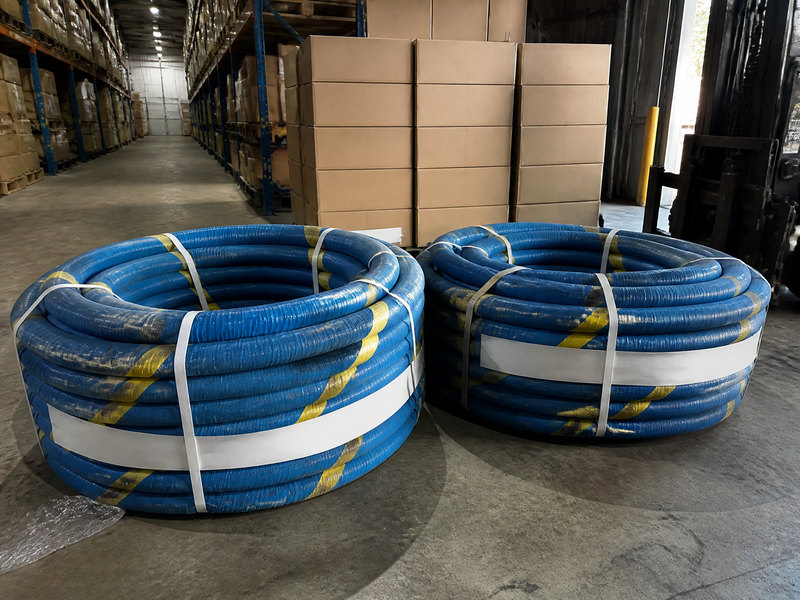
Coiled private-label hoses with plain white bands and neutral cartons on warehouse racks

OEM and Private Label Composite Hose: MOQ, Marking and QC

A composite hose OEM programme lets a distributor or brand owner sell hose built to its own specification, with its own label, packaging and documents. The factory keeps the winding, bonding and test records. The four decisions that shape the programme are the build specification, the private label scope, the marking rules and the QC

OEM and Private Label Composite Hose: MOQ, Marking and QC اقرأ المزيد »

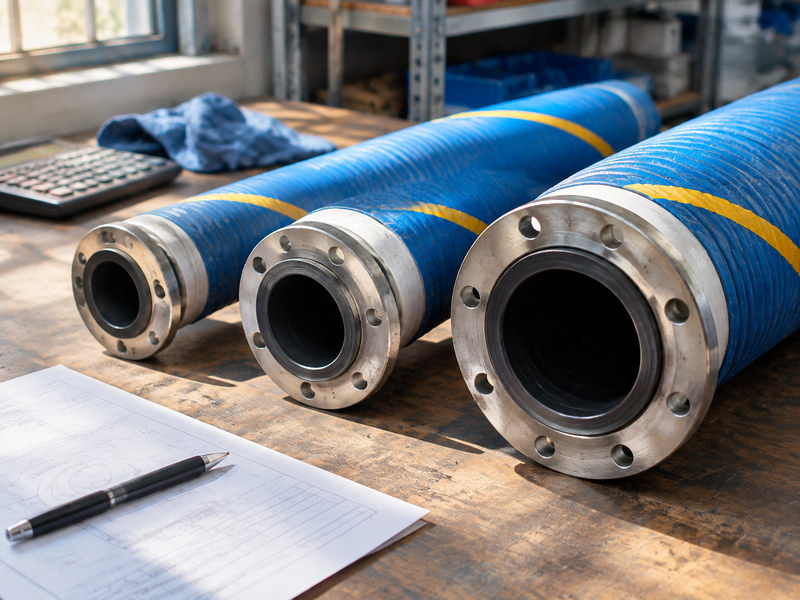
Cost sheet, calculator and hose sample on a desk, three hose ends of different bores laid beside the sheet

Composite Hose Price per Meter: What Drives the Number

The composite hose price is set by five inputs: bore, lining, helix material, end fittings and the test and document regime. Length and order quantity scale the result, and freight moves it again. No two quotes are comparable until those five inputs match, which is why a per-metre figure on its own says very little.

Composite Hose Price per Meter: What Drives the Number اقرأ المزيد »

Composite hose and rubber hose side by side on a bench, both of the same nominal bore with flanges fitted

Composite Hose vs Rubber Hose: Weight, Flexibility and Cost

Composite hose vs rubber hose comes down to construction. A composite hose is a stack of thermoplastic films, fabric and wire that is not vulcanised, so it is lighter and more flexible at the same bore. A rubber hose is a vulcanised tube with textile or wire reinforcement, which gives it toughness and a lower

Composite Hose vs Rubber Hose: Weight, Flexibility and Cost اقرأ المزيد »

Close-up of a composite hose cover with a small wet leak point at a seam, a torch held close during a walk-round

Why Composite Hose Fails Safe: Leak-Before-Burst

Composite hose fail safe behaviour comes from its wall. A breach in the inner film lets product seep through the fabric plies and out through the cover as a visible leak. The load-bearing layers and the wire helix still hold the line together. The hose loses containment slowly instead of releasing the whole line at

Why Composite Hose Fails Safe: Leak-Before-Burst اقرأ المزيد »

Large-bore composite hose with a flanged end being offered up to a terminal loading arm by two fitters

Composite Hose Sizing and Pressure Drop for Bulk Transfer

Composite hose sizing is a two-step decision. The bore comes from the flow rate and the time the transfer is allowed to take, then the pressure drop through that bore is checked against the head the pump can actually deliver. Get the order wrong and the hose either throttles the line or costs more than

Composite Hose Sizing and Pressure Drop for Bulk Transfer اقرأ المزيد »