
An EN 13765 type approval certificate is a third-party document showing that a hose or assembly design has passed the type tests in the standard. It should name the edition, the types covered, the bore range and the test results. The standard itself defines the tests in Clause 9 and Annex K; it does not issue certificates. Reading one properly means checking who issued it, what it covers, and which edition it was written against.
This guide walks through the document field by field and shows the coverage gaps that buyers miss. It explains the difference between a hose certificate and an assembly certificate, and sets out what a certificate does not prove about chemical compatibility. It closes with the records an auditor will ask for and the questions to put to a supplier who sends a certificate as a PDF attachment.
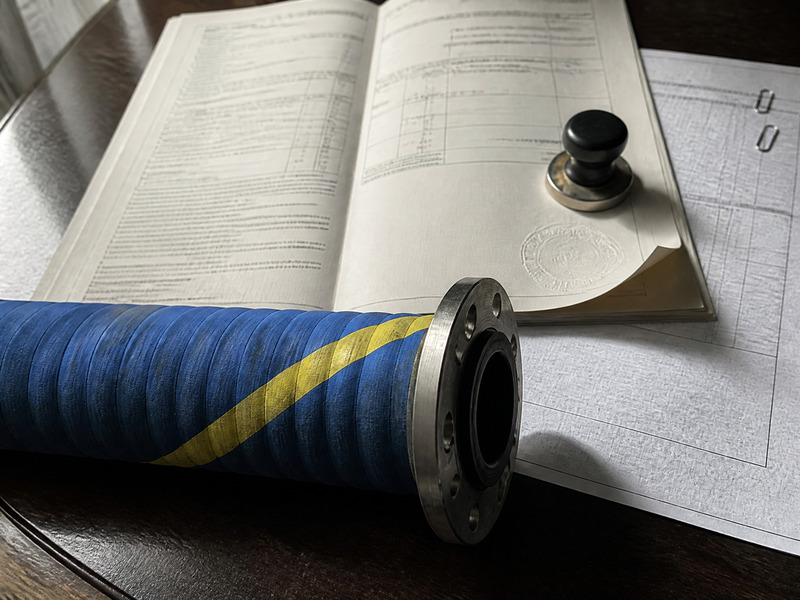
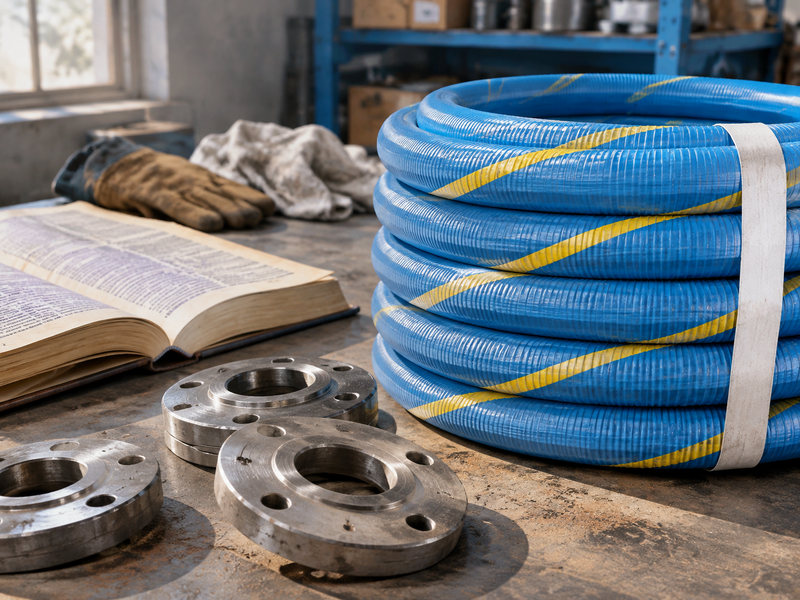
Figure 1. The scope page is open on the right, the issuer block and the stamp on the left.
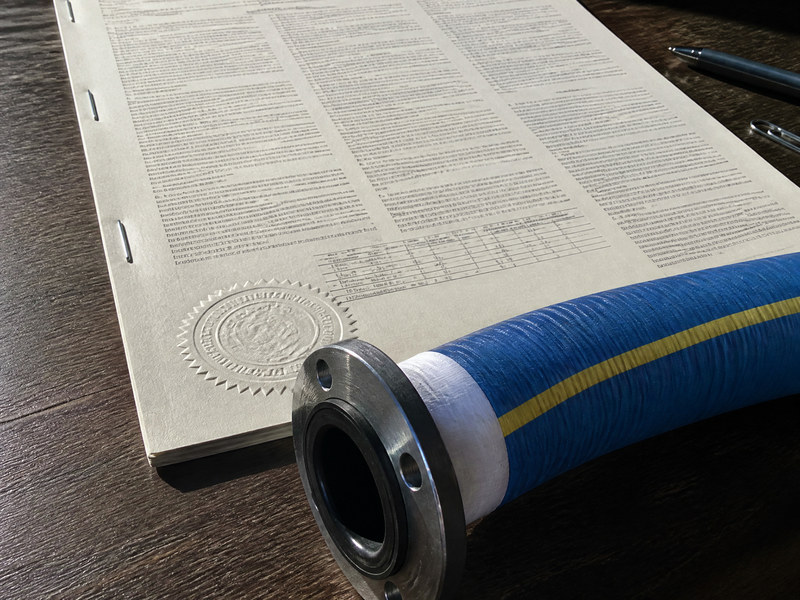
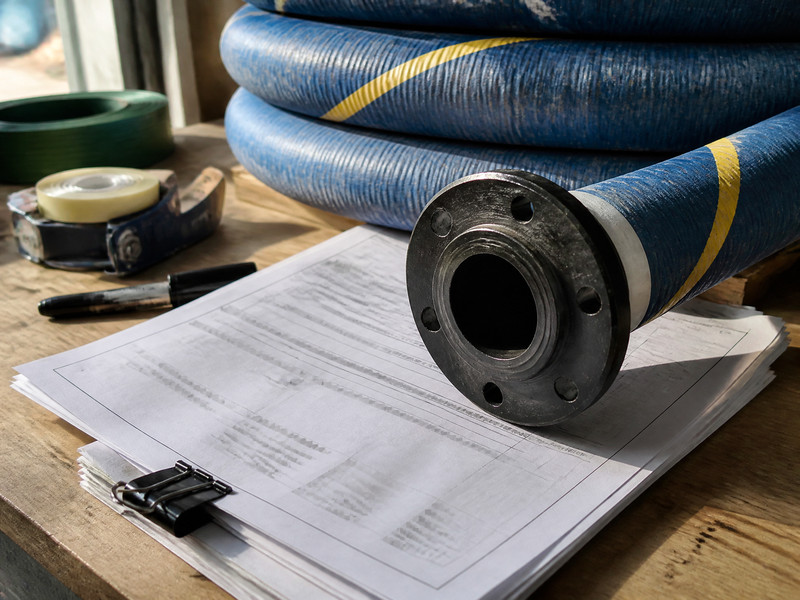
Figure 2. A certificate is a stapled page with a results table in the middle and an embossed seal at the foot. The seal names the issuer and the table carries the type and bore values, and what each part must contain is in Table 2 here.
What Is an EN 13765 Type Approval Certificate?
An EN 13765 type approval certificate is a third-party attestation that a design has been tested against the standard and meets the requirements for the types claimed. The certificate is not part of the standard. EN 13765 sets out the type tests, the routine tests and the batch tests, and a body independent of the manufacturer witnesses or repeats those tests before issuing the document.
That separation matters when a buyer asks “is this hose certified?”. The correct answer describes two things: the standard the design was tested to, and the body that issued the attestation. A manufacturer’s own declaration of conformity is a different document from a third-party certificate, and the two are not interchangeable in a tender.
The practical consequence is that an EN 13765 type approval has a scope. It applies to the types, bores, constructions and fittings described in the certificate, and nothing else. A buyer who reads “EN 13765 approved” without reading the scope has learned very little.
Who Issued It, and Are They Accredited?
Start with the letterhead. A certificate issued by a nationally accredited certification body, or by a classification society acting in that role, carries more weight than one issued by a testing laboratory working alone. The distinction is between product certification and testing: certification bodies are assessed against the ISO/IEC 17065 family, while testing laboratories are assessed against ISO/IEC 17025.
Both can appear on a valid document. A laboratory report proves that specific samples were tested; a certificate adds a surveillance and scope framework around that testing. If the file contains only a laboratory report, treat it as test evidence and ask whether a certificate exists.
Accreditation is checkable. The certificate should carry an accreditation mark or a registration number, and that number should resolve to a scope that includes hose or hose assemblies. A scope that covers “rubber and plastics products” generally is not the same as a scope that names the standard.
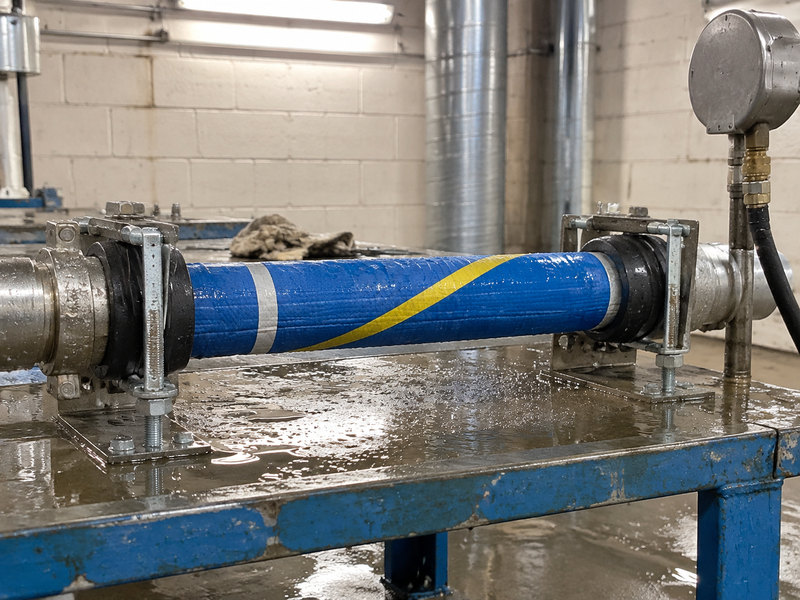
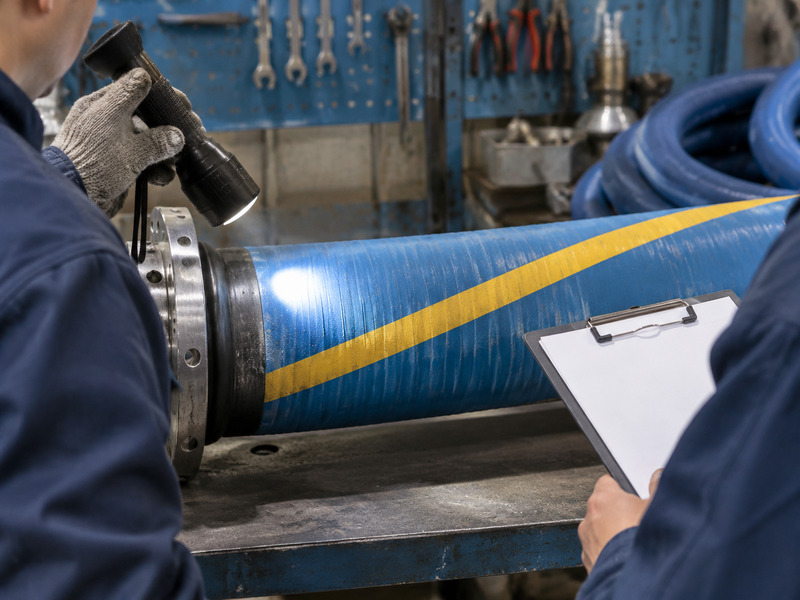
Figure 3. The hose is held between steel end caps while the gauge on the stand records the pressure, which is how proof and burst values are produced. The certificate repeats those values for a stated bore range, and the acceptance limits are in Table 1.
The Five Fields to Check First
| Field | What it should say | What a weak document says |
|---|---|---|
| Standard and edition | EN 13765:2018 | “EN 13765” with no year, or the 2010 edition |
| Product | Hose, or hose assembly, stated explicitly | “Composite hose” with no product class |
| Types covered | Type 1, 2, 3 or 4, listed | “Composite hose, all types” |
| Bore range | A range in millimetres, with the bores tested | The largest bore only |
| Pressure and temperature | Values tied to the type table | A single headline pressure |
Table 1. The five fields that decide whether a certificate is useful. Weak wording in the right-hand column is common and is not necessarily dishonest, but it needs a follow-up question.
A composite hose type approval is only as good as these five fields. Read the edition first: a certificate written against the 2010 edition describes a design tested to a superseded text, and the 2018 edition changed the classification. A supplier may still hold a valid certificate for the older edition; that is not the same as compliance with the current standard.
Read the product class second. Hose and hose assemblies are separate categories in the standard, with separate marking clauses and separate tests for fitting security. An assembly certificate that covers the fittings is worth more to a terminal than a hose certificate, because the joint is where most service failures start.
Which Types and Bores Does It Actually Cover?
Coverage is where certificates and purchase orders most often diverge. A certificate may cover Types 2 and 3 across 25 mm to 100 mm while the order calls for Type 3 at 150 mm. The design may well be capable of it, but the certificate does not say so, and an auditor will ask why the document does not match the delivery.
Ask for a coverage matrix rather than a range. The matrix should list each bore against each type, with the test result that supports it. Where a bore is not listed, treat it as untested for certification purposes, even if the supplier has production experience with it.
Bore coverage also interacts with pressure. A type’s maximum working pressure applies across the size range in the standard, but the proof and burst values that demonstrate it have to be measured per bore. A certificate that reports results at one bore and claims a range is incomplete.
What Test Values Should Appear?
The values on the certificate should line up with the type table in the standard. For Type 3 and Type 4, that means a 14 bar maximum working pressure, a 21 bar proof pressure and a 56 bar minimum burst. For Type 2, 10 bar working, 15 bar proof and 40 bar minimum burst. Type 1 sits at 4 bar working, 6 bar proof and 16 bar minimum burst.
| النوع | Max working pressure | Proof pressure | Min burst pressure | Vacuum rating | Working temperature |
|---|---|---|---|---|---|
| Type 1 | 4 bar | 6 bar | 16 بار | 0.5 bar | −20 °C to +60 °C |
| Type 2 | 10 bar | 15 bar | 40 bar | 0.9 bar | −30 °C to +80 °C |
| Type 3 | 14 bar | 21 bar | 56 bar | 0.9 bar | −30 °C to +80 °C |
| Type 4 | 14 bar | 21 bar | 56 bar | 0.9 bar | −30 °C to +150 °C |
Table 2. The values a certificate should support, type by type, taken from the classification table of EN 13765. Treat a certificate without a temperature column as covering pressure only.
Compare the reported results with the table, not with the marketing sheet. A certificate reporting a burst of 62 bar for a Type 3 assembly is consistent with the requirement, because the table gives a minimum. A certificate reporting 54 bar for the same type is a failed test, however the summary describes it.
Check also which test each number came from. The standard separates type tests, routine tests and batch tests, and a hydrostatic proof at the factory is a routine test, not a type test. Both belong in a document pack, but only the type test supports the certificate.
Does the Certificate Cover the Fittings?
Sometimes not, and that gap matters at a terminal. The standard has a fitting security test and marking requirements for assemblies, so a certificate that covers hose only leaves the crimped or flanged joint outside its scope. On a dock line, the flange face and the swage are where leaks appear first.
Ask for the assembly clause explicitly, because an EN 13765 type approval that stops at the hose leaves the joint outside its scope. If the certificate covers assemblies, check whether it names the fitting types and the attachment method. A certificate that covers swaged fittings does not automatically cover a bolted flange arrangement, because the joint design is different.
Where the certificate covers hose only, the buyer is relying on the manufacturer’s own assembly controls: torque, insertion depth, proof test after assembly. Those controls can be perfectly sound, but they are not third-party attested, and the paperwork should say so.
What a Certificate Does Not Prove
A type approval certificate does not prove chemical compatibility, and a full approval can sit behind a hose that is wrong for the medium. EN 13765 treats resistance to the conveyed product as an informative annex, because compatibility depends on concentration, temperature and exposure time. A hose with a full certificate can still fail in a week against the wrong medium.
It does not prove fitness for a particular berth, tank or pump set. Working pressure, surge and static head are system questions. A certified assembly installed against a relief valve set above its rating is a misuse, not a certification failure.
It does not prove marking compliance on the delivered item, and it does not extend shelf life. Marking has its own clauses, and the delivered hose should carry the type, bore, working pressure and date of manufacture. Our article on hose marking and static requirements covers the marking side in more detail, and the chemical resistance and derating guide shows how compatibility is checked at temperature.
What About Expiry and the 2018 Revision?
Certificates carry issue dates and often a validity period or a surveillance cycle. Check both. A certificate that expired two years ago tells you the design was approved then, not that production today matches it.
The 2018 revision is the other moving part. Where a design was approved to the 2010 edition, the supplier should be able to say whether it has been re-tested to the current text and when. If the answer is “the design has not changed”, ask for the clause comparison that supports the claim.
For projects that mix standards, our comparison of BS 5842 and EN 13765 explains why an old approval cannot be read as a type approval under the current scheme.
Worked Example: Reading a Certificate Line by Line
A tank-terminal file we reviewed in 2025 opened with three lines: certificate of type examination, EN 13765:2018, and thermoplastic multi-layer hose assemblies. The header carried no bore range and no fitting scope, so four questions followed: which types, which bores, which fittings, and which body signed it.
The product line was the first surprise. It said hose assemblies, which is broader than the order needed, so the assembly clause had to be located before the document meant anything for a terminal. Assembly wording is a promise about the joint, and a promise is only useful when the fitting method is named.
The scope page then listed Types 2 and 3 across 25 mm to 100 mm. The order in question was Type 3 at 150 mm, which placed the delivery outside the tested range. The design may well carry the duty, but the file did not demonstrate it.
Two further lines mattered. The issue date was four years old, and the surveillance statement said annual. An EN 13765 certificate without a surveillance line is a snapshot of one week, not a statement about production today.
What the file did not contain was any fitting security result. That omission turned a strong-looking document into a hose-only approval, which is exactly the gap that shows up at a flange face rather than in an office.
This is why we treat an EN 13765 type approval as something to read rather than a logo to file. A composite hose type approval that lists the bores, fittings and dates used on the order is worth the paper it is printed on. A composite hose type approval that lists a design family is a starting point for questions, and the same applies to an EN 13765 certificate that never reaches the fittings.
How Should You File It for an Audit?
File the certificate with the purchase order, the delivery marking record and the test report for the serial numbers delivered. Three documents, one file, per order. An inspector who can trace a hose on the rack to a certificate and a test result has what they need.
Keep the scope page visible. Filing a certificate without its scope page is the most common documentation gap we see. The scope is usually the second page, and it is the page that answers the coverage question.
Where the delivery includes several bores, file the coverage matrix alongside the certificate and mark which rows the order used. That single sheet turns a generic approval into an order-specific record.
Keep the EN 13765 certificate file in one place and date every revision. Terminals that pass audits without friction tend to keep a single folder per hose family, holding the certificate, the scope page, the coverage matrix and the test reports for delivered serial numbers. When a standard is revised, the folder gains a new certificate rather than losing the old one, so the history stays visible.
Frequently Asked Questions
Does EN 13765 issue type approval certificates?
No. The standard defines the tests and the marking requirements; certificates are issued by independent bodies that witness or repeat those tests. An EN 13765 type approval is therefore a third-party document about a design, not a clause of the standard.
What is the difference between a certificate and a test report?
A test report records results for specific samples. A certificate adds a scope, an issuer, a validity period and usually surveillance. A report alone is useful evidence but does not carry the same standing in a tender.
Should the certificate name the 2018 edition?
Yes for new work. An EN 13765:2018 certificate is the only one that speaks to the current classification. A certificate to the 2010 edition describes a design tested to a superseded text, and the classification changed in 2018.
Does the certificate cover every bore?
Only the bores listed in its scope. Ask for a coverage matrix that shows each bore against each type, with the result that supports it.
Is an assembly certificate better than a hose certificate?
For terminal work, usually yes. An assembly certificate covers the joint that a hose certificate leaves outside its scope, and the joint is where leaks most often begin.
Can a certified hose still fail?
Yes. Certification addresses pressure, temperature and construction, not chemical compatibility with your product at your temperature. Compatibility has to be checked separately, using a resistance guide rather than a certificate.
Who can issue an EN 13765 type approval?
Any independent body competent to test or witness the type tests, usually an accredited certification body or a classification society. A certificate is only as strong as the scope behind the issuer.
How often should the certificate be renewed?
Follow the validity or surveillance cycle printed on the document, and re-check it whenever the standard is revised or the construction changes.
About HENGHUA
HENGHUA manufactures composite hose and hose assemblies to the bore, pressure class and temperature range you specify, with XLPE, polypropylene, PTFE and UHMWPE linings, stainless or coated carbon steel helixes, and crimped or flanged ends. We supply the test records that sit behind an order and state plainly what is certified and what is not. A certificate with an unclear scope causes more trouble at a terminal than no certificate at all. The range is listed in our full composite hose range, and the type selection logic is set out in the EN 13765 type guide. If a project requires third-party type approval, send the scope your auditor expects and we will confirm what documentation the order can carry.
 English
 Spanish
 Portuguese
 French
 German
 Arabic
 Russian
 Indonesian
 Japanese
 Korean