goodheart786@gmail.com

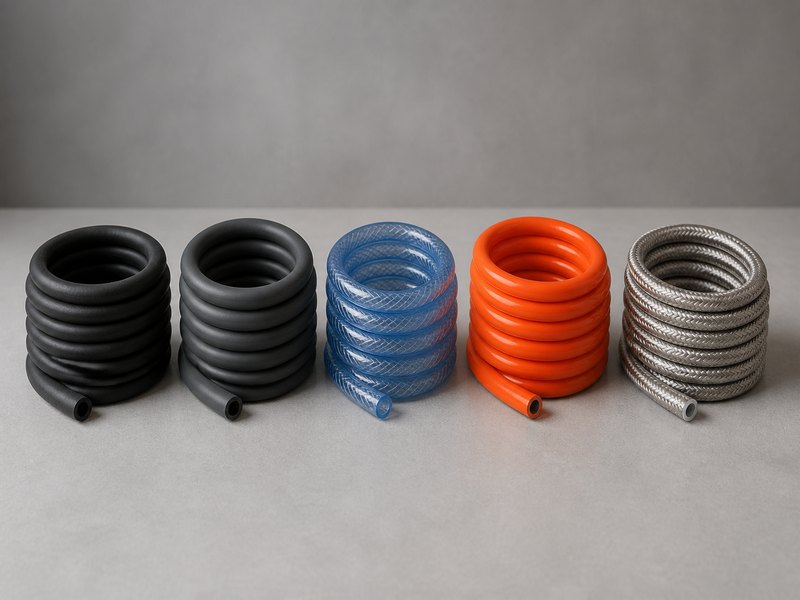
Coils of five flexible hose materials on a workshop bench: black rubber water hose, black EPDM coolant hose, clear blue PVC hose, orange polyurethane air hose and a stainless steel braided PTFE hose

Types of Flexible Hose Materials Explained (Rubber, PVC, PU, EPDM, PTFE)

The main types of flexible hose materials are rubber (natural rubber, SBR and EPDM), thermoplastics (PVC and polyurethane) and fluoropolymers (PTFE). Rubber, EPDM and the fibre-reinforced water hoses are vulcanised elastomers governed by the rubber hose standards. PVC, polyurethane and PTFE are thermoplastics governed by separate plastics hose standards. That one split explains most of

Types of Flexible Hose Materials Explained (Rubber, PVC, PU, EPDM, PTFE) Read More »
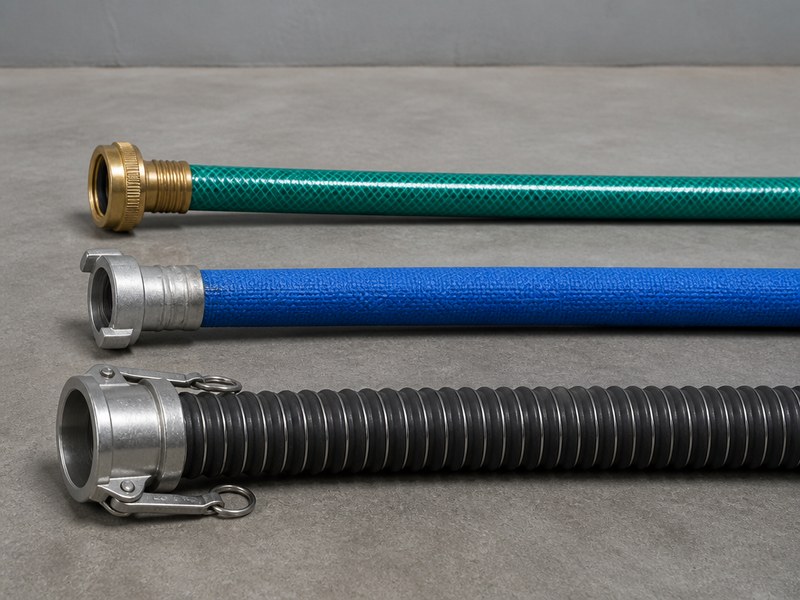
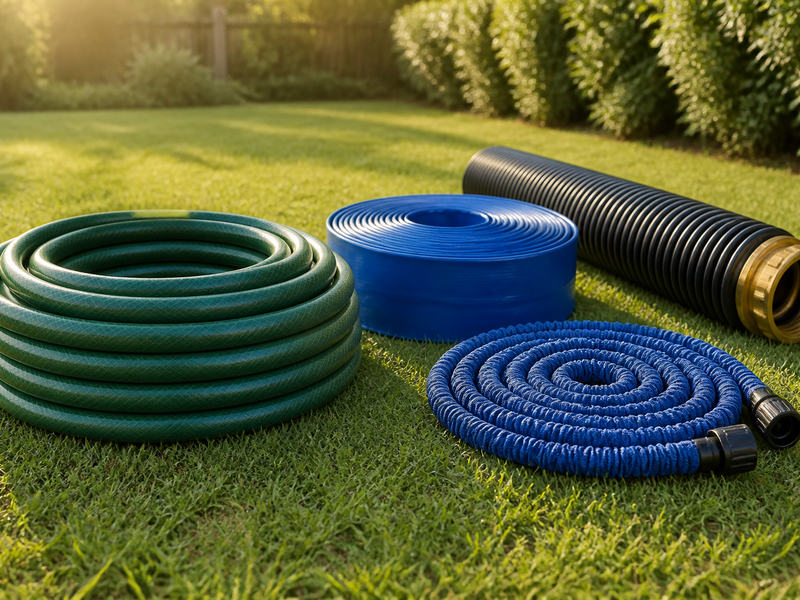
Three water hoses side by side on a workshop floor, a green rubber garden hose with brass garden hose thread couplings, a blue textile-reinforced delivery hose, and a black helical wire suction hose with a camlock fitting

Water Hose Types, Sizes and Materials: The Complete Guide

Water hose types are a combination of three specifications that are always chosen together: duty, size and material. By duty there are nine families — delivery, suction and discharge, washdown, potable, hot water, irrigation, lay-flat dewatering, fire service and garden. By pressure, ISO 1403 and ISO 6224 classify general-purpose water hose as Type 1 at

Water Hose Types, Sizes and Materials: The Complete Guide Read More »

different types of water hoses including a rubber garden hose, a PVC layflat hose and a wire-helix suction hose

What Are the Types of Water Hoses? Materials, Pressure Ratings and Best Uses

Pressure ratings and temperature bands below were re-checked against EN ISO 1403, ISO 7751, NFPA 1961/1962, NSF/ANSI 61 and FDA 21 CFR 177.2600. The short answer: the main types of water hoses fall into four material families (rubber, PVC, polyurethane, and TPE or latex hybrids), and each family is produced in several pressure classes and

What Are the Types of Water Hoses? Materials, Pressure Ratings and Best Uses Read More »

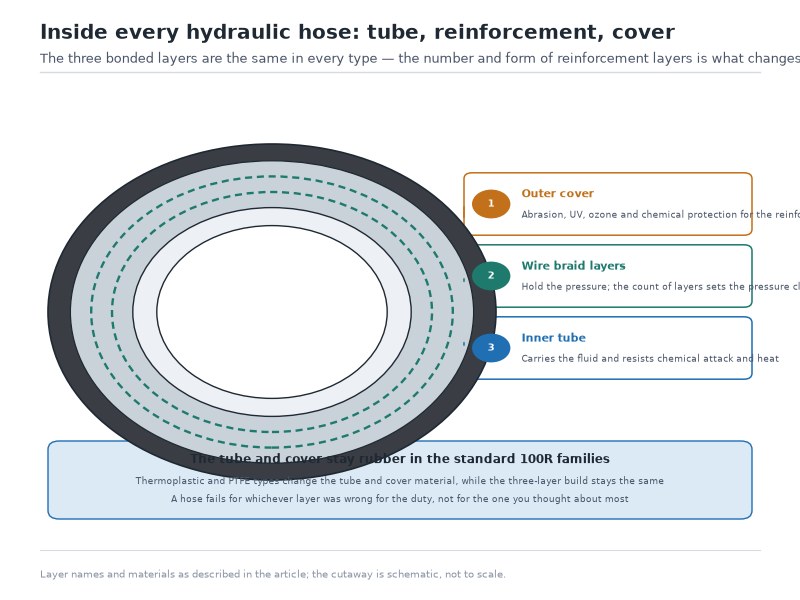
Cross-section of a hydraulic hose showing the inner tube, wire braid reinforcement layers, and outer cover

Types of Hydraulic Hose Explained: Uses, Construction & Selection

The main types of hydraulic hose fall into six construction families — single-wire braid, double-wire braid, spiral-wound, textile braid, thermoplastic, and PTFE — and which one belongs on a given line is decided by four numbers: working pressure, bore size, fluid temperature, and bend radius. This guide gives you the chart and the checklist together:

Types of Hydraulic Hose Explained: Uses, Construction & Selection Read More »

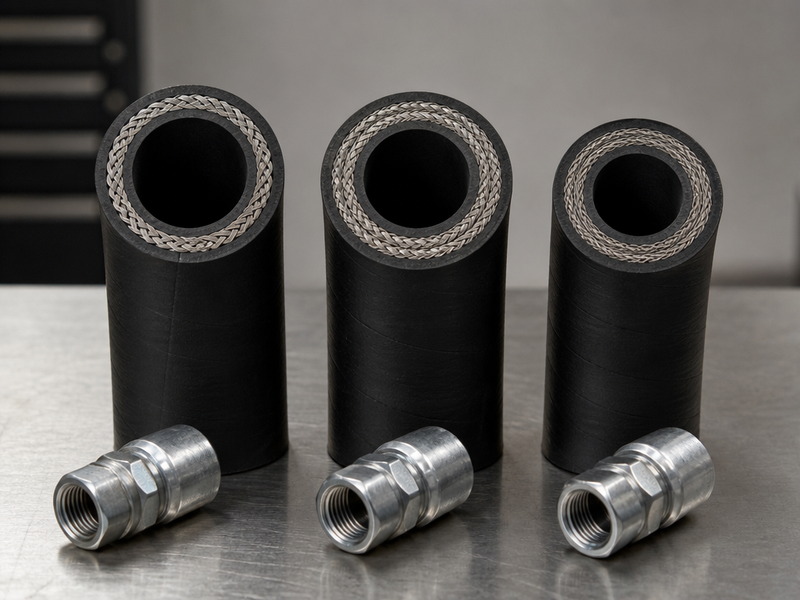
SAE 100R1, SAE 100R2 and SAE 100R16 hydraulic hose coils and cut samples side by side on a workshop bench

SAE 100R1 vs 100R2 vs 100R16: Which Hose Do You Need?

The short answer to 100R1 vs 100R2 vs 100R16 is a size-for-size comparison of pressure and geometry: in 3/8-inch bore, an SAE 100R1 single wire braid hose is rated about 2,280 psi, an SAE 100R2 double wire braid hose about 4,000 psi, and an SAE 100R16 compact double wire braid hose delivers the same or

SAE 100R1 vs 100R2 vs 100R16: Which Hose Do You Need? Read More »

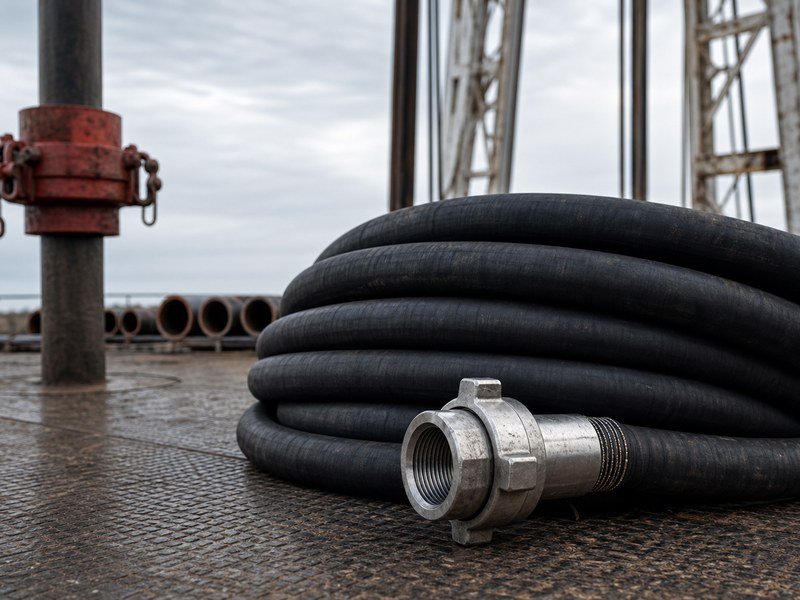
High-pressure oilfield hose coil with a steel union end on a drilling rig floor beneath the derrick

Petroleum & Oilfield Hose: High-Pressure Solutions Guide

An oilfield hose is a flexible, wire-reinforced line built to carry drilling fluid, cement, fracturing fluid, or well-control fluid under pressure. The working pressure depends on the duty: a rotary drilling or vibrator hose is specified from about 4,000 psi to 7,500 psi (Grade C to Grade E), a fracturing hose commonly works at 10,000–15,000

Petroleum & Oilfield Hose: High-Pressure Solutions Guide Read More »

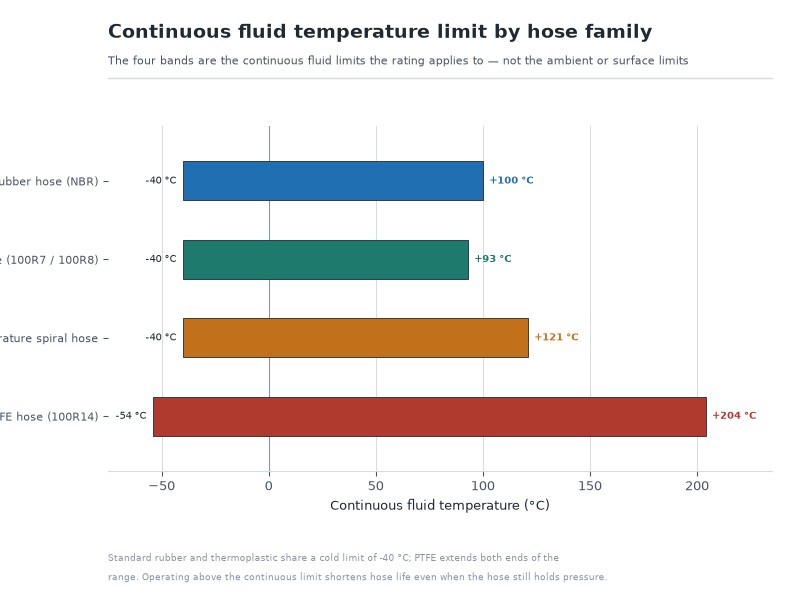
Chart comparing continuous hydraulic hose temperature rating ranges for standard rubber hose, thermoplastic hose, high-temperature rubber hose and PTFE hose

Hydraulic Hose Temperature Rating: Limits, Charts & Selection

A hydraulic hose temperature rating is the range of fluid temperatures a hose is designed to carry continuously — for standard rubber hydraulic hose, -40°C to +100°C (-40°F to +212°F), with an intermittent allowance that usually stops around +120°C (+248°F). The three limits people search for most often are these: standard rubber hose -40°C to

Hydraulic Hose Temperature Rating: Limits, Charts & Selection Read More »

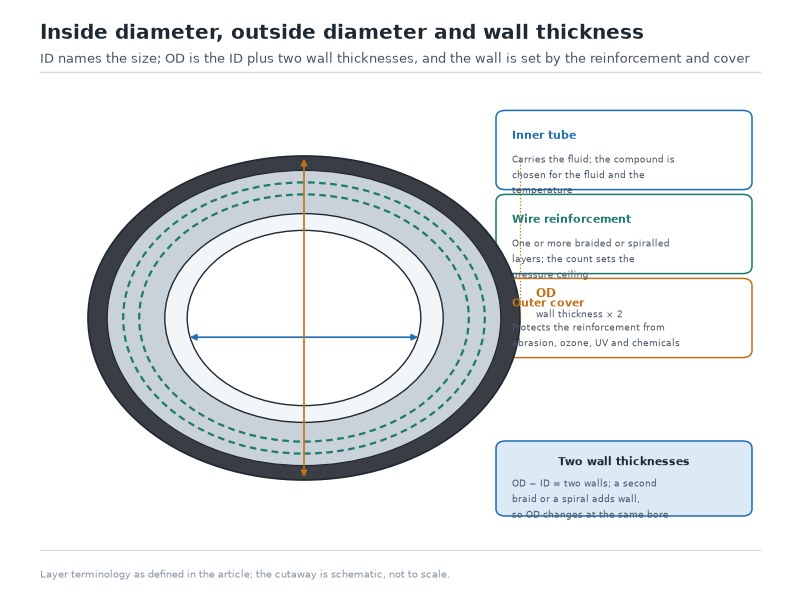
Annotated cross-section of a hydraulic hose showing the inside diameter, outside diameter, wall thickness, inner tube, wire reinforcement and outer cover

Hydraulic Hose Sizes Explained: ID, OD, Dash Size & How to Measure

Hydraulic hose sizes are written as a dash number that states the hose inside diameter in sixteenths of an inch, so a -6 hose has a 6/16 inch (3/8 inch, 9.53 mm) bore. The outside diameter is a different number entirely and is set by the hose construction, not by the size number. At the

Hydraulic Hose Sizes Explained: ID, OD, Dash Size & How to Measure Read More »

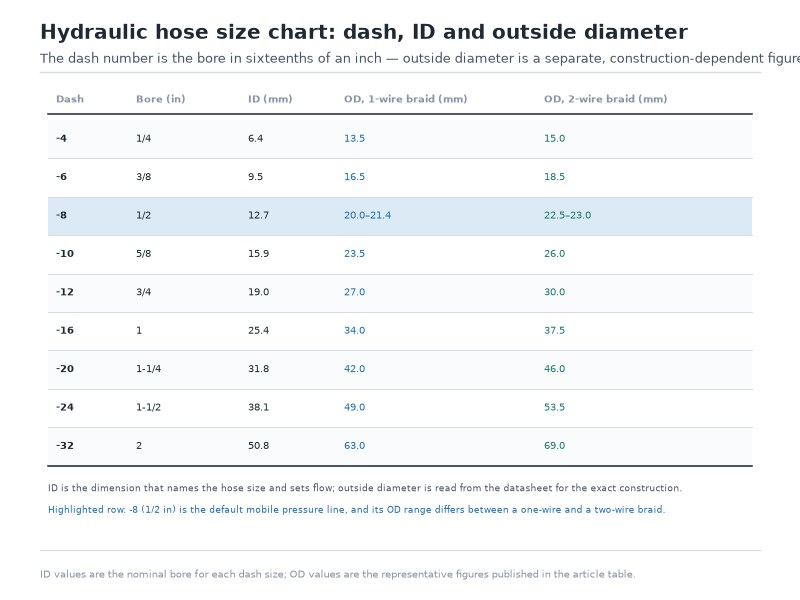
Hydraulic hose size chart showing dash size converted to inside diameter and outside diameter in inches and millimetres

Hydraulic Hose Size Chart: Dash Size, ID, OD & Conversion

A hydraulic hose size chart converts the three numbers that are easiest to confuse: the dash size, the inside diameter (ID), and the outside diameter (OD). The dash number is the hose inside diameter expressed in sixteenths of an inch, so a -8 hydraulic hose has a bore of 8/16 inch — 1/2 inch, or

Hydraulic Hose Size Chart: Dash Size, ID, OD & Conversion Read More »