
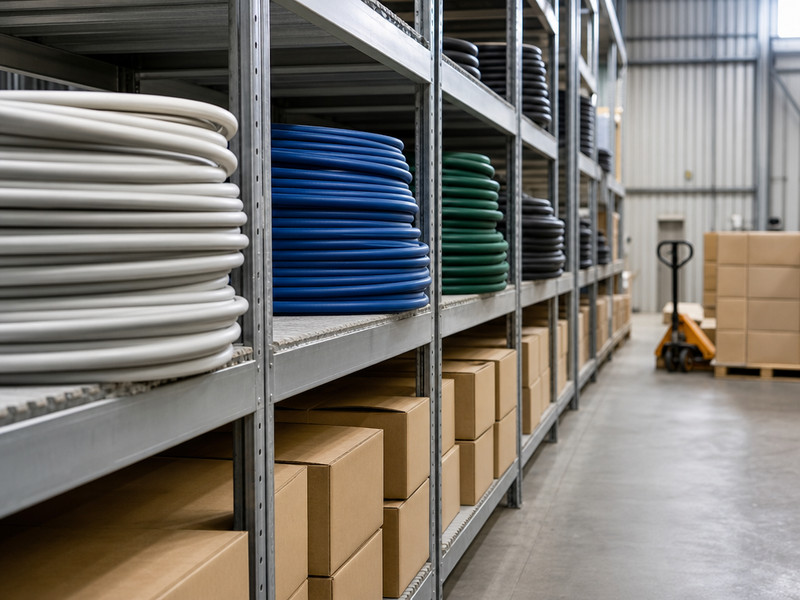
Chemical hose wholesale is the business of buying chemical hose in bulk from a factory and reselling it across a regional account base. The work is not selling one hose; it is deciding which sizes, liners and fittings to hold, how deep to stock each one, and when to reorder.
A distributor lives on availability and margin at the same time. A stocked program that keeps fast-moving bore and liner combinations ready wins repeat orders, while a catalog padded with slow special-order items ties up cash and shelf space.
This guide covers SKU range and depth, the fast-moving versus special-order split, stocking by bore and liner, reorder triggers, bulk specification control, cut-length services, container loading and the supplier terms that protect resale margin.
About a 14-minute read at 250 words per minute; it is written for distributors and resellers building a repeatable chemical hose program.
How Chemical Hose Wholesale Programs Differ From Retail Supply
A distributor buying from a factory is not the same as a consumer buying from a store. Wholesale buyers order across a range of sizes, expect a consistent specification on every shipment, and need enough depth on hand to serve many downstream accounts. Suppliers answer that pattern with a bulk catalog rather than with single units.
The unit of planning is the family, not the item. One bore with one liner is not a product; the family is every bore that shares the same liner, the same construction and the same end fitting. A single purchase decision then covers many catalog lines.
A hose distributor also carries duties a retailer does not. It holds stock against demand from several accounts, absorbs the risk of slow movers, and offers cut lengths, fast pickups and credit that a factory will not extend to a small buyer. Those services are the reason the channel exists, and they set the terms the distributor must protect on the supply side.
Buyers who want the material background first can start with the complete chemical hose guide, which covers liner chemistry and construction in depth before the commercial questions begin.
Table 1. Wholesale and retail supply compared by role
| Dimension | Retail supply | Wholesale supply |
|---|---|---|
| Buyer | End user, one site | Reseller or distributor network |
| Order shape | Single item, single bore | Family of bores, mixed lengths |
| Stock held | At the point of use | At a regional warehouse |
| Specification | One job requirement | One specification across many orders |
| Service added | Pickup or delivery | Cut lengths, credit, buffer stock |
Building a Chemical Hose Wholesale SKU Range: Breadth and Depth
Breadth and depth pull in opposite directions. Breadth is how many distinct sizes, liners and fitting combinations a catalog lists. Depth is how many units of each the warehouse actually holds. A program that maximizes both carries an inventory bill it cannot justify, so the range has to be ranked before it is stocked.
The practical method is to sort every candidate line into demand classes. A-class lines sell steadily and justify depth. B-class lines sell often enough to keep a working quantity. C-class lines sell rarely and belong in a special-order or drop-ship lane.
The demand class, not the catalog owner’s preference, decides the shelf space. Working through the SKU rationalization method for distributors shows how far demand-class sorting can cut a catalog without losing coverage.
Bulk chemical hose families should be defined before individual sizes are ranked. If a liner is offered in only one bore, it cannot anchor a family, and it belongs in the special-order lane by default. A liner offered across several bores earns depth across that whole sized family. That ranking discipline is the first habit of any durable chemical hose wholesale range.
Demand also clusters by industry. Tank cleaning, water treatment, food processing and metal finishing each pull a different mix of liner and fitting. A stocking range should be checked against the account list the warehouse actually serves, not against a generic market average.
Table 2. Demand classes and the depth rule for a wholesale SKU range
| Class | Demand pattern | Stocking rule | Reorder approach |
|---|---|---|---|
| A | Steady, repeat orders | Hold depth across the family | Automatic reorder point |
| B | Regular but uneven | Keep a working quantity | Reorder point with review |
| C | Rare, project-driven | Special order or drop ship | No standing stock |
Stocking by Bore and Liner in a Chemical Hose Wholesale Catalog
Warehouse planning should be organized around bore and liner, not around supplier names. A hose distributor that keys the catalog to brand names ends up with three near-identical lines competing for the same shelf and the same account. When the plan is keyed to bore and liner instead, a reorder decision answers a service question: which transfer duty does this combination solve?
The main axis is the liner. A UHMWPE (UPE), XLPE or PTFE liner covers one family of chemicals, while rubber constructions such as EPDM or oil-resistant synthetic rubber cover others. The second axis is bore, which runs from 3/4 in through 1 in, 1-1/4 in, 1-1/2 in, 2 in, 3 in and 4 in across the core chemical range. The hose size selection guide explains how to map a duty to a bore before a stocking line is created.
The third axis is service type. A delivery hose and a suction and delivery hose look similar on a shelf but cannot be substituted. EN 12115:2021 names these as Type D and Type SD. The SD construction carries a steel helical wire that resists collapse under vacuum, while the D construction does not.
Organizing the catalog this way makes cross-selling natural. A customer who buys one bore for drum transfer often needs the next bore up for a tank line, and a stocked family lets the warehouse answer both orders from a single shelf position.
Table 3. Stocking plan by bore and liner for a distributor program
| Bore | Typical liner set | Service type | Depth band | Review trigger |
|---|---|---|---|---|
| 3/4 in, 1 in | UHMWPE (UPE), XLPE | Delivery | Fast-moving | Demand class A |
| 1-1/4 in, 1-1/2 in | UHMWPE (UPE), XLPE, EPDM | Suction and delivery | Fast-moving | Demand class A |
| 2 in | UHMWPE (UPE), XLPE, EPDM | Suction and delivery | Working stock | Demand class B |
| 3 in | XLPE, PTFE | Suction and delivery | Working stock | Demand class B |
| 4 in | PTFE | Suction and delivery | Special order | Demand class C |
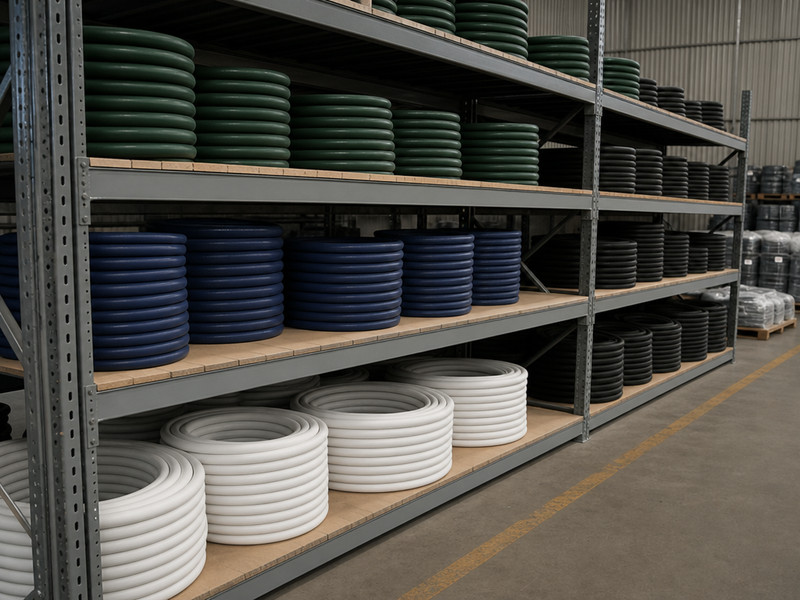
Figure 1. A stocking plan keyed to bore and liner lets one shelf position serve several catalog lines.
Bulk Chemical Hose Specification Control Across a Sized Family
Specification control is what separates a wholesale catalog from a pile of part numbers. If every bore in a family is bought to a different internal standard, the distributor cannot promise equivalent performance from one size to the next, and the warehouse cannot substitute one for another.
A master specification fixes the liner compound, the reinforcement, the cover, the working pressure and the electrical class for the whole family. EN 12115:2021 is the usual reference for rubber and thermoplastic chemical hose. It defines Type D and Type SD service, four electrical classes, a temperature range of -20 °C to +65 °C, and a working pressure of 10 bar. Electrical resistance is tested to EN ISO 8031, where the M class sits at or below 10⁶ Ω and the Ω class at or below 10⁹ Ω.
The wider system approach to hoses and fittings (planned URL — publish before linking) places that specification inside the fittings, gaskets and clamps it has to match. Once the master specification is fixed, every bulk chemical hose order in the family is checked against the same document. A change of liner supplier or of reinforcement construction counts as a specification change, and it should trigger a new sample rather than a quiet substitution.
The payoff is substitution safety. A warehouse picker can move a customer from one bore to the next within a family and still deliver the same chemical compatibility, the same pressure rating and the same grounding behavior.
Reorder Triggers and Safety Stock for Chemical Hose Wholesale
Stock that runs out costs more than stock that sits, but only up to a point. The reorder signal should be a rule rather than a feeling, and the rule has two parts: a reorder point and a safety stock level.
The reorder point is the quantity on hand at which a new order is released. It equals the expected demand over the replenishment window plus the safety stock held for variation. The replenishment window is the time from placing an order to receiving it, expressed in the distributor’s own units of demand rather than in days.
Safety stock covers the two things a plan cannot predict. The first is demand that arrives faster than the average. The second is a replenishment that arrives later than the average. A common starting point is a buffer sized to the worst reasonable combination of the two, then reviewed against the actual service level after each cycle.
In a chemical hose wholesale program, the reorder point is best set per family rather than per item. When every bore in a family comes from the same production run, a single trigger protects the whole family and avoids small, frequent orders that raise the freight cost per unit. The cost drivers behind that freight figure are covered in the price and MOQ analysis (planned URL — publish before linking).
Table 4. Reorder-point method for a stocked hose family
| Step | What to measure | Data source | Output |
|---|---|---|---|
| 1 | Demand rate per period | Order history by family | Units per period |
| 2 | Replenishment window | Order placement to receipt | Window in demand units |
| 3 | Expected demand | Rate multiplied by window | Base order quantity |
| 4 | Safety stock | Demand and supply variation | Buffer quantity |
| 5 | Reorder point | Expected demand plus buffer | Trigger level |
Cut-Length Services and Mixing Lengths in Wholesale Hose Supply
The gap between a factory coil and a customer’s requirement is where a distributor adds value. Factories ship in standard coil lengths, while a chemical plant may need a shorter run for one line. A cut-length service closes that gap and turns a slow-moving coil into several fast-moving picks.
Cutting carries costs that must be priced into wholesale hose supply. Every cut creates two ends, and every end needs a fitting, a test and a record. A clean cut-length process also needs a bench mark, a crimper, a pressure test, and a way of marking the finished assembly so the tested configuration can be traced.
Mixing lengths in one order is the second lever. A distributor can combine full coils for stock with shorter cut lengths for immediate demand in a single shipment. That fills a pallet or a container more completely and spreads the fixed freight cost over more sellable meters.
Length tolerance belongs in the purchase agreement. If a supplier’s coils run short of the nominal length, the distributor absorbs the difference on every cut. Agreeing on the tolerance, and on how short lengths are counted, protects the margin quietly. The supplier’s own chemical line is listed on the chemical hose product page.
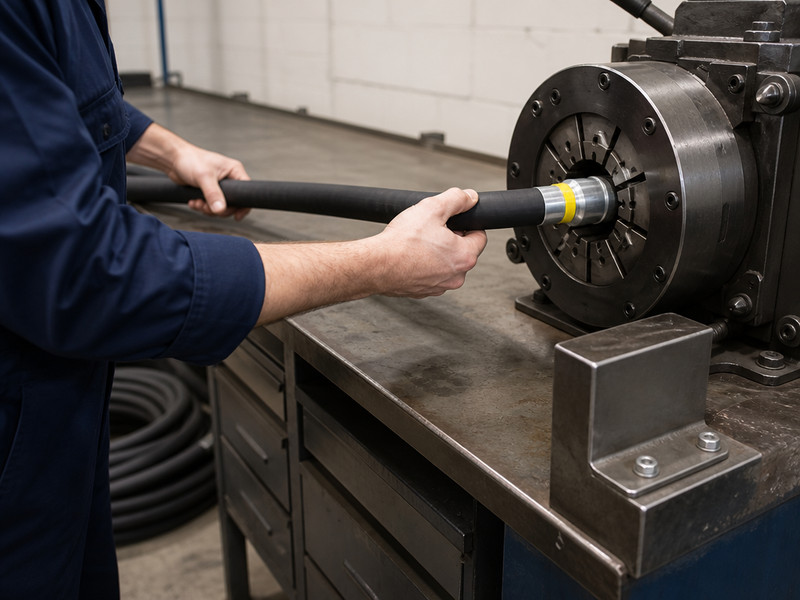
Figure 2. A cut-length bench turns a bulk coil into tested assemblies with marked ends.
Container and Pallet Loading Economics for a Hose Distributor
A distributor pays for freight by the container or the pallet, not by the meter, so loading efficiency is a direct margin item. Coils are bulky and cannot be compressed. The volume a shipment occupies is set by how well those coils nest into the space available.
Coil geometry drives the plan. A coil of a given bore has a fixed outer diameter and a fixed width, so the number that fits a pallet footprint is decided by diameter rather than by weight. Larger bores reduce the count per pallet even when total weight is unchanged, which raises the effective freight burden per meter.
Cut lengths change the loading picture because they can be packed into voids that full coils cannot fill. Mixing full coils and cut lengths in one load raises the fill rate, provided the cut lengths are packed so they cannot kink or crush under the weight above them.
Container economics also favor planning order cycles. Combining several families into one bulk chemical hose replenishment reduces the number of shipments and the freight paid per unit, but it lengthens the interval between arrivals. The right cycle balances both effects against the safety stock that the longer interval requires. Container planning is where a wholesale program either earns or loses a point of margin.
Table 5. Loading factors that set freight economy per load
| Factor | Effect on the load | Planning action |
|---|---|---|
| Coil outer diameter | Sets the count per pallet footprint | Group similar bores together |
| Coil width | Sets stack height and stability | Cap the stack height |
| Cut lengths | Fill voids that coils cannot fill | Mix with full coils |
| Pallet footprint | Sets the base loading module | Standardize pallet sizes |
| Order cycle | Sets shipments per period | Combine families per cycle |

Figure 3. Mixed coils and cut lengths fill a container so freight is spread over more meters.
Supplier Terms That Protect Resale Margin in Chemical Hose Wholesale
A wholesale program earns its margin in the terms attached to the supply, not only in the price on the invoice. Terms decide how much capital sits in stock, how long a quotation stays valid, and who pays when something is wrong.
Several terms matter most to a distributor. The validity window on a quotation protects the resale price if costs move between quotation and order. The treatment of full-container and mixed-container orders decides the freight paid per unit. Length tolerance, and the way it is counted, decides whether the distributor is buying the length it sells.
Fault handling is the other half. A supplier that accepts a documented claim for a construction defect and replaces the affected length protects the distributor’s reputation with its own customers. A supplier that pushes every claim back down the chain transfers the loss instead. The supplier qualification checklist (planned URL — publish before linking) turns those expectations into questions a buyer can ask before the first order.
Documentation should travel with the order. A supplier able to issue an inspection document under EN 10204 at the 3.1 level gives the distributor a paper trail for regulated buyers. Electrical test records to EN ISO 8031 support the anti-static claim in the resale specification.
Packaging neutrality is the last term. Plain cartons and neutral sheath marking let the distributor keep its own identity on the resale shelf, and a wholesale hose supply agreement that allows it removes a recurring friction point in the relationship.
Chemical Hose Wholesale FAQs
What does a wholesale chemical hose program involve?
A wholesale program means buying hose in bulk from a manufacturer and reselling it to other businesses rather than to end users. The distributor holds stock across a range of bores and liners, breaks bulk coils into smaller orders, and serves many accounts from one warehouse. Availability, a consistent specification and support services such as cut lengths and credit are the core of the offer.
How many hose sizes should a distributor stock?
A distributor stocks a working set of sizes, not every size the factory can make. The catalog should list the families a warehouse can actually serve, then rank each line by demand class. Steady sellers earn depth, occasional sellers earn a working quantity, and rare combinations belong in a special-order lane. A shorter list that ships on time beats a long list that often does not.
Which bore and liner combinations justify the deepest stock?
The combinations that appear on the most repeat orders earn the deepest stock. In most chemical ranges that means the mid-range bores carrying two or three common liners, plus a suction-rated construction for vacuum duty. Bores at the top end of the range usually sell less often and can be held shallower, provided the replenishment window stays short enough to cover a sudden order.
How is a reorder point calculated for chemical hose?
Multiply the expected demand rate by the length of the replenishment window, then add a safety stock for variation. Measure that window as the elapsed time between placing a replenishment order and receiving it into stock, then convert it to a quantity using the same demand rate. Check the reorder point against the service level the warehouse actually achieved in the last cycle, since demand and supply both drift.
What is bulk-specification control?
Bulk-specification control means holding one master specification across every bore in a family. That document fixes the liner compound, reinforcement, cover, pressure rating and electrical class, so any size in the family can substitute for another without changing performance. It also gives the buyer a single reference to check each shipment against, instead of a different internal standard per size.
Should a distributor offer cut-length services?
Usually yes, because cutting is where a stocked coil becomes a sellable order. The service needs a measured cut, a crimped end, a pressure test and a durable end marking that ties each assembly to its test record. Those steps add cost, so cut lengths must be priced to cover them while still defining wholesale hose supply as faster than a special order.
How does container loading affect resale margin?
Freight is charged by the container or the pallet, so the volume a shipment occupies sets the freight paid per meter. Coil diameter decides how many coils fit a pallet footprint, and larger bores reduce that count. Combining cut lengths with full coils fills voids that coils alone cannot fill, which lowers the freight carried by every meter sold.
Which supplier terms protect margin the most?
Four supplier terms do most of the work. A quotation validity window protects the resale price when costs move, and full-container and mixed-container rules set the freight per unit. Length tolerance decides whether the distributor buys the length it sells. A clear defect-claim process decides who pays when a construction fault appears, and a fair process keeps that loss off the distributor’s books.
How should a hose distributor decide between delivery and suction hose?
A delivery hose moves liquid under pressure, while a suction and delivery hose must hold its shape when the pump pulls a vacuum, so one cannot replace the other. If the duty ever pulls liquid up from a drum, tank or pit, the line needs the suction version, because only that construction carries a steel helical wire to resist collapse. A distributor should hold both forms in the bores that move most often, and treat one as a fallback for the other only when the duty is confirmed.
How often should a stocking plan be reviewed?
Review the plan at least every quarter, and again whenever a major account is won or lost. Demand classes shift as customers change products, so a line that earned depth last year may now belong in the special-order lane. Each review should check service level, stock turns and freight per meter, then move lines between classes and reset reorder points.
Next Steps for a Chemical Hose Wholesale Program
Start with the account list, not with the catalog. Rank the bores and liners that current customers actually buy, assign each line to a demand class, and set a stocking plan and a reorder point for the families that earn depth. Fix one master specification per family, and write the cut-length and container rules into the supply agreement.
Then measure. Track service level, how fast stock turns, and the freight cost a meter carries, then shift lines between classes as demand moves. A chemical hose wholesale program improves through those small corrections, not through a single large inventory bet.
Ready to build the supply side? Get a quote and free samples and we will confirm the families, the specification documents and the terms behind them.
About HENGHUA
HENGHUA is a professional hose and fittings manufacturer supplying global distributors, retailers and OEM brands. The chemical hose line includes UHMWPE (UPE), XLPE and PTFE liners and rubber constructions such as EPDM and oil-resistant synthetic rubber, with high-strength textile reinforcement and steel helical wire available for suction duty. The fittings side covers camlock (cam and groove), flange, threaded and clamp-type terminations. Factory-crimped assemblies, custom lengths, sheath printing, private label and OEM/ODM are available, supported by factory-direct pricing, bulk short lead times and warranty.






 English
  Spanish
  Portuguese
  French
  German
  Arabic
  Russian
  Indonesian
  Japanese
  Korean