
Choosing between a polyurethane vs rubber garden hose comes down to three trade-offs that pull in different directions. A polyurethane hose weighs roughly a third less when empty, resists kinks and abrasion better, and springs back out of a bend instead of holding a fold. A rubber hose tolerates heat, hot water and years of direct sun better, and it feels softer in the hand. Neither material wins all three criteria, so the useful answer depends on which problem you actually have.
This guide works through the comparison in the order the differences matter in practice. It covers measured garden hose weight per foot and what the water inside adds, what flexibility means at the hose wall, how abrasion, heat, UV and hydrolysis decide durability, where the two materials share the same pressure rating, and how to read a specification sheet before money changes hands.
It is written for people who have to justify a decision rather than guess: landscape contractors replacing a fleet of hoses, facility managers specifying washdown lines, distributors building a catalog, and homeowners who are tired of buying a split hose every spring.
Polyurethane vs Rubber Garden Hose: The Direct Answer
A polyurethane garden hose wins on weight, kink resistance and abrasion resistance. A rubber garden hose wins on heat tolerance, hot-water service and softness in the hand. Working pressure is set by the reinforcement inside the wall rather than by the polymer, so both materials normally land in the same pressure class at the same bore.
The table below gives the verdict criterion by criterion, together with the property that decides each one. Most buyers arrive at this garden hose material comparison with a simpler question: is polyurethane hose better than rubber? The honest answer is that neither material wins on everything.
Polyurethane vs rubber garden hose: the verdict on each criterion and the property that decides it.
| Criterion | Polyurethane | Rubber (EPDM or SBR) | What decides it |
|---|---|---|---|
| Weight, 5/8 in x 50 ft, empty | About 7 to 8 lb | About 11 to 13 lb | Wall thickness and reinforcement plies, not compound density alone |
| Kink resistance | Resists kinking and springs back open | Kinks more readily and holds a kink memory | A higher-modulus wall resists oval collapse at a bend |
| Softness in the hand | Firmer, with a springy feel | Softer, and wraps evenly onto a reel | Lower-modulus compounds deflect more under the same hand force |
| Abrasion and cut resistance | Higher, by 3 to 10 times in rotary drum testing | Lower | Polyurethane chemistry outperforms compounded rubber under abrasive wear |
| Heat and hot water | Commonly rated to 165 °F | Commonly rated to 190 °F, and EPDM higher again | Rubber’s cross-linked network tolerates heat better than a thermoplastic hard segment |
| Cold-weather flexibility | Rated to -40 °F on premium grades | Rated to -40 °F on premium grades | Both compounds stay soft far below freezing; frozen water is the real risk |
| UV and ozone | Good when the grade is UV stabilised | EPDM is the reference material for outdoor weathering | A saturated polymer backbone resists ozone attack |
| Working pressure, 5/8 in | Commonly 150 psi | Commonly 150 psi, with heavy-duty grades to about 300 psi | Reinforcement construction, not the tube material |
| Typical service life | Often around 10 years with care | Often 5 to 10 years with care | Abrasion, UV and storage practice decide the outcome |
The pattern behind that table is simple enough to carry into a store. Polyurethane is the tougher, lighter material; rubber is the more heat-tolerant and more relaxed one.
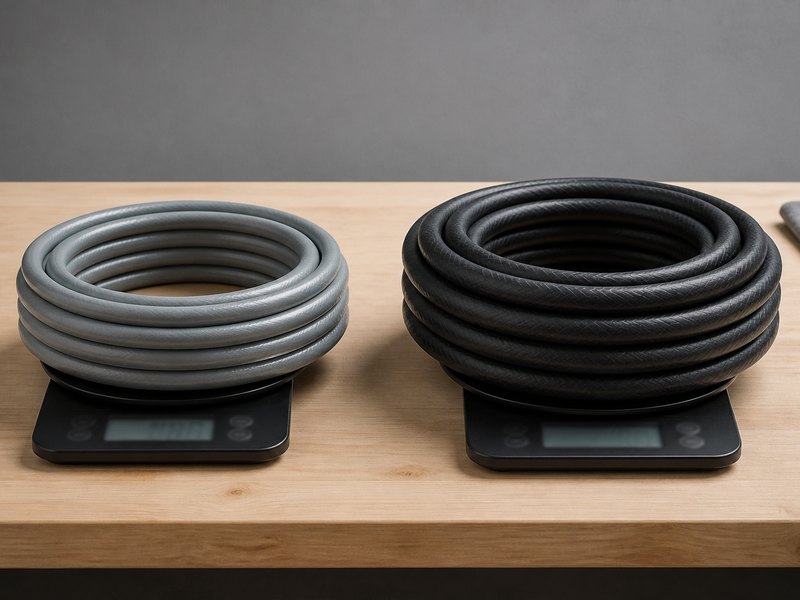
Figure 1. Same bore, same length, different wall: a polyurethane garden hose and a rubber garden hose weighed empty.
Garden Hose Weight: How Much Lighter Is Polyurethane?
Garden hose weight is the difference users notice first, and it is measurable rather than subjective. It is also the criterion on which a polyurethane vs rubber garden hose decision is settled fastest, because the gap is wide enough to feel the moment you lift the hose.
In independent hose reviews that publish per-foot figures for 5/8-inch hose, premium polyurethane models land between 0.14 and 0.15 lb per foot, while commercial-grade rubber models land between 0.22 and 0.26 lb per foot. Across a 50-foot length that is roughly 7 to 8 pounds against 11 to 13 pounds.
Because two hoses of the same bore deliver a comparable garden hose flow rate, choosing the lighter material does not cost you water. If you are comparing several formats at once, a wider survey of types of water hoses puts those figures next to lay-flat, suction and potable constructions.
Why a Polyurethane Garden Hose Weighs Less
A polyurethane garden hose is lighter because less material is wrapped around the same bore, not because the polymer itself is dramatically lighter. Polyurethane and EPDM sit in a similar density band when they are compounded for hose service.
The saving comes from strength. Polyurethane compounds reach higher tensile and tear strength than general-purpose rubber, so a thinner wall and fewer reinforcement plies can still deliver the rated burst pressure. Abrasion resistance helps in the same direction, because a polyurethane cover survives dragging without the extra thickness a softer rubber cover needs for an equivalent wear life.
Four factors set the empty weight of a garden hose at a given bore:
- Wall thickness: the largest single term, because mass per foot rises with the cross-sectional area of the wall.
- Reinforcement: every braided yarn layer or spiral adds weight, and heavier constructions are needed to reach higher burst ratings.
- Compound density: the gap between a typical rubber compound and a typical polyurethane compound is small next to the gap created by wall thickness.
- Cover and hardware: a thicker abrasion-resistant cover adds weight, and brass fittings add several ounces to either material.
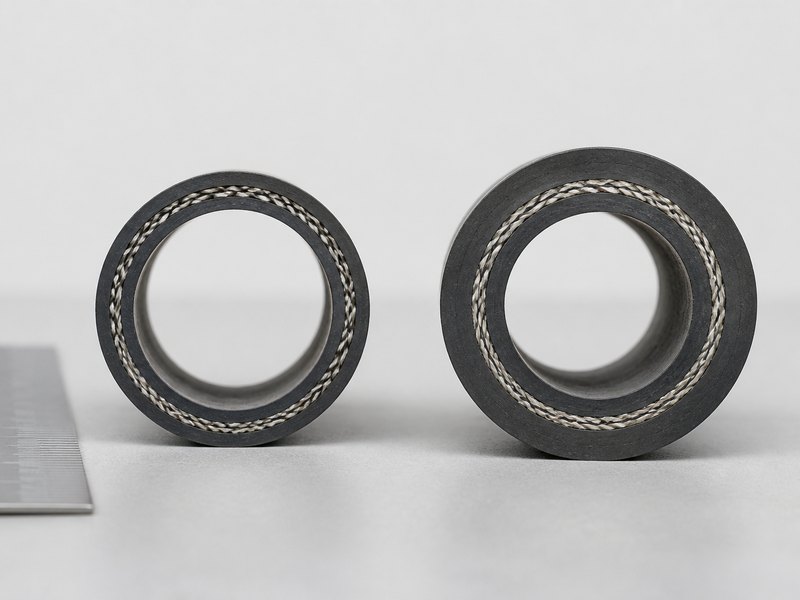
Figure 2. Sectioned at the same 5/8-inch bore, the rubber wall is visibly thicker, and wall area is what sets mass per foot.
What the Water Inside Weighs
Water is the load most buyers forget, and it is identical in both materials. A 50-foot hose holds a fixed internal volume set by its bore, so the water charge is the same whether the tube is polyurethane or rubber.
Water carried by a 50 ft hose: internal volume and the weight of the water charge, by bore.
| Bore | Internal volume at 50 ft | Weight of the water charge | What it means in use |
|---|---|---|---|
| 1/2 in (12.7 mm) | About 1.9 L (0.5 US gal) | About 4.3 lb | Lightest charge, but the lowest flow rate of the three |
| 5/8 in (15.9 mm) | About 3.0 L (0.8 US gal) | About 6.6 lb | The standard residential bore and the usual compromise |
| 3/4 in (19.1 mm) | About 4.3 L (1.15 US gal) | About 9.6 lb | Highest flow, and the heaviest load to drag |
Put the two figures together and the weight comparison changes shape. A 50-foot 5/8-inch polyurethane hose weighs about 7 to 8 pounds empty and about 14 to 15 pounds full. The same hose in rubber weighs about 11 to 13 pounds empty and about 18 to 20 pounds full. The absolute gap stays near 5 pounds either way, while the ratio falls from roughly 1.6 to 1 empty to roughly 1.35 to 1 full.
A lightweight garden hose is usually a thinner-walled hose rather than a different bore, which is why the water charge above does not change with material. If you are still choosing a bore, the garden hose 5/8 vs 1/2 decision trades about 2.3 pounds of water over 50 feet against a real loss of flow.
That matters because the hose is almost always full when you are dragging it, and garden hose weight is what you feel rather than what the box says. When the walk is long and the hose stays pressurised for hours, this is the part of the polyurethane vs rubber garden hose question that settles the purchase. A larger bore raises the garden hose flow rate, and it raises the weight you drag by more.
Which Garden Hose Is More Flexible, and What Does Flexible Mean?
Garden hose flexibility covers at least four different properties in product listings, and they do not always point the same way. The second half of the polyurethane vs rubber garden hose question lives here, because the word is applied loosely in most product copy. The word can mean the hand force needed to bend the hose, the tendency to kink and shut off flow, the memory that keeps a shape you forced on it, or how stiff the assembly feels on a cold morning.
Kink Resistance: Where Polyurethane Is Ahead
At a tight bend, the wall of a hose flattens into an oval until the two inner surfaces touch and the flow stops. A wall with a higher modulus resists that flattening, and its stored elastic energy pushes the surfaces back apart instead of letting them stay closed.
This is why the stiffer of two hoses often kinks less, and why a polyurethane hose tends to flip out of a kink rather than collapse into one. A kink resistant garden hose is therefore not the softest hose in the rack; it is the one whose wall keeps its round section under load.
Rubber behaves differently. A softer compound folds more easily and holds the fold, and a hose that has kinked once tends to kink in the same spot again. No construction is truly a kink free garden hose, but the difference in how often you stop to straighten the hose is easy to feel. A flexible garden hose that springs back also demands less attention than one that has to be walked out before every use.
Coiling and Memory: Where Rubber Is Ahead
The same springiness that makes polyurethane kink-resistant makes it awkward to coil. Rubber’s lower modulus lets it wrap evenly onto a reel, which matters when storage density and a tidy appearance are part of the job. Long polyurethane lengths are best used with a reel, because coiling them into a neat circle on the ground by hand is slow work.
Cold-Weather Flexibility: What the Temperature Ratings Do and Do Not Say
Published garden hose temperature ratings for different materials disagree with each other, and the disagreement is worth understanding before it drives a purchase.
Published temperature ranges for common garden hose materials, with the basis of each figure.
| Material | Published low end | Published high end | Basis of the published figure |
|---|---|---|---|
| Polyurethane, premium garden hose grade | -40 °F (-40 °C) | 165 °F (74 °C) | Manufacturer rating for a specific premium model |
| Rubber, EPDM or SBR | -40 °F (-40 °C) | 190 °F (88 °C) | Manufacturer rating for the comparable rubber model |
| Hybrid polymer, TPE or TPV blend | -40 °F (-40 °C) | 140 °F (60 °C) | Manufacturer comparison table |
| Vinyl or PVC | About 40 °F (4 °C) before it stiffens | 120 °F (49 °C) | Manufacturer guidance and field reports |
Two useful things follow. Polyurethane and rubber share the same cold-weather rating on premium grades, so cold alone does not separate them. The real spread between the two sits at the hot end of the range, not the cold end.
The cold-end numbers also need context. Both rubber and polyurethane compounds stay soft far below freezing at the molecular level, so the practical failure in a cold snap is water left inside the hose that expands and splits the wall or the coupling. A claim that a rubber hose stiffens below 20 °F describes how an assembly feels and coils in the cold, not a temperature at which the material turns brittle.
Whichever material you pick, drain and disconnect the hose before the first hard frost. A flexible garden hose full of frozen water is no longer a flexible hose at all, and the repair is a new hose rather than a new material.
That is the practical limit of the garden hose flexibility discussion. Material sets how the wall behaves at ambient temperature, and storage practice decides whether the hose survives long enough to show it.
For a wider survey of tube compounds and how each one behaves at temperature, our flexible hose materials guide compares EPDM, nitrile, PVC and polyurethane side by side.
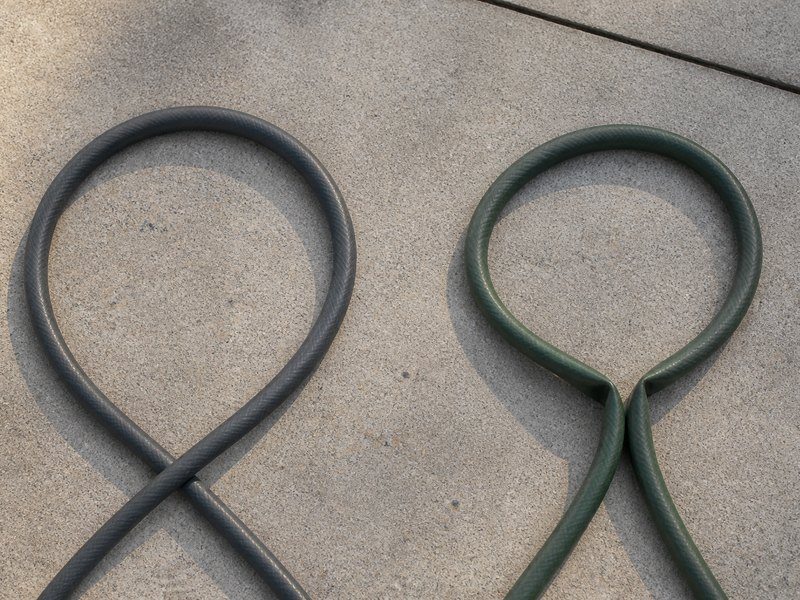
Figure 3. The same bend applied to both materials: a polyurethane hose holds an open curve where a softer rubber hose folds shut.
Garden Hose Durability: Abrasion, Heat and Weathering
Garden hose durability is really two separate questions, and a garden hose material comparison that reduces it to a single number will mislead you. The first is how well the cover resists mechanical wear while the hose is dragged across concrete, gravel and stone edging. The second is how well the whole assembly resists heat, sunlight, ozone and moisture over years of storage.
Polyurethane is the stronger answer to the first question, and EPDM rubber is the stronger answer to the second. That split is the most useful thing to hold on to, and it survives every honest polyurethane vs rubber garden hose comparison.
For the same reason, material alone does not decide longevity. Our PVC vs rubber garden hose comparison works through how climate and storage change the expected life of each family.
Abrasion and Cut Resistance: The 3-to-10-Times Question
Abrasion performance is measured under ISO 4649, the rotary drum test that replaced the withdrawn German standard DIN 53516. A cylindrical specimen 16 mm in diameter is pressed against a rotating drum covered with standardised abrasive paper under a 10 N load and travels a total path of 40 metres. The result is reported as volume loss in cubic millimetres, and a lower number means better wear resistance.
In published comparisons of elastomers under that test, polyurethane resists abrasive wear roughly 3 to 10 times better than conventional rubber compounds. Tear strength points the same way: a polyether polyurethane at around Shore 90A can reach the 70 to 80 kN/m range, which is above natural rubber.
The practical translation for a garden hose is straightforward. A polyurethane cover tolerates being dragged over a driveway edge, a kerb or a gravel path for longer before the cover wears down to the reinforcement, which is the property that separates a heavy duty garden hose from an ordinary one in commercial service.
Heat and Hot Water: Where Rubber Is Clearly Better
Heat is the criterion where the two materials genuinely diverge, and the gap is large enough to change a specification. A premium polyurethane hose is commonly rated to about 165 °F (74 °C) against a comparable rubber hose at about 190 °F (88 °C), while EPDM compounds are quoted for continuous service up to roughly 200 °F (93 °C) in static air.
Two mechanisms sit behind that gap. Rubber is cross-linked, so it has no softening point anywhere near the temperature a hose sees. Polyurethane is thermoplastic: its hard segments soften as the temperature climbs, so the material loses stiffness and creeps faster when it runs hot.
The rule follows directly. Read the garden hose temperature rating at both ends before you choose: if the hose will sit permanently on a sun-baked patio, or if it carries hot water for washdown or tank filling, choose rubber or EPDM. Polyurethane remains the better choice for cold water at ambient temperature, where its abrasion and kink advantages are not offset by anything.
UV, Ozone and Hydrolysis: Why Two Polyurethane Hoses Age Differently
The two families fail differently under sunlight, and the differences are chemical rather than cosmetic. Garden hose UV resistance is set by the cover compound and its stabiliser package rather than by the tube compound alone:
- EPDM rubber: a saturated backbone with no reactive double bonds in the main chain, which is why it is the reference compound for ozone, UV and outdoor weathering.
- Polyurethane: needs a UV stabiliser package to survive years of direct sun, and the polyester-based grades hydrolyse in warm, humid conditions.
- SBR and natural rubber: cheaper covers age faster outdoors than EPDM, which is why a budget rubber hose often falls short of its label.
- Fittings and washers: brass corrodes, plastic cracks, and rubber washers harden, so the assembly ages as well as the tube.
That list explains a problem buyers run into constantly. Two hoses can both be labelled polyurethane and age completely differently, because the polyol chemistry decides hydrolysis resistance.
Polyether-based polyurethane resists hydrolysis well and keeps its low-temperature flexibility. Polyester-based grades are measurably better in dry abrasion but degrade faster in sustained moisture. Because the label rarely states which chemistry was used, this is a question to put to the supplier rather than guess from the price.
Expected life is easier to reason about once those routes are separated. Published garden hose lifespan figures cluster around five to ten seasons for reinforced rubber and around ten years for premium polyurethane. Garden hose temperature range and the amount of direct sun the hose sees are the two variables that move those figures most, which is why garden hose UV resistance and heat tolerance matter more in a desert yard than in a shaded one. Buyers who ask how long do garden hoses last are usually describing a storage habit, and storage is the one factor they fully control.
Garden hose lifespan is a maintenance outcome, not only a material property, and a commercial garden hose that is coiled and drained at the end of every shift will beat a premium hose left full in the sun.
How Garden Hoses Actually Fail in Service
Failure modes in garden hose service and how the two materials differ.
| Failure mode | Polyurethane tendency | Rubber tendency | Prevention |
|---|---|---|---|
| Kinking shut under load | Low, and it springs back open | Moderate, and a kink can set a permanent crease | Use a reinforced hose and store it in wide loops |
| Cover abrasion on concrete or gravel | Low wear over many seasons | Visible scuffing and cover loss sooner | Route the hose away from sharp edges |
| UV and ozone cracking | Resists while the stabiliser package lasts | Low on EPDM, higher on SBR and natural rubber covers | Store out of direct sun where practical |
| Hydrolysis and softening | Depends on the polyol chemistry; polyester grades are vulnerable | Not a typical failure route | Specify polyether-based polyurethane for wet service |
| Freeze burst | Wall or coupling splits | Wall or coupling splits | Drain and disconnect before frost |
| Hot-water damage | Softens and creeps above the rating | Tolerates higher temperatures | Keep hot water inside the published rating |
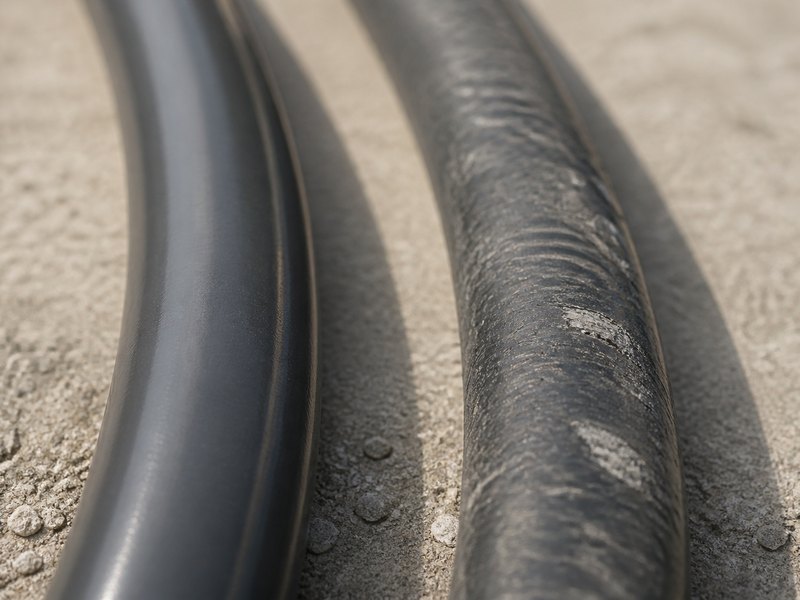
Figure 4. After the same dragging distance, the polyurethane cover is still intact while the rubber cover shows the first stage of wear.
Do Polyurethane and Rubber Garden Hoses Share the Same Pressure Rating?
At the sizes and pressure classes most people buy, the polyurethane vs rubber garden hose question stops mattering, because pressure is set by the reinforcement inside the wall rather than by the tube polymer. A 5/8-inch garden hose in either material is commonly rated at 150 psi working pressure, and a heavy duty garden hose in rubber is offered up to roughly 300 psi. Household supply pressure is typically 40 to 80 psi, so a standard hose carries a large static margin.
That single figure answers most garden hose pressure rating questions. The garden hose water pressure rating printed on the cover is a working pressure, not a target to operate at. A higher garden hose water pressure rating buys margin against water hammer, ageing and a closed nozzle, rather than permission to run the hose at its limit.
What Garden Hose Burst Pressure Actually Means
Burst pressure is the pressure at which the wall finally fails, and it is quoted as a multiple of the working pressure. Published specifications for a premium polyurethane hose list 150 psi maximum working pressure with a minimum burst pressure of 450 psi at 75 °F, which is a 3 to 1 margin.
That ratio matters more than the material. A hose rated 150 psi is not intended to run at 150 psi continuously; the margin exists to absorb water hammer, a closed nozzle held against a running supply, and the slow ageing of the wall. There is no single best garden hose material, only a material that matches the pressure, temperature and abrasion duty of the job.
The polyurethane hose advantages, lower weight and better abrasion and kink resistance, do not include a higher garden hose burst pressure. That surprises buyers who assume the more expensive material must be the stronger one. Three terms carry the whole pressure discussion, and the same three appear on any hose label, including our working pressure vs burst pressure explainer for another product family:
- Working pressure: the highest continuous pressure the hose is designed to carry.
- Burst pressure: the pressure at which the wall fails, about three times the working rating in garden hose sizes.
- Safe practice: keep the supply well below the working rating, and release nozzle pressure whenever the hose is idle.
Polyurethane vs Rubber Garden Hose: Which Should You Buy?
The decision is usually settled by one dominant condition rather than by a score across all criteria. Read the left-hand column first and find your situation; the middle and right columns tell you what to order and what to confirm.
Selection matrix: the situation that decides the material, and the specification to confirm before ordering.
| Your situation | Material to choose | Specification to confirm |
|---|---|---|
| Long drags, steep ground, or a hose that is carried rather than rolled | Polyurethane | 5/8 in bore, 150 psi working pressure, brass fittings |
| Repeated kinking is the main complaint today | Polyurethane | Reinforced construction and a cover rated for abrasive duty |
| Hose is dragged daily over concrete or gravel | Polyurethane, or a heavy-duty rubber hose | Cover abrasion performance and burst pressure |
| Hot water for washdown, tank filling or equipment cleaning | Rubber or EPDM | Temperature rating to at least 190 °F (88 °C) |
| Hose stays outdoors in strong sun all year | Rubber or EPDM | UV-resistant and ozone-resistant cover compound |
| Potable water for an RV, a boat or a food facility | Either, if the finished hose is listed | NSF/ANSI 61 material listing, NSF/ANSI 372 lead-free fittings |
| Small balcony, short runs, light seasonal use | Lightweight polyurethane | Shorter length and smaller bore, so weight stays low |
| Commercial landscaping fleet with a mixed duty cycle | Both, by application | Standardise on one thread and one fitting material across the fleet |
Three habits make that matrix easier to use. Compare hoses at the same bore and the same length, because a 3/4-inch hose is heavier than a 5/8-inch hose in either material. Then weigh cost over the service life rather than at the till, since a hose that survives ten seasons is usually cheaper per season than one that fails in two. Finally, treat the polyurethane vs rubber garden hose choice as a specification decision rather than a brand decision, because brand copy uses the same four words for very different constructions.
This is also where a rubber vs pvc vs polyurethane hose question usually starts, and where most garden hose buying guide advice stops short. A pu hose vs pvc hose argument is really about cold-weather behaviour and abrasion, and a lightweight garden hose is usually a thinner-walled hose rather than a new polymer.
The useful test is the same in every case: match constructed weight, kink resistant garden hose behaviour and heat rating to the way the hose will actually be used, then confirm the numbers on the label. A kink free garden hose claim with no bend radius behind it is marketing rather than a specification.
A commercial garden hose earns its price through abrasion resistance and fitting quality, and one that saves ten pounds of drag per working day pays for itself in labour long before the first replacement. That is where a garden hose material comparison stops being a consumer question and becomes a cost per season.
If your application is water transfer rather than watering, the pressure and abrasion requirements change, and a water discharge hose rated for 150 to 300 psi is the correct starting point instead of a garden hose.
How to Verify a Hose Specification Before You Buy
Most buying mistakes come from comparing marketing words instead of numbers, and a heavy duty garden hose is the label most often applied without a number behind it. A garden hose buying guide is only useful if it tells you which numbers to read, so work through the specification sheet in this order:
- Bore and length: 1/2, 5/8 or 3/4 inch, since garden hose size and hose length together decide whether the hose reaches the furthest tap.
- Working pressure and burst pressure: the continuous rating, and the multiple that sits above it.
- Temperature rating: both ends of the range, because the upper limit is where polyurethane and rubber separate.
- Cover marking or standard: the designation printed on the cover, which is what a supplier is accountable for.
- Potable-water listing: NSF/ANSI 61 for material safety and NSF/ANSI 372 for lead content where drinking water is involved.
- Polyurethane grade: whether the TPU is polyether or polyester based, which decides how the hose behaves in wet service.
Fittings and Threads Do Not Follow the Tube Material
Fittings follow the thread standard rather than the polymer, so the same couplings, quick connects and nozzles serve either material, and a garden hose material comparison that starts with the tube will miss that entirely. A hose material for drinking water is chosen on certification, not on polymer family. North American garden hoses use a 3/4-inch GHT coupling at 11.5 threads per inch across 1/2-, 5/8- and 3/4-inch bores alike, and it seals on a rubber washer rather than on thread tape.
Pipe threads are a different system, which is why a garden hose size chart and a pipe thread chart are not interchangeable: NPT is tapered at 14 threads per inch, and BSPP and BSPT are the common European and Australian equivalents. Our garden hose fitting size guide covers diameter and adapter selection, and the hose thread size chart compares the thread forms side by side.
The material that matters for durability here is the fitting, not the tube. Brass outperforms aluminium and aluminium outperforms plastic under repeated connect and disconnect cycles, and the washer inside the female coupling is the part that fails first. A garden hose fitting that lasts ten seasons is worth more than a hose body that might, and the same logic runs through a water discharge hose and a multipurpose hose on the industrial side of the catalogue.
What Drinking-Water-Safe Actually Requires
Neither material family is automatically safe for drinking water, and price is a poor guide. Independent testing of consumer garden hoses has repeatedly found lead, phthalates and BPA leaching into water that was left standing in a hose, including from hoses sold without any warning on the label.
The honest position is that the listing decides, not the polymer, and that garden hose material is the wrong place to look for reassurance. A hose marked NSF/ANSI 61 for material safety with NSF/ANSI 372 lead-free fittings is suitable for potable service; an unlisted polyurethane hose is not, and neither is an unlisted rubber hose. Treat “lead-free” and “drinking water safe” as two different claims, because the first covers one contaminant and the second covers the whole assembly. A hose can be lead-free and still not be drinking water safe.
Frequently Asked Questions
Is polyurethane hose better than rubber for a garden?
Neither is better in every respect, which is why garden hose durability, weight and flexibility have to be judged separately rather than as one score. Polyurethane is lighter and more resistant to abrasion and kinking, while rubber tolerates heat, hot water and long outdoor exposure better. The useful question is which of those problems you actually have.
Which garden hose is lighter, polyurethane or rubber?
Polyurethane, by roughly a third when the hose is empty, and it is the only lightweight garden hose that also carries a full pressure rating. Published measurements for 5/8-inch hose put premium polyurethane at about 0.14 to 0.15 lb per foot against 0.22 to 0.26 lb per foot for commercial-grade rubber, which is about 7 to 8 pounds against 11 to 13 pounds over 50 feet.
Does the water inside the hose change the weight comparison?
It narrows the relative advantage but not the absolute one. A 50-foot 5/8-inch hose holds about 3.0 litres, or 6.6 pounds, of water in either material, so the gap stays near 5 pounds while the ratio falls from about 1.6 to 1 empty to about 1.35 to 1 full.
Which material kinks less?
Polyurethane, in most matched comparisons. Its higher-modulus wall resists the oval collapse that closes a hose, and it tends to spring back out of a kink. Rubber folds more readily and can hold a permanent crease where it has kinked before, which is why a kink resistant garden hose is usually a polyurethane one.
Is a rubber hose more flexible than a polyurethane hose?
Rubber feels softer and coils more evenly, which many people call flexibility. Polyurethane bends without collapsing and resists kinks better. Both descriptions are correct, and they describe different properties hiding behind one word.
Can I use a polyurethane hose for hot water?
Only within its published rating, which is commonly about 165 °F (74 °C) on premium grades. The garden hose temperature range is where the two materials genuinely separate, because rubber and EPDM reach about 190 °F (88 °C). For sustained hot water choose a rubber hose, and confirm the figure rather than assume it.
How long do garden hoses last in each material?
With drain-and-store winter care, a reinforced rubber garden hose commonly serves 5 to 10 seasons and a polyurethane hose often reaches around 10 years, which is the widest garden hose lifespan spread between the two materials. Abrasion, direct sun and storage practice change the outcome more than the material alone.
Which material is better for cold weather?
On premium grades both are rated to about -40 °F (-40 °C), so cold alone does not separate them, and claims about garden hose flexibility below freezing usually describe handling rather than failure. The real cold-weather risk is water left inside the hose. Drain and disconnect it before the first hard frost whichever material you choose.
Is one material stronger under pressure?
Not in practice. Working pressure is set by the reinforcement in the wall, and both materials are commonly rated at 150 psi at 5/8 inch. Published specifications for a premium polyurethane hose show a 450 psi minimum burst pressure at 75 °F, roughly a 3 to 1 margin over the working rating.
Are polyurethane hoses safe for drinking water?
Only if the finished hose is listed for it. Neither the polyurethane nor the rubber family is automatically potable, so look for NSF/ANSI 61 for material safety and NSF/ANSI 372 for lead content. Treat any hose that is not marked drinking water safe as unsuitable for potable service.
Why do two polyurethane hoses age so differently?
Because the polyol chemistry differs. Polyether-based polyurethane resists hydrolysis and keeps its low-temperature flexibility, while polyester-based grades are better in dry abrasion but degrade faster in warm, humid conditions. Ask the supplier which chemistry the hose uses.
Do I need different fittings for a polyurethane hose?
No. Fittings follow the thread standard rather than the tube material. North American garden hoses use 3/4-inch GHT at 11.5 threads per inch on 1/2-, 5/8- and 3/4-inch bores alike, so the same couplings, quick connects and nozzles work on either material.
Standards and Test Methods Behind These Numbers
The figures in this guide come from published manufacturer specifications, independent hose measurements and the standard test methods listed below. Standards are named here so a reader can check a supplier claim against the method behind it:
- ISO 4649: rubber, vulcanised or thermoplastic, determination of abrasion resistance using a rotating cylindrical drum device, reported as volume loss in cubic millimetres.
- DIN 53516: the withdrawn German abrasion test that ISO 4649 replaced; the two share the same rotating drum principle.
- ASTM D412: tension testing of vulcanised rubber and thermoplastic elastomers, the method behind tensile strength and elongation figures.
- ASTM D2240: durometer hardness testing, which is the Shore A scale quoted for hose compounds.
- ASTM D471: the effect of liquids on rubber properties, the basis of most fluid-resistance claims.
- ASTM D1149: cracking of rubber in a controlled ozone environment, the test behind ozone-resistance statements.
- ASTM G154: fluorescent ultraviolet lamp exposure, the standard route to UV-weathering data.
- NSF/ANSI 61: health effects of drinking water system components, the listing that gates potable service.
- NSF/ANSI 372: lead content of drinking water system components, the lead-free requirement in the United States.
- FDA 21 CFR 177.2600: rubber articles intended for repeated use in contact with food.
Getting the Right Hose for Your Watering System
HENGHUA manufactures reinforced hoses for water and industrial service, and the garden hose range sits at the center of that work. Production covers EPDM, SBR, PVC and polyurethane compounds, so the material decision in this article can be matched to a real construction rather than approximated. Bores run from 1/2 inch to 3/4 inch for garden hose and up to 12 inches for industrial water hose, with GHT, NPT and BSP-compatible fittings available on the same line.
Quality control targets the four points where field failures actually start: wall thickness consistency, braid tension, fitting crimp quality and pressure retention. Every production batch is pressure-tested above its rated working pressure before release, and reinforced constructions are checked for kink recovery rather than assumed to have it. Lead-free brass fittings and potable-water-capable constructions are available where a project needs them. Four things shape how a HENGHUA garden hose program is set up:
- Factory-direct supply: stable pricing and lead times for distributors, retailers and private-label brands.
- Material options: EPDM, SBR, PVC and polyurethane compounds selected for the climate and the price point you sell into.
- OEM and ODM service: custom lengths, colors, braid constructions, fitting types and packaging.
- Engineering support: pressure and temperature confirmation, sample testing and the technical documentation your catalog needs.
If you are weighing a polyurethane vs rubber garden hose for a specific market, send our engineers the application details and we will confirm the material, the bore, the fittings and the expected service life. You can compare the specification against a multipurpose hose already in production, request free samples to test on your own equipment, or request a quote to start a program.






 English
  Spanish
  Portuguese
  French
  German
  Arabic
  Russian
  Indonesian
  Japanese
  Korean