goodheart786@gmail.com

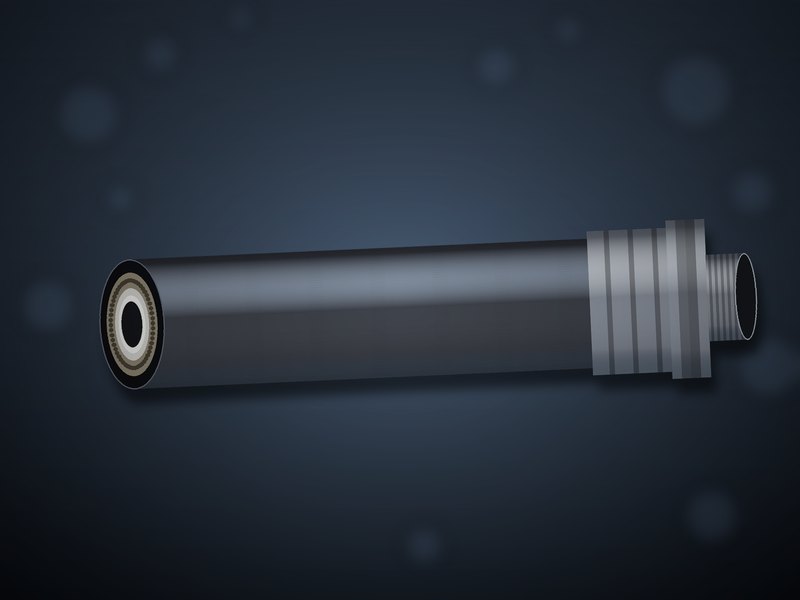
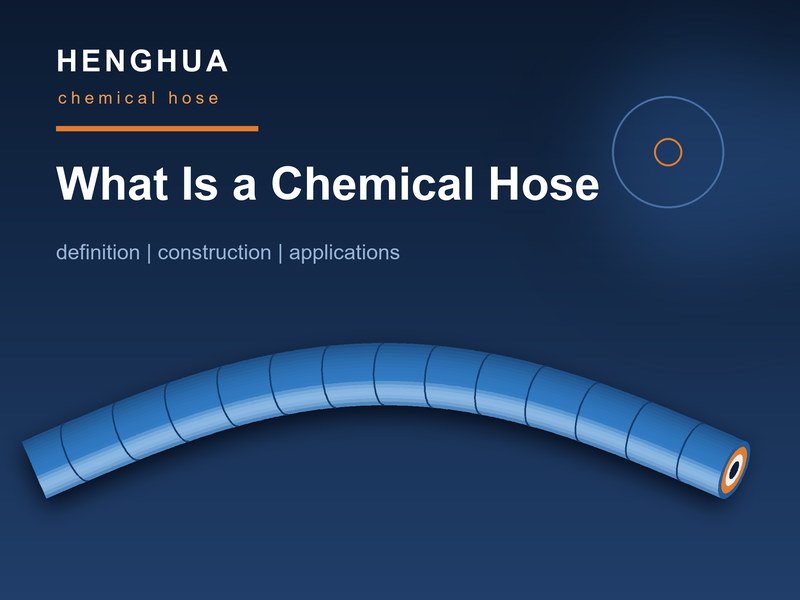
Chemical hose definition showing a layered composite hose with liner, reinforcement and cover

What Is a Chemical Hose? Definition, Construction and Applications

A chemical hose is a flexible line built to transfer aggressive liquids, slurries, and gases safely between tanks, trucks, and process equipment. Its chemical hose construction combines four functional layers: a liner that resists the medium, a load-bearing reinforcement, a support helix for vacuum duty, and a protective cover. This page defines the product and

What Is a Chemical Hose? Definition, Construction and Applications Read More »
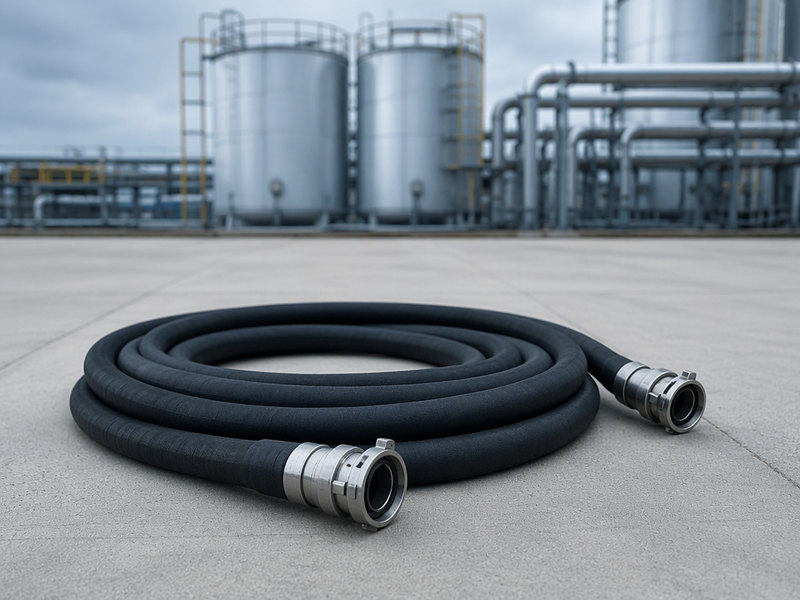
Chemical plant hose assembly used for in-plant chemical transfer

How to Choose the Right Chemical Hose for Chemical Plants

Choosing a chemical plant hose means matching one assembly to the exact duty at each transfer point: tank farm, railcar and tanker unloading, reactor charging, drum and tote transfer, and sump or waste lines. Match four things in this order: the transfer point, the liner, the structure, and the electrical grade. Then control the static,

How to Choose the Right Chemical Hose for Chemical Plants Read More »

Rubber chemical hose assembly staged for bulk industrial chemical transfer

Transfer of Industrial Chemicals: How to Choose the Right Safe Rubber Hose

A safe rubber chemical hose for bulk transfer comes down to four facts: the chemical, the worst temperature, the working pressure, and whether the duty is suction or delivery. If you are choosing a hose for industrial chemical transfer, those four facts are the whole decision. Match the rubber compound, the reinforcement, and the cover

Transfer of Industrial Chemicals: How to Choose the Right Safe Rubber Hose Read More »

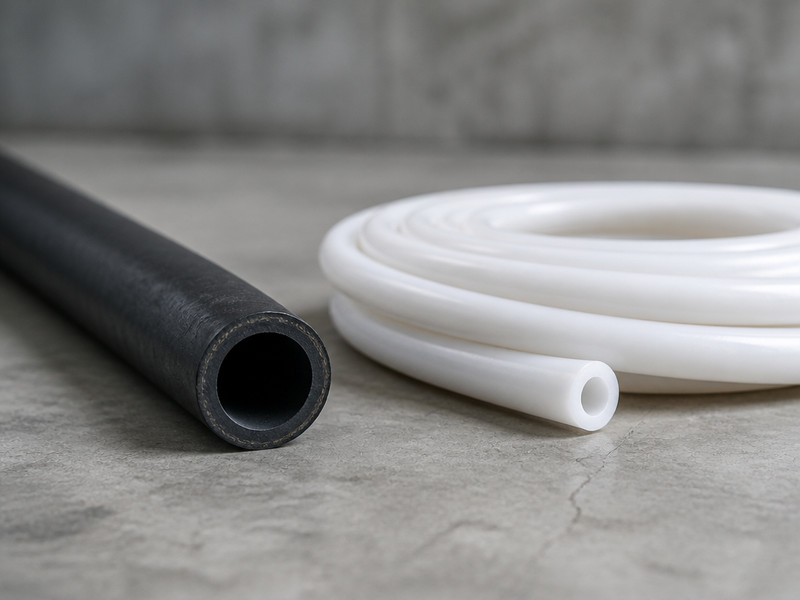
Cut edge of a chemical hose assembly showing cover, textile reinforcement, liner and hollow bore beside a crimped end fitting

How to Choose the Right Chemical Hose for Each Product

Chemical hose compatibility is a matching problem, not a catalog lookup. The fluid decides the liner; the liner sets the temperature and pressure limits; only then do bore and fittings matter. This guide maps seven chemical families onto the liners that survive them, and shows how to read a chemical resistance chart. Read the fluid

How to Choose the Right Chemical Hose for Each Product Read More »

A PTFE-lined chemical hose coiled beside a rubber-lined acid hose on an industrial workshop floor

Selecting the Right Chemical Hose: From Acid Hose to PTFE Hose

A ptfe chemical hose is the top rung of a ladder that starts with the traditional rubber-lined acid hose, usually an EPDM liner. Above it sit XLPE and UHMWPE, and each rung closes a failure mode of the rung below — oxidizers at XLPE, breadth at UHMWPE, solvents and heat at PTFE (polytetrafluoroethylene), the only

Selecting the Right Chemical Hose: From Acid Hose to PTFE Hose Read More »

Chemical resistant hose assembly with stainless steel end fittings on an industrial transfer line

The Ultimate Guide to Chemical Resistant Hoses for Industrial Needs

A chemical resistant hose is defined by its liner, which must be documented as compatible with a named medium, concentration, and temperature. Buyers cannot judge that by look or feel, so they rely on the standard, on the type, and on the electrical grade, each proven by documents. This guide covers how to specify and

The Ultimate Guide to Chemical Resistant Hoses for Industrial Needs Read More »

XLPE chemical suction and discharge hose with steel helix, crimped fittings and open bore in a chemical plant transfer area

XLPE Chemical Suction and Discharge Hose 17 bar: Specs and Uses

An XLPE chemical hose is a suction and discharge line built around a cross-linked polyethylene liner. It carries acids, alkalis, and oxidizing media at a quoted working pressure of 17 bar inside its stated temperature band, and it holds its bore under vacuum because a steel helix runs through the wall. If you are reading

XLPE Chemical Suction and Discharge Hose 17 bar: Specs and Uses Read More »

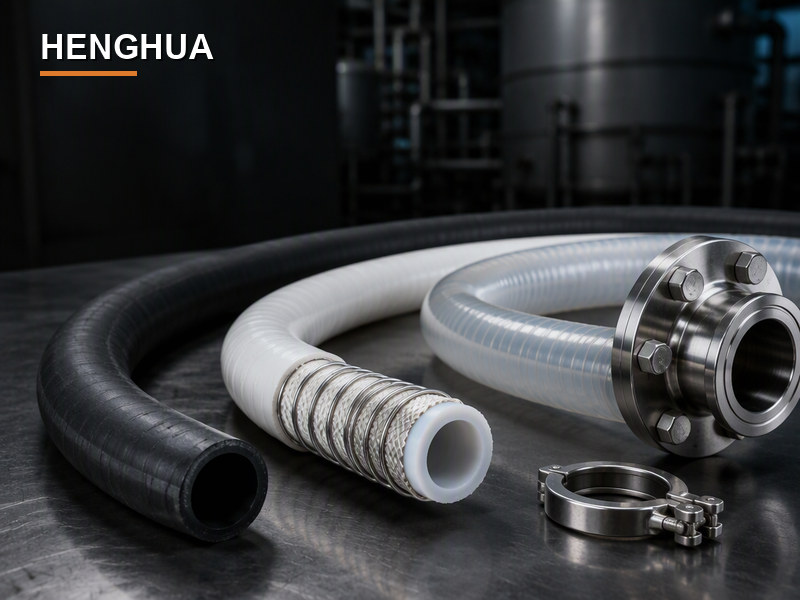
Rubber, PTFE and UHMWPE chemical hose and fittings on a stainless steel bench

Rubber vs PTFE vs UHMWPE: Chemical Hose Material Comparison

Choosing a chemical hose material comes down to four questions: what the medium attacks, how hot or cold the line runs, how the hose is handled, and what it costs over its working life. Rubber, PTFE and UHMWPE are the three liners most chemical plants weigh. None of the three is automatically the right purchase.

Rubber vs PTFE vs UHMWPE: Chemical Hose Material Comparison Read More »

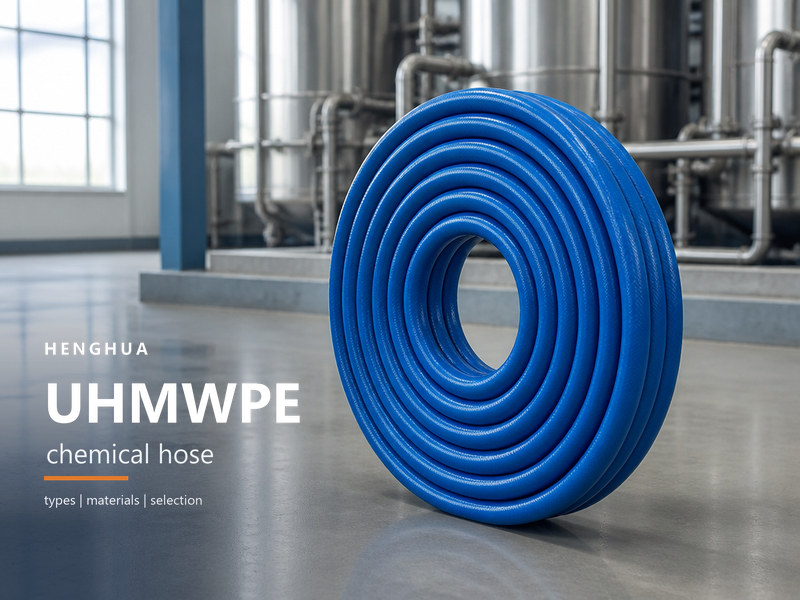
Coiled UHMWPE chemical hose with a blue EPDM cover standing in a chemical plant

UHMWPE Chemical Hose: Why UPE Handles 98% of Industrial Chemicals

A UHMWPE chemical hose pairs an ultra-high-molecular-weight polyethylene liner with a blue EPDM cover to resist a wide range of industrial chemicals. Manufacturer data sheets commonly state that the liner handles about 98% of industrial chemicals, working from −40 °C to +120 °C at 150 PSI. If you are checking whether one liner can carry

UHMWPE Chemical Hose: Why UPE Handles 98% of Industrial Chemicals Read More »