

A chemical resistant hose is defined by its liner, which must be documented as compatible with a named medium, concentration, and temperature. Buyers cannot judge that by look or feel, so they rely on the standard, on the type, and on the electrical grade, each proven by documents. This guide covers how to specify and verify that evidence.
Chemical service punishes guesswork. A hose carrying the right medium at the wrong pressure, or failing an electrical test, becomes a hazard instead of a tool. The sections below follow the EN 12115:2021 framework, the four electrical grades, the assembly specification, the fitting and coupling decisions, the documentation to request, and the supplier questions that separate a manufacturer from a reseller.
About a 13-minute read at 250 words per minute; the guide covers standards, assembly specification, electrical grades, documentation, and supplier qualification.
What a Chemical Resistant Hose Standard Actually Controls
EN 12115:2021 is not a badge a factory can buy. It is a set of tests, dimensional limits, and marking rules a hose must pass before it earns a claim. In chemical service, a chemical hose standard usually settles three questions at once: what the hose may be built from, how strong and flexible it must stay across its temperature envelope, and how its electrical behavior is measured and marked. Those three questions map onto the failure modes that hurt people.
A buyer who treats a compliant label as the whole story will eventually meet the gap between a test rig and a plant. The mark describes the envelope the hose was tested inside. It does not describe every condition a process can invent. Whether an industrial chemical hose meets its claim therefore depends on evidence, not on appearance. Document the real service conditions first, then match them to the standard, the type, and the grade the hose actually claims.
Three parts make a valid claim. The standard names the test basis. The type states whether the hose resists vacuum. The grade states how the hose handles static electricity. Remove any one of them and the claim becomes decoration. For the medium-to-liner side of that decision, the fluid compatibility chart is a useful starting point before you choose a construction.
Table 1. Core parameters of the EN 12115:2021 framework for rubber and thermoplastic chemical hoses and hose assemblies (planning values; confirm against the current standard text).
| Parameter | What the standard sets | Why a buyer checks it |
|---|---|---|
| Hose types | Type D delivery and Type SD suction and delivery | Decides whether the hose resists vacuum |
| Electrical grades | Four grades, separated by measured electrical resistance | Sets the static duty the hose can carry |
| Temperature envelope | −20 °C to +65 °C | Defines the band the rating applies to |
| Working pressure | 10 bar | Anchors the continuous pressure claim |
| Resistance test | EN ISO 8031 | Names the method behind the grade claim |
How EN 12115:2021 Classifies Chemical Resistant Hoses
EN 12115:2021 covers rubber and thermoplastic chemical hoses and hose assemblies. It sorts service into two hose types. Type D is a delivery hose, built to carry product under pressure. Type SD is a suction and delivery hose, fitted with internal support so it holds its shape when a pump pulls a vacuum on the inlet side. For that reason a chemical resistant hose selected for a suction line must be Type SD.
Choosing the wrong type is a structural error rather than a preference. A delivery hose on a suction line collapses inward, and a collapsed liner blocks flow and traps product. A suction hose used only for pressure duty carries a helix the line does not need. The structural difference is the same one covered in suction hose vs delivery hose.
EN 12115:2021 fixes a service envelope of −20 °C to +65 °C at a working pressure of 10 bar. The two figures qualify together: a 10 bar rating holds only inside that band. Compare products outside that band against the maker’s own published data, not against the standard.
EN 12115:2021 also sorts hoses into four electrical grades, and the division concerns static, not strength. A conductive or antistatic hose gives a static charge somewhere safe to go. Where a flammable atmosphere can form, specify one of those grades and confirm the measured limit in the test report.

Figure 1. Type D and Type SD share the liner and the reinforcement; the steel helix inside the Type SD wall is what stops a chemical resistant hose collapsing under vacuum.
The Four Electrical Grades and the Resistance Limits
Electrical grading is the part of selection that buyers most often overlook, and it is the part regulators care about most. EN 12115:2021 separates hoses into four grades, and the resistance limits are verified with the EN ISO 8031 test method. Two limits are quoted most often. A conductive grade is measured at or below 10^6 Ω, and an antistatic grade is measured at or below 10^9 Ω. The gap between those limits is not a rounding detail. It separates two different duties.
A conductive hose bleeds charge away quickly, so it suits transfer where a rapid static build-up is possible. An antistatic hose drains charge more slowly, and it is the common choice for general transfer duty. Neither grade replaces the OSHA requirements for bonding and grounding. A chemical resistant hose with no stated grade leaves that path undefined.
The grades matter because static is invisible until it discharges. A plastic-lined hose and a rubber hose do not share the same electrical behavior, and one liner can be produced in more than one grade. Ask which grade the maker intends to supply, in writing, and confirm that the test report matches it. The flexible hose materials guide explains how the liner interacts with the rest of the wall.
Table 2. The two electrical resistance limits most often quoted for EN 12115:2021 hoses, measured with the EN ISO 8031 test method.
| Grade | Resistance limit | What it controls |
|---|---|---|
| Grade M (conductive) | 10^6 Ω or lower | Rapid static build-up during fast transfer |
| Grade Ω (antistatic) | 10^9 Ω or lower | Slow static accumulation in general duty |
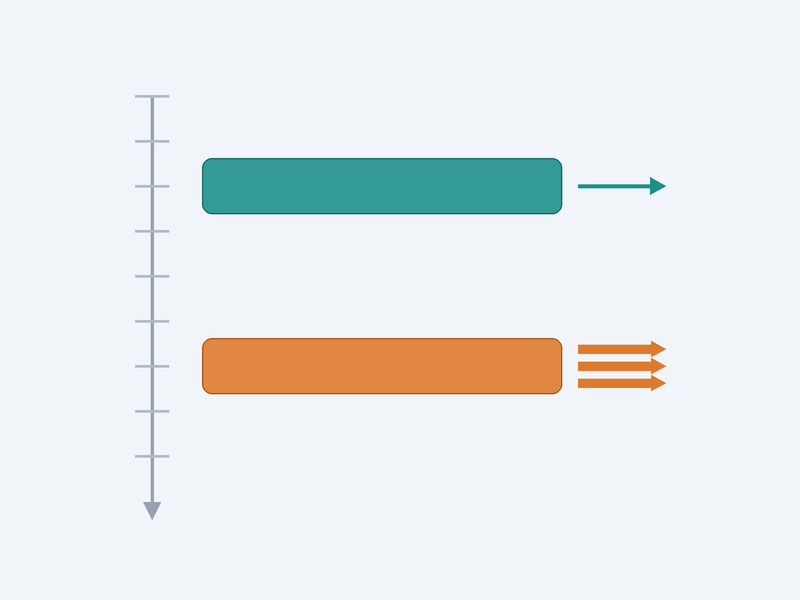
Figure 2. A conductive grade drains static almost at once, while an antistatic grade drains it more slowly and sits higher up the scale.
Specifying a Chemical Resistant Hose Assembly
A hose assembly is not a length of hose. It is the hose plus its end fittings, joined and tested as one unit. A chemical resistant hose becomes an assembly the moment fittings are attached, and the assembly is what should be pressure tested. Treating the two as separate purchases is a common sourcing error in chemical service.
A written specification that both sides sign removes most disputes later. Quote against the chemical hose standard you named, not against a generic product, and specify the chemical hose fittings at each end before the assembly is built. State the parameters in a fixed order:
- Service medium and its concentration, including any second phase.
- Maximum and minimum material temperature at the hose wall, not the room average.
- Working pressure, plus the highest surge the line can see.
- Whether the line sees vacuum, gravity, or pressure only.
- Required hose type and electrical grade.
- Bore and length, with the fitting type at each end.
- Tests and documents required before shipment.
Table 3. A written assembly specification sheet: state each parameter so a supplier can quote against a real requirement.
| Parameter | What to state | Why it changes the build |
|---|---|---|
| 중간 | Chemical name, concentration, and any second phase | Drives the liner choice |
| 온도 | Worst material temperature at the wall | Sets the usable pressure band |
| 압력 | Working pressure plus highest surge | Sets the reinforcement and rating |
| 의무 | Pressure, gravity, or vacuum | Decides Type D or Type SD |
| Electrical grade | Conductive or antistatic, with the limit | Decides static control |
| Bore and length | Nominal bore in inches and overall length | Sets flow and reach |
| End fittings | Type and material at each end | Sets the joint and the seal |
Once the specification sheet exists, a supplier can quote from the stated duty instead of a guess. Add the bore using a standard size such as 3/4 in, 1 in, 1-1/4 in, 1-1/2 in, 2 in, 3 in, or 4 in, and state the working pressure and the length tolerance. The hose size selection guide covers how bore and flow rate connect.
Choosing End Fittings and Couplings
End fittings carry the same medium as the hose, at the same pressure, and they are often the weakest point in an assembly. A chemical hose fittings decision is therefore a material choice as much as a mechanical one. The hose may be perfect and still leak at a fitting made of the wrong alloy. Start from the medium, then pick the fitting material that resists it.
Table 4. End fitting choices for a chemical service assembly, with the trade-off each one carries.
| Fitting type | Typical material | Where it suits | Watch |
|---|---|---|---|
| Crimped hose barb | Stainless steel or plated steel | Permanent factory assemblies | Single use; check the plating against the medium |
| Cam and groove coupling | Stainless steel or polypropylene | Fast connect and disconnect transfer | Check the gasket against the medium |
| 플랜지 단부 | Stainless steel | Fixed plant piping and high pressure | Needs a new gasket at every break |
| 나사산 끝단 | Stainless steel or PVDF | Small bore lines and instruments | Sealant must resist the medium |
| Clamp and insert | Steel clamp with chemical insert | Field repairs and custom ends | Clamp torque and material must match |
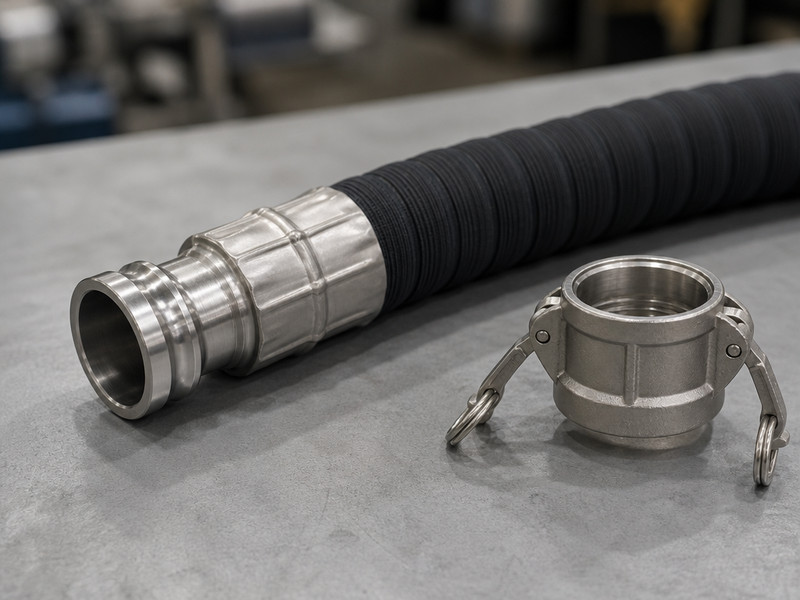
Figure 3. A finished assembly joins the hose and the end fittings as one tested unit, so the pressure proof covers the joint as well as the tube.
Couplings and clamps complete the joint. A crimped fitting is made in a factory press and cannot be reused; a clamped fitting lets a plant change ends in the field but depends on the clamp being right for the bore and the pressure. The hose couplings guide sets out the coupling families, and the hose clamp selection guide covers clamp torque and materials.
The Documentation and Test Regime to Request
A compliance claim should arrive with paper. Ask for the test regime before you place the order, because documents are cheap to prepare before shipment and expensive to chase afterward. A chemical resistant hose without a test report is a promise, not a specification. The reports only mean something when they name the chemical hose standard the hose was built to. The items below are the ones most worth holding for each order:
- A hydrostatic proof and burst report to a named method such as ISO 1402.
- An impulse test report where the service is pulsating, to ISO 6803.
- An electrical resistance report to EN ISO 8031, stating the grade and the value.
- An abrasion result to ISO 4649 where the cover drags on rough ground.
- A material certificate for the liner and the fitting.
- A marking schedule that matches the print on the cover.
Table 5. Documents and tests to request with a chemical hose quote, and what each one proves.
| Document or test | Method to name | What it proves |
|---|---|---|
| Hydrostatic proof and burst | ISO 1402 | The assembly holds the rated pressure with margin |
| Impulse test | ISO 6803 | The assembly survives repeated pressure cycling |
| Electrical resistance | EN ISO 8031 | The hose meets the grade limit it claims |
| Abrasion test | ISO 4649 | The cover resists wear on rough ground |
| Material certificate | Supplier record | The liner and fitting match the specified compound |
| Marking schedule | Supplier record | The cover print matches the specification |
Keep the reports with the purchase record, not in a drawer. If an industrial chemical hose later fails, the first question will be whether it was the right grade and the right type for the job. A report that matches the cover marking answers that question in minutes.
How to Qualify a Chemical Hose Supplier
Qualifying a supplier is a process, not a single question. The goal is to confirm that the factory can build to the standard you named and can prove it with records. A reseller can forward a data sheet; a manufacturer can show the tests behind it. A factory that can trace a chemical resistant hose back to a batch record is easier to qualify than one that cannot.
Table 6. Supplier qualification checks, and the answer that should raise a question.
| Check | What a qualified answer looks like | Warning sign |
|---|---|---|
| Standards knowledge | Names the standard, type, and grade unprompted | Vague talk about general quality |
| Test evidence | Provides reports for the claimed grade | Offers a material sheet instead |
| Production control | Controls liner and crimping in house | Buys finished hose and resells it |
| Traceability | Marking traces to a batch record | No link between hose and paperwork |
| Sampling | Supplies samples for a fit and pressure check | Refuses any pre-production sample |
Ask the questions in an order that tests knowledge before paperwork. A supplier that cannot name Type D and Type SD without prompting is unlikely to control the difference in production. Samples are the final check, because a sample lets you confirm bore, flexibility, and fitting fit before a bulk order.
Turning Compliance Into a Purchase Decision
Compliance is a paper trail as much as a product. For an industrial chemical hose line, the buying decision reduces to three matched items: the standard, the type, and the electrical grade. Get those three right, document the service conditions, and the rest of the selection follows. The wider chemical hose picture (planned URL — publish before linking) fills in the types and applications around them.
Set the purchase up in this order:
- Write the service conditions before you contact a supplier.
- Name the standard, the type, and the electrical grade you require.
- Request the test reports and the marking schedule with the quote.
- Confirm the fitting and clamp materials against the medium.
- Keep a copy of the signed specification with the order.
When a supplier asks for your specification, a written sheet is the fastest route to an accurate quote. Send the medium, the temperature, the pressure, the duty, and the grade, and ask for samples with the price. A chemical resistant hose quoted against a real requirement is less likely to fail in service than one chosen from a catalog photo.
About HENGHUA
HENGHUA manufactures chemical hoses and hose assemblies for distributors, retailers, and OEM brands worldwide. The chemical line covers UHMWPE (UPE), XLPE, and PTFE liners alongside rubber constructions in EPDM and oil-resistant synthetic rubber, with high-strength textile reinforcement and a steel helix available for suction duty. We supply factory-crimped assemblies, custom lengths, fittings, cover printing, private label, and OEM/ODM programs. Commercial terms are factory-direct pricing, short bulk lead times, and warranty.
Send your specification for a quote and free samples, and we will confirm the standard, the type, and the electrical grade each assembly meets. 견적 및 무료 샘플 받기
Chemical Resistant Hose FAQs
What is a chemical resistant hose?
It is a hose built to carry a specific chemical or chemical family without swelling, cracking, or leaching within its rated conditions. Resistance comes from the liner material and from a construction that suits the pressure and vacuum of the job. No single hose resists every chemical, so resistance is always defined against a named medium, a concentration, and a temperature. That is why a written compatibility check comes before any purchase.
What does EN 12115:2021 actually require?
The standard sets the tests, dimensions, and marking rules for rubber and thermoplastic chemical hoses and hose assemblies. It defines Type D delivery hoses and Type SD suction and delivery hoses, fixes a service envelope of −20 °C to +65 °C at 10 bar, and divides hoses by electrical behavior into four grades. A supplier claiming the standard should be able to show the test reports that back the claim.
What is the difference between Type D and Type SD?
Both carry product, and both share a liner and a reinforcement layer. Type D is a delivery hose, so it is rated for pressure service only. Type SD adds internal support, usually a steel helix, that stops the wall collapsing when the inlet side pulls vacuum. Choose Type D for pressure lines and Type SD whenever the line must also handle suction or gravity unloading.
What are the electrical grades in EN 12115:2021?
EN 12115:2021 defines four electrical grades for a chemical hose. The two limits buyers ask about most are the conductive grade at 10^6 Ω or below and the antistatic grade at 10^9 Ω or below. Both figures come from the EN ISO 8031 test method, applied to the finished hose. Electrical grading describes only how fast a charge drains, so the grade you order must match the flammability risk of the area.
How is electrical resistance tested?
Resistance is measured with the EN ISO 8031 test method, applied to the completed hose or assembly. The result is compared with the grade limit the maker claims. Because the reading depends on the path from end to end, a test on the finished assembly is more useful than a figure from a material data sheet alone. Ask for a measured value, not just a grade name.
What temperature and pressure should I plan for?
Plan inside the standard’s envelope of −20 °C to +65 °C at 10 bar working pressure. Those two figures belong together, so a hose qualified at 10 bar is qualified at 10 bar within that band. If your process runs hotter, colder, or higher, ask the maker for its own published data rather than stretching the standard figure.
What fittings should I choose?
Match the chemical hose fittings to the medium first, then to the pressure and the mating connection. A fitting that corrodes or swells is a leak waiting to happen, even when the hose itself is correct. Confirm the thread and the coupling standard at both ends before the hose is built, and specify whether the joint will be factory crimped or field clamped.
What documents should I request?
Ask for a hydrostatic proof and burst report, an impulse report where the service pulsates, and an electrical resistance report naming the grade. Request a material certificate for the liner and the fitting, and a marking schedule that matches the cover. These papers are cheap to prepare before shipment and hard to obtain afterward, so make them part of the purchase order.
How do I qualify a chemical hose supplier?
Check that the factory can name the standard, the type, and the grade, and can show reports for each. Ask who controls the liner material and who crimps the fittings. A supplier that buys finished hose and resells it will struggle to answer. Visit, or request a video walkthrough, and confirm that the marking on the delivered hose matches the documents.
Can I use one hose for several chemicals?
Only where the liner is documented as compatible with all of them at the temperatures and concentrations in service. A liner that handles two chemicals separately may still fail when both are present at once, or when a cleaning agent is added. Treat a change of process as a new compatibility question, and re-check the liner before reusing a hose.






 English
  Spanish
  Portuguese
  French
  German
  Arabic
  Russian
  Indonesian
  Japanese
  Korean