
油圧アダプター
Hydraulic Adapters: Join Any Two Connection Standards
Hydraulic adapters exist because no machine uses one thread system: a JIC hose line must meet an NPT port, an ORFS circuit a BSPP valve. An adapter joins those two standards in one leak-free part, and the right end combination keeps a repair simple instead of a stack of improvised fittings. This page covers our full range — straight, reducing, swivel, elbow, bulkhead, port, and gauge adapters across every standard we manufacture — with an end-combination matrix, sealing rules, thread identification, and ordering terms. Match your two ends from the tables, then request a quote in minutes.
Why Buy from Us
| Trust Anchor | What It Means for You | |
|---|---|---|
| 1 | Factory Direct Manufacturer | We produce the adapters, not just resell them. |
| 2 | Batch-Tested Quality | Dimension-inspected with calibrated gauges; salt-spray tested per ISO 9227. |
| 3 | Every Standard in One Place | Hydraulic adapters in JIC, ORFS, ORB, NPT, BSPP/BSPT, flange, 24° cone, and ISO 6149 ends. |
| 4 | Verified Quotes in One Business Day | Send both end types and sizes; get a confirmed part number, price, and lead time in one working day. |
| 5 | Free Samples for Qualified Projects | Verify thread fit and sealing on your own equipment before volume production. |
結果の109~120/149を表示しています


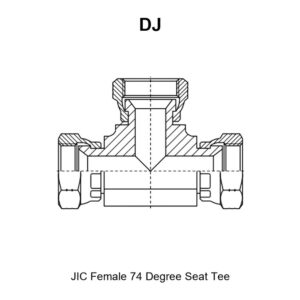
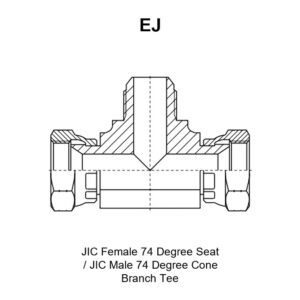


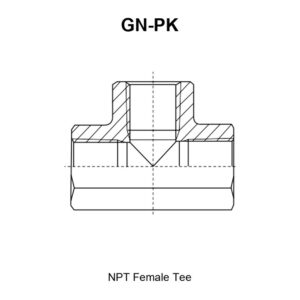
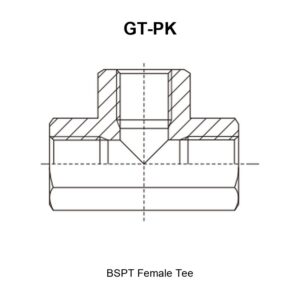


What Are Hydraulic Adapters?
A hydraulic adapter has two different connection ends and joins two components that do not share a thread system or sealing method. It is not a hose fitting: adapters connect port to port or fitting to fitting, while the hose end is crimped separately.
Each end seals differently. A JIC end seals on a 37° metal flare; ORFS and ORB ends seal with an O-ring; BSPP seals on a washer or bonded seal; NPT and BSPT seal on the threads themselves. A correctly specified adapter handles both sealing systems in one part — buying by thread size alone is how leaks start.
Core value: identify both ends of the connection, match the sealing method at each end, and one adapter replaces a stack of improvised fittings.
Three customer paths:
- For OEM manufacturers — standardize port-to-hose transitions across a machine platform.
- For end users — convert a port without a special hose assembly.
- For distributors — stock high-runner combinations instead of slow-moving specials.
Key Specifications
End-Combination Matrix
The most-requested hydraulic adapters join these pairs; both ends come in male, female, and swivel forms.
| End 1 | End 2 | Typical Use |
|---|---|---|
| JIC 37° (SAE J514) | NPT / NPTF (ASME B1.20.1) | American hose line to pipe port |
| JIC 37° | SAE ORB (SAE J1926) | Hose line to straight-thread port |
| ORFS (SAE J1453) | JIC 37° | Face-seal line to flare port |
| ORFS | SAE ORB | Face-seal line to manifold port |
| ORFS | NPT / NPTF | Face-seal line to pipe port |
| BSPP (ISO 228-1) | JIC 37° | European port to American line |
| BSPT (ISO 7-1) | JIC 37° | Tapered European port to American line |
| Metric 24° cone (ISO 8434-1) | BSPP | European hydraulic systems |
| SAE flange (SAE J518) | JIC 37° | Large-bore flange to hose line |
| ISO 6149 metric port | JIC 37° | Modern metric manifold to hose line |
Adapter Types
Hydraulic adapters are built in the bodies below; the end combination and body style are chosen independently.
| Type | 説明 | Typical Use |
|---|---|---|
| Straight adapter | Two ends in line, male or female | Standard port conversion |
| Reducer / bushing | Joins two sizes in one standard | Downsizing a port |
| Swivel adapter | One end rotates before torque | Aligning a hose without twisting |
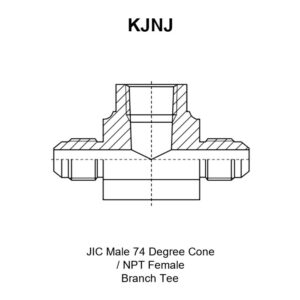
| Elbow / tee | 45°, 90°, or three-port bodies | Routing around obstacles |
| Bulkhead adapter | Panel-mount body with locknut | Passing through a wall or frame |
| Port adapter | Threaded end for a specific port standard | Manifold and valve ports |
| Gauge / test-point adapter | Port for a gauge or test point | Diagnostics and commissioning |
| Hose barb adapter | Threaded end to a barbed tail | Low-pressure push-on connections |
| Weld-on adapter | Weldable body | Tanks, reservoirs, and fabrications |
Thread and Torque Reference
Torque depends on thread and sealing system. ORFS values below are published per SAE J1453-1; confirm other families with our engineers.
| Standard | Example Thread | Notes on Torque |
|---|---|---|
| ORFS (SAE J1453) | 11/16-16 | 40–44 Nm; maximum remedial torque 45 Nm |
| ORFS (SAE J1453) | 13/16-16 | 55–60 Nm; maximum remedial torque 65 Nm |
| ORFS (SAE J1453) | 1-3/16-12 | 90–99 Nm; maximum remedial torque 146 Nm |
| JIC 37° (SAE J514) | 9/16-18 | Flare seat; confirm per configuration |
| SAE ORB (SAE J1926) | 11/16-16 | O-ring boss; confirm per configuration |
| NPT (ASME B1.20.1) | 1/2-14 | Tapered; sealant required; hand-tight plus 1–2 turns |
Materials and Finish
| Component | Standard Option | Corrosive-Service Option |
|---|---|---|
| Adapter body | Carbon steel, zinc or clear trivalent chrome | Stainless steel |
| Low-pressure and fuel | Brass | Stainless steel |
| Sealing elements | NBR O-rings, copper or bonded washers | FKM O-rings, PTFE-encapsulated seals |
Key Features
- Ten standards joined in any combination
- Straight, reducing, swivel, elbow, tee, bulkhead, port, gauge, and weld-on bodies
- Correct sealing method at each end — flare, O-ring, washer, or thread
- Published torque values with defined remedial limits
- Thread accuracy gauged to size
Installation
Sealing method decides the procedure, and on hydraulic adapters the two ends often differ:
- Identify both ends: measure thread diameter and pitch, then check the seat — 37° cone, flat face with O-ring groove, O-ring boss, or tapered pipe thread.
- Clean both faces and threads; grit trapped at a seat is a guaranteed leak.
- Fit a new O-ring or washer where required; never reuse a crush washer.
- Hand-thread both ends before using a wrench.
- Torque each end to its published value with a calibrated wrench.
- Re-pressurize, wipe dry, and check for weeping; retorque once after the first heat cycle.
Rules that prevent failures:
- Never use sealant on JIC, ORFS, ORB, or BSPP ends — the seat or O-ring seals, and tape shreds can block passages.
- Use sealant only on NPT and BSPT tapered ends, where the threads are the seal.
- Keep the adapter short: each joint adds leak paths.
- Support long hose runs against vibration.
- Never force a mismatched thread; “feels tight” means a damaged thread.
Nomenclature: Describing an Adapter
An adapter is described by two ends and a configuration:
| Field | 意味 | Example |
|---|---|---|
| End 1 | First connection standard and size | JIC 37° male, -08 |
| End 2 | Second connection standard and size | ORB male, -08 |
| Configuration | Body style and angle | Straight |
A typical description reads: -08 JIC 37° male x -08 ORB male, straight. We assign the exact part number on request — send both ends, sizes, and working pressure, and our engineers confirm the code.
Matching and Identification
Measure the thread, then look at the seat — several standards share similar diameters:
| Feature | JIC 37° | ORFS | SAE ORB | NPT | BSPP |
|---|---|---|---|---|---|
| Seat | 37° cone | Flat face, O-ring groove | Flat base, O-ring | Tapered thread | Flat face, washer |
| Thread | Straight UNF | Straight UN | Straight UNF | Tapered | Straight Whitworth 55° |
| Sealant | Never | Never | Never | Required | Never |
| Seal element | Metal flare | Oリング | Oリング | Thread interference | Washer or bonded seal |
A thread that engages loosely then tightens quickly is tapered (NPT or BSPT); one that runs to a hard stop is straight (JIC, ORFS, ORB, BSPP). Send photos with a ruler and we identify both ends free of charge.
Applications and Industries
Hydraulic adapters appear wherever two systems meet:
- Mobile equipment built to mixed US and European standards
- Manifolds and valve blocks with metric ports and JIC lines
- Marine engines and deck machinery
- Agricultural and utility equipment service
- Machine tools, presses, and industrial power units
- Repairs where the right hose assembly is unavailable
Operating temperature follows the sealing element: NBR O-rings suit typical petroleum service, FKM extends the upper range, and copper washers run hotter than aluminum. Confirm against your fluid.
Ordering and Packaging
Ordering hydraulic adapters is straightforward once both ends are confirmed.
- Unit of measure: sold per piece (EA)
- MOQ: one box per size; mixed-size sample kits available
- Customization: end combinations, angles, materials, seal compounds, private label
- Supplied with the matching O-ring or washer where the end requires one
- Export packing: corrugated cartons with moisture barrier for sea freight
Hydraulic Adapters FAQ
Can I connect a JIC hose line to an NPT port with one adapter? Yes — a JIC male to NPT male straight adapter does it in one part. The JIC end seals on its flare; the NPT end seals on its threads, so use sealant on the NPT side only.
Can ORFS and JIC be joined? Yes, with an ORFS-to-JIC adapter. The two systems never seal directly — the adapter provides the O-ring face on one side and the 37° flare on the other.
Does an adapter reduce the pressure rating? An adapter carries its own rating, and the assembly is limited by the lowest-rated component. Confirm the rating for your size and standard before release.
Which ends need thread sealant? Only tapered threads: NPT and BSPT. JIC, ORFS, ORB, and BSPP seal at a seat or O-ring; sealant there only risks contaminating the circuit.
How do I identify an unknown thread? Measure outside diameter and pitch with a caliper and thread gauge, then check whether the thread is tapered. A thread that tightens quickly is tapered; one that runs to a hard stop is straight.
Can you supply a combination that is not in the matrix? Yes. Send both end standards, sizes, and the pressure requirement, and we will confirm the part and its lead time — most combinations are available without a new tool.
Do adapters come with the O-ring or washer? Where an end needs a sealing element, the matched O-ring or washer is supplied. Washers are single-use — order spares.
- 油圧ホース2323個の商品
- スチールワイヤー撚り込み式油圧ホース66個の商品
- スチールワイヤー編組油圧ホース1010個の商品
- 繊維補強油圧ホース33個の商品
- 熱可塑性樹脂製油圧ホース33個の商品
- 工業用ホース5959個の商品
- 油圧継手166166個の商品
- 再利用可能なホース継手66個の商品
- ソケットレスホース継手88個の商品
- JIC 油圧継手1616個の商品
- メートル法の油圧継手4141個の商品
- NPT油圧継手66個の商品
- BSP油圧継手2626個の商品
- SAE油圧継手3030個の商品
- バンジョー式油圧継手44個の商品
- ORFS油圧継手1111個の商品
- フェルール1111個の商品
- フランジ継手2626個の商品
- ワンピース用フィッティング2424個の商品
- 油圧アダプター149149個の商品
Send a Mail
henghua@hhgpipe.com
Make a Call
+15822925523
86-22-83859963
Mon - Sun: 09:00 am - 22:00 pm
Main Office
Tianjin, China
Hezhong Building, Youyi North Road
 English
  Spanish
  Portuguese
  French
  German
  Arabic
  Russian
  Indonesian
  Japanese
  Korean