
Reading steam hose specifications means working through six columns in order: inside diameter (ID), outside diameter (OD), the working rating (WP), the burst rating (BP), minimum bend radius, and weight or length tolerance. The first two columns tell you what will connect, the two pressure columns tell you what is safe, and the last two tell you whether the hose will survive the route.
Compare every steam hose specifications sheet column by column, and check three recurring traps before you discuss price. This guide works through a real 230 °C grade table, explains the marking line, and states the safety boundary the numbers imply. The rating scheme behind those columns is ISO 6134:2024.
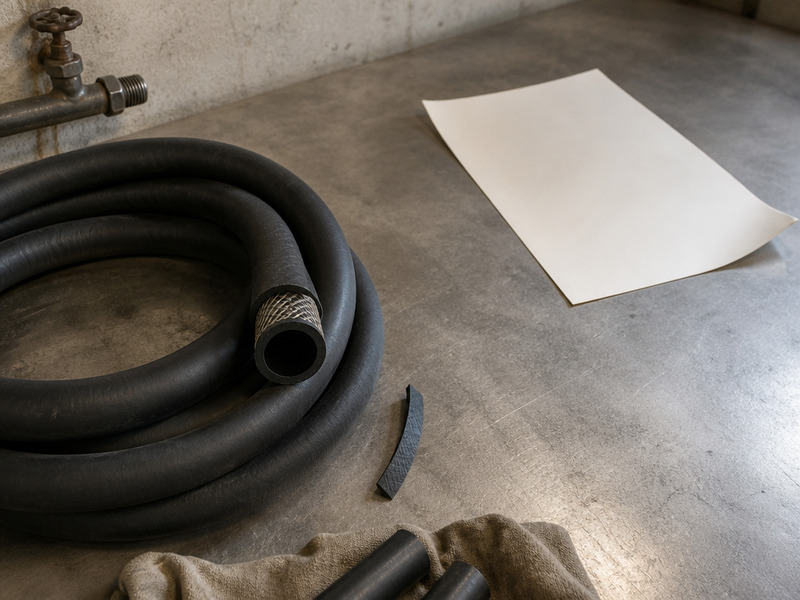
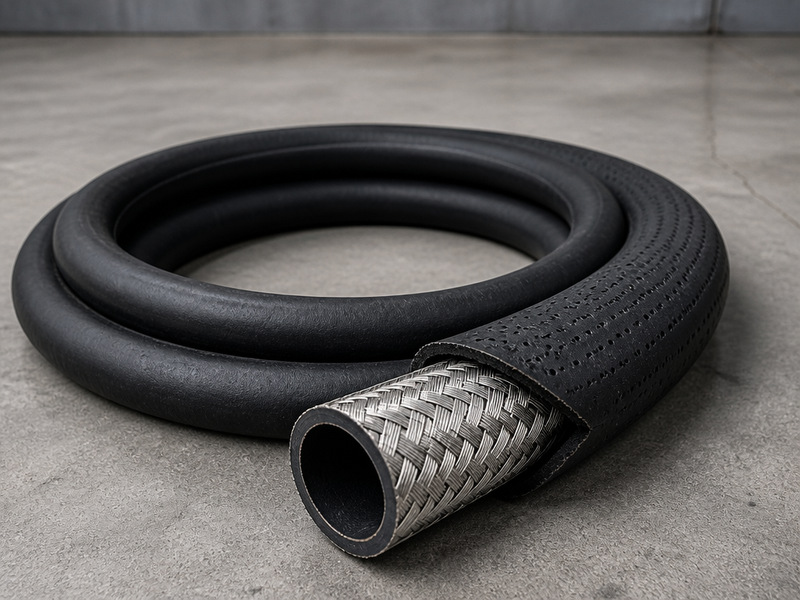
Figure 1. A steam hose data sheet laid beside the hose it was ordered for.
The Six Columns in Every Steam Hose Specifications Table
The column order on a steam hose datasheet barely changes from supplier to supplier, because the same six facts decide whether a hose fits a job. Buyers who read the columns left to right rarely order the wrong hose.
Most ordering mistakes trace back to a skipped column, not to a missing value. A hose can carry a perfect pressure rating and still fail on the first shift because the bore was wrong or the route bent tighter than the cover allows. Treat the six columns as one linked set, and read them in this order.
- Bore and steam hose ID — the nominal size and the true inside diameter that the steam actually flows through.
- Steam hose OD — the outside diameter, which sets clamp size, clearance and how much hose fits on a reel.
- Rated pressure (WP) — the highest pressure the hose may see in continuous service.
- Burst pressure (BP) — the pressure at which the hose fails, always several times higher than the rated figure.
- Bend radius — the tightest curve the hose may take without kinking or flattening.
- Steam hose wall thickness, weight and length tolerance — the handling data that decides reels, support spacing and shipping.
A specification sheet is a contract rather than a brochure. Each column answers a question that the next one depends on. If the inside diameter is wrong, no pressure rating will save the install. If the minimum curve is wrong, the hose will kink no matter how strong it is.
ID and OD: Which Number Do You Measure?
The inside diameter is the hole the steam passes through, and the outside diameter is the outer skin of the cover. On a steam hose, the steam hose ID sets the flow while the steam hose OD sets the fittings, clamps and clearance. Measure the bore at a clean cut end with a caliper or an internal gauge, never by reading the outer surface alone.
Between the inside diameter and the outside diameter sit three layers, not empty space: the rubber tube, the steel braid and the protective cover. Their combined thickness is the wall figure on the sheet, and it grows with the bore, so a large hose is never simply a scaled-up small one. For the full range from 3/8 inch to 4 inch, see steam hose types and sizes.
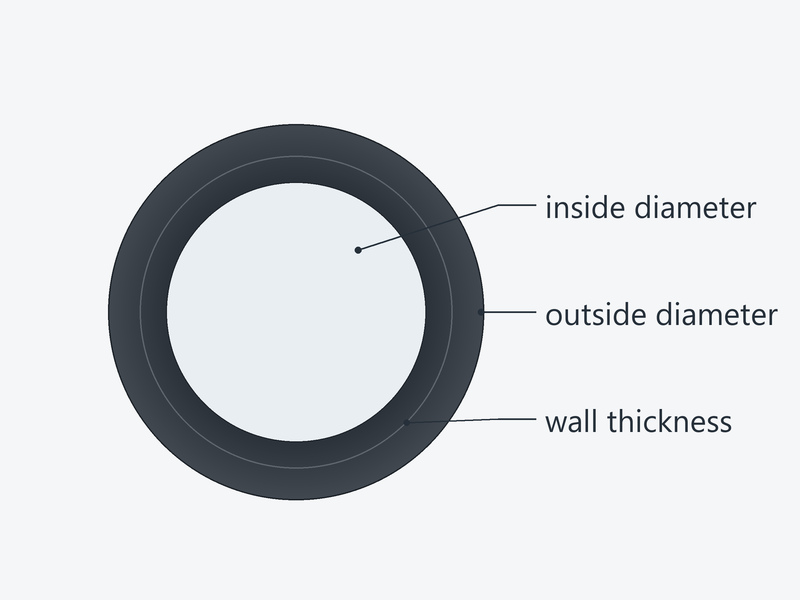
Figure 2. Inside diameter, outside diameter and wall thickness on a hose cross-section.
How Do You Measure the Bore on a Used Hose?
On a hose already in service, measure the steam hose ID at both ends and in the middle, because the tube can swell under heat. An old hose often reads larger than its nominal size, which matters when you order a replacement clamp or ferrule. Record the steam hose OD as well, so the outside diameter still matches the hardware you plan to reuse.
How Do You Convert mm to Inches for a Specification?
Most steam hose tables publish both scales, but catalogs differ. A true 3/8 inch bore is 10 mm inside and 21 mm outside, while a 1 inch bore is 25 mm inside and 39 mm outside. When a supplier quotes one scale only, convert it rather than guessing. A millimeter to inch conversion chart removes the arithmetic error that turns a 19 mm bore into a 25 mm order.
Bore also sets the flow, so size it against the steam load rather than against the fitting you happen to have in the store. A hose size selection guide walks through that match.
WP and BP: Two Numbers, One Safety Factor
Two pressure columns sit side by side on almost every steam hose datasheet, and readers often treat them as the same kind of number. They are not. One is a design limit and the other is a destruction point, and the gap between them is the whole safety story.
| Symbol | Column | What the number means | 230 °C grade example | How to use it |
|---|---|---|---|---|
| WP | Working pressure | The highest pressure allowed in continuous service | 250 psi (17 bar) | Design to it and never exceed it |
| BP | Burst pressure | The pressure at which the hose actually fails | 2,500 psi (about 172 bar) | Divide it by the rated figure to confirm the ratio |
| Ratio | Safety factor | How many times the service pressure the hose holds | 10:1 | Expect about ten for steam |
| Proof | Hydrostatic proof test | The factory test every length must pass | 1.5 times the rated pressure | Look for it on the test record |
The two columns answer different questions. The rated pressure is what the hose can hold every day for years, and the burst pressure is where it finally lets go. A ten-to-one gap between them is normal for steam, far wider than the four-to-one typical of hydraulic hose or the three-to-one typical of pneumatic hose. That margin exists because steam carries far more stored energy than a liquid at the same pressure, and because heat slowly ages the rubber even when the hose is used correctly.
Why the Burst Column Is Not the Rated Column
The most expensive misread on any specification sheet is treating the larger pressure column as if it were the working figure. A hose rated 250 psi (17 bar) for service may burst near 2,500 psi (about 172 bar), and that gulf is not spare capacity you can spend. The ten-to-one factor covers surge, water hammer, age and heat. Run at the burst figure and you are testing a hose the way a lab destroys a sample.
How Do You Read psi and bar on the Same Sheet?
Steam hose specifications often mix two pressure units, because American and European customers read different scales. Learn the anchors: 250 psi is 17 bar, and 2,500 psi is about 172 bar. If one column is bar and the next is psi, restate both in a single unit before you compare anything. Mixing the units on one line is the fastest way to under-rate a hose by a factor of fourteen.
Bend Radius: The Column Buyers Ignore Until the Hose Kinks
The minimum bend radius is the tightest curve the hose may follow before it flattens, kinks or strains the reinforcement. Buyers skip the column because it looks like a route detail rather than a rating, then wonder why a hose dies at a sharp elbow. On this 230 °C grade, a 3/4 inch hose needs a minimum curve of 80 mm, while the cooler 170 °C grade quotes 70 mm for the same bore.
The grade difference is the whole point. The limit belongs to one temperature grade and cannot be carried across grades. The hotter compound is stiffer, so it needs a wider curve. Copy the 70 mm figure onto a 230 °C hose and the installer will bend it tighter than the reinforcement allows. Use the radius printed against the exact grade and bore you ordered, and add slack at every elbow.
A route with generous curves lasts far longer than one that saves a meter of hose. Where space is tight, use a longer hose and a wider arc rather than a short hose with a hard turn. Grade choice depends on the steam itself, so for the difference between saturated and superheated service, see saturated versus superheated steam.
Worked Example: Reading a Full Steam Hose Specifications Sheet
The table below is a full 230 °C grade sheet, read the way a buyer should read it. Start at the bore you need, then check the inside and outside diameters, then confirm the pressure rating and the ten-to-one ratio, then look up the minimum curve for the route. Only after all of that should you consider weight and length.
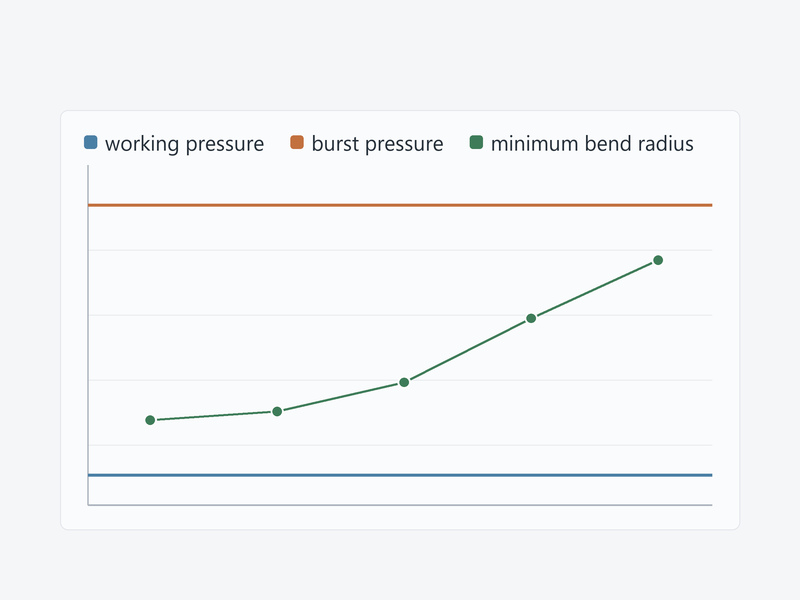
Figure 3. Rated pressure, burst rating and minimum curve by bore size.
| Bore (inch) | ID (mm) | OD (mm) | WP (psi / bar) | BP (psi / bar) | Safety ratio | Min. radius (mm) |
|---|---|---|---|---|---|---|
| 3/8 | 10 | 21 | 250 / 17 | 2,500 / 172 | 10:1 | 50 |
| 1/2 | 12 | 25 | 250 / 17 | 2,500 / 172 | 10:1 | 60 |
| 5/8 | 16 | 28 | 250 / 17 | 2,500 / 172 | 10:1 | 70 |
| 3/4 | 19 | 32 | 250 / 17 | 2,500 / 172 | 10:1 | 80 |
| 1 | 25 | 39 | 250 / 17 | 2,500 / 172 | 10:1 | 110 |
| 1-1/4 | 32 | 46 | 250 / 17 | 2,500 / 172 | 10:1 | 150 |
| 1-1/2 | 38 | 54 | 250 / 17 | 2,500 / 172 | 10:1 | 180 |
| 2 | 51 | 67 | 250 / 17 | 2,500 / 172 | 10:1 | 245 |
| 2-1/2 | 64 | 83 | 250 / 17 | 2,500 / 172 | 10:1 | 300 |
| 3 | 76 | 95 | 250 / 17 | 2,500 / 172 | 10:1 | 400 |
| 3-1/2 | 89 | 110 | 250 / 17 | 2,500 / 172 | 10:1 | 500 |
| 4 | 102 | 124 | 250 / 17 | 2,500 / 172 | 10:1 | 600 |
Reading Row Four: 3/4 Inch
Take the 3/4 inch row as an example. The steam hose ID is 19 mm and the steam hose OD is 32 mm, so the wall and cover add about 13 mm across the two sides. The rated pressure is 250 psi (17 bar) and the burst rating is 2,500 psi (about 172 bar), a clean ten-to-one ratio. The minimum curve is 80 mm, and every length passed a hydrostatic proof test at 1.5 times the rated pressure.
Read the rest of the table the same way. Every row keeps the same pressure and ratio, and only the bore and the minimum curve change. If a supplier publishes different pressures for different bores, ask why before you order. For how these rows map to duties, see industrial steam hose sizes and ratings.
One specification sheet serves different readers. A maintenance fitter replacing one failed hose reads the bore first and the end connection second. A plant engineer writing a line specification reads the two pressure columns and the safety ratio first. A distributor quoting from stock reads the length tolerance and the weight first. The figures do not change; only the column that decides the order does.
Steam Hose Wall Thickness, Weight and Length Tolerance
Steam hose wall thickness is the gap between the bore and the steam hose OD, and it carries the tube, the reinforcement and the cover. It is rarely listed as its own column, so you derive it from the two diameters. A thicker wall usually means more reinforcement and a stiffer hose, which is why the hot grade needs a wider curve than the cooler one. Check the steam hose wall thickness against the minimum curve before you order a heavy wall for a tight route.
A steam hose wall thickness that grows between two sizes usually signals more reinforcement rather than a bigger bore. Confirm both before you order, because a heavy wall on a tight route will fight the minimum curve that the routing already set.
Weight matters because a steam hose is often carried by hand and hung on a reel. Length tolerance matters because you pay per meter and you cut per route. A typical bulk length runs to 100 m, with large bore sizes supplied in 40 m or 20 m coils. Ask for a steam hose datasheet if a supplier quotes only a price and a picture.
- Cut length — supplied to a tolerance, so measure the route and add extra for fittings.
- Coil length — how the hose ships; the largest bores arrive in the shortest coils.
- Service length — the cut length minus the space taken by the two ends.
Three Ways a Steam Hose Specifications Sheet Is Misread
Three errors repeat across plants, and each one shortens hose life or creates a hazard. Learn to spot them and the sheet becomes a safety document rather than a formality.
Mistake One: Mixing psi and Bar
The units sit side by side, so a reader assumes they can be compared directly. A hose marked 17 and a hose marked 250 are the same hose, and treating them as different pressures wastes time or, worse, over-rates one of them. Restate every figure in one unit before you compare anything.
Mistake Two: Reading the Burst Figure as the Service Limit
The burst figure is the failure point, not the service limit. A supplier who quotes only the larger number is either careless or trying to impress. Always ask for the rated pressure and the safety ratio together, and treat a burst-only quote as incomplete.
Mistake Three: Copying a Minimum Curve Across Grades
The minimum curve travels with the grade, not the bore. A 3/4 inch hose needs 80 mm in the 230 °C grade but only 70 mm in the 170 °C grade. Copy the wrong figure into a purchase order and the hose will kink where the route turns hardest.
What a Steam Hose Marking Line Must Show
Every compliant steam hose carries a marking line printed along the cover or embossed at intervals. The marking is not decoration; it is the data that lets a fitter confirm the hose matches the sheet without a catalog. Under ISO 6134:2024 the marking identifies the type and the class, and the maker adds the bore, the rated pressure and the temperature range.
- ISO 6134:2024 — the standard the hose is built to, now in its fifth edition.
- Type 1 or Type 2 — Type 1 is textile-reinforced to a maximum 6 bar at 164 °C; Type 2 is steel wire reinforced to a maximum 18 bar at 210 °C.
- Class A or Class B — the cover only: Class A is non-oil-resistant and Class B is oil-resistant, and neither says anything about steam.
- Bore and pressure — the nominal size plus the rated pressure, often in both psi and bar.
- Temperature range — the continuous and intermittent limits for that grade.
- M and Ω — the electrical suffixes, read separately from the steam data: M marks a bonded hose and Ω marks a conductive hose.
A marking line that omits the rated pressure, the standard or the temperature range is a warning sign. If the marking and the steam hose datasheet disagree, stop and query it before the hose goes into service. For the paperwork behind a rating, keep the type examination and test certificates with the batch.
A hose that is kinked, blistered, cracked, hardened or weeping at the coupling has reached the end of its service life, so replace, never repair it. A patched steam hose can let go at the repair without warning, and steam at 250 psi (17 bar) is not a hazard you manage with a bandage. Keep a proof-tested spare assembly on the rack, swap the failed hose out, and inspect it off line.
Steam Hose FAQs
What is the difference between rated pressure and burst pressure on a steam hose datasheet?
The rated pressure is the design limit for continuous service; the burst pressure is the point at which the hose gives way. On the 230 °C grade these are 250 psi (17 bar) and 2,500 psi (about 172 bar), a ten-to-one ratio. Design to the rated figure only. The ratio is the number to compare between suppliers, because two hoses can share a rated figure and still carry different burst figures.
Does a larger steam hose ID always move more steam?
Up to a point, a larger inside diameter passes more steam for the same pressure drop. But bore also changes the minimum curve, the weight and how the hose handles on a reel. A hose that is too stiff for the route can kink and lose more flow than the extra diameter gains. Size the bore to the steam load and the route together, not to diameter alone.
Can I borrow a curve limit from a different temperature grade?
No. For the same 3/4 inch bore the two published figures differ, 80 mm on the 230 °C grade against 70 mm on the 170 °C grade. Order the grade first, then take the minimum curve from that row; if a supplier quotes a single radius for the whole range, ask which grade it belongs to.
Which pressure unit should I quote, psi or bar?
Quote the unit your supplier publishes, and restate the other one beside it. Steam hose specifications often list both, so 250 psi and 17 bar describe the same rating, and 2,500 psi is about 172 bar. Writing both removes doubt at the order desk. Never compare a bar figure against a psi figure without converting first.
What must a steam hose end connection allow?
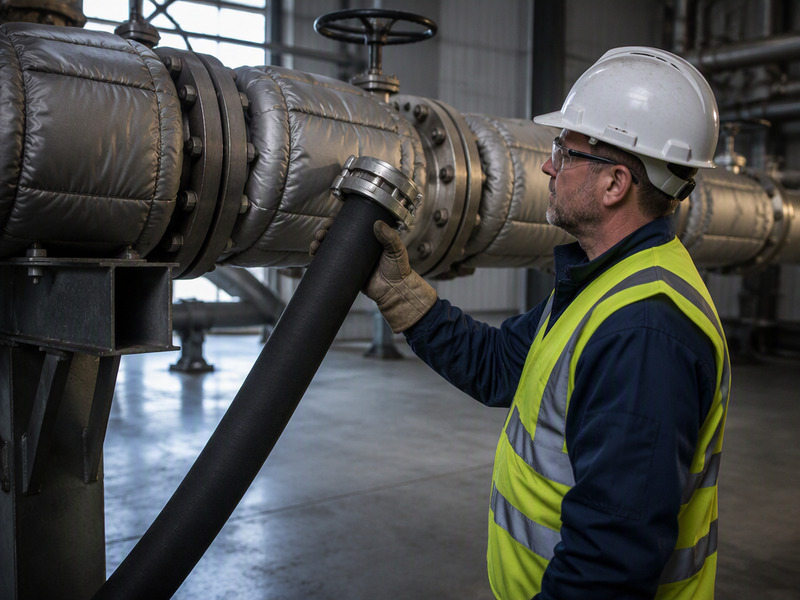
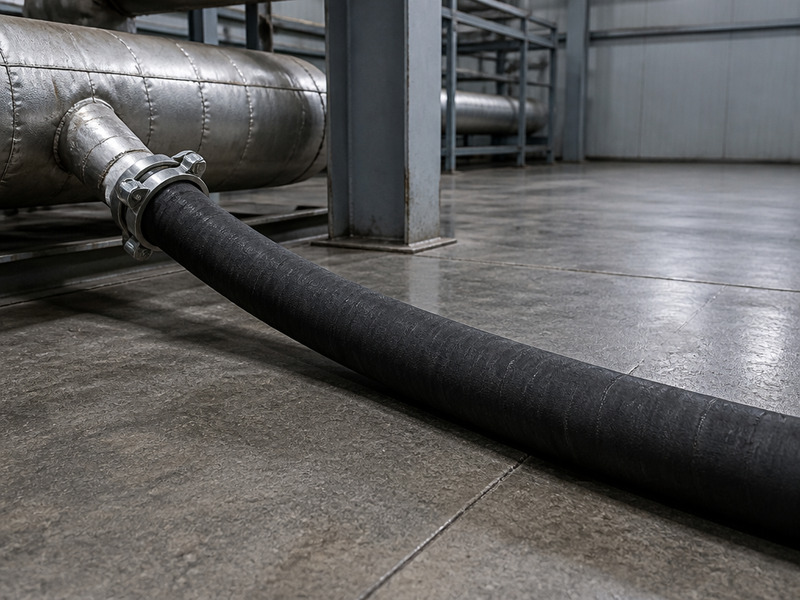
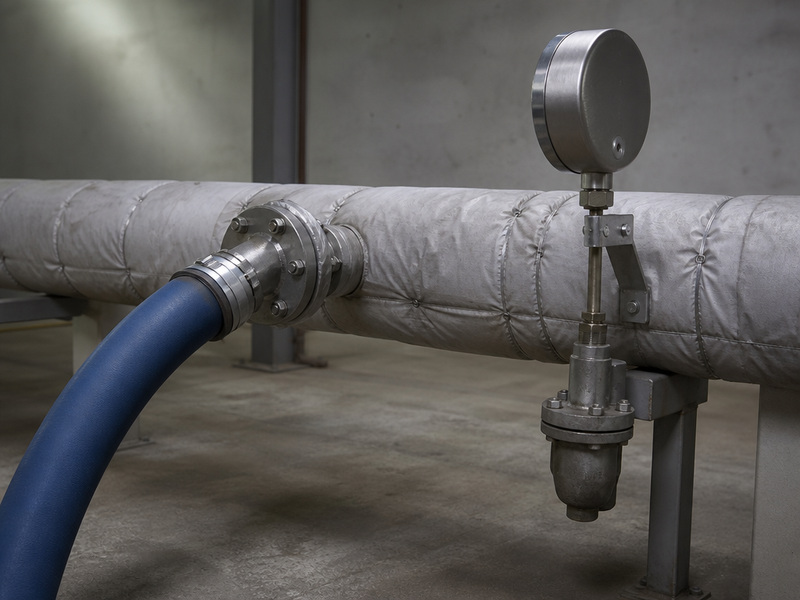
ISO 6134:2024 requires a steam hose end connection that lets you adjust the clamping force, which is why bolted safety clamps are standard on steam service. The same standard prohibits quick-release couplings, because a hose that can be disconnected under pressure is a burn waiting to happen. Match the end to the outside diameter so the clamp or ferrule seats correctly.
How is a steam hose proof-tested before shipment?
Every length is proof-tested hydrostatically at 1.5 times the rated pressure before it leaves the plant. For the 230 °C grade that means a test well above 250 psi (17 bar), held long enough to reveal a weak wall or a bad coupling. Ask for the test record with the batch. A hose without a proof-test record is an unverified hose.
When do I replace rather than repair a steam hose?
Replace a steam hose the moment it is kinked, blistered, hardened, cracked or weeping at the coupling. Steam service is unforgiving, and a repair creates a new weak point that can fail without warning. Keep the failed hose for inspection, fit a proof-tested spare, and record why it failed so the next hose lasts longer.
Send Us Your Specification and We Quote Against It
Send the bore, the steam temperature, the rated pressure and the steam hose end connection, and the quote is built around your line rather than a stock size.
Steam hose end connection hardware has to hold its clamping force as the hose heats and cools; a coupling that cannot be adjusted will work loose. Match the thread before you order by checking the GHT versus NPT thread chart, and confirm the outside diameter against the hose you already have.
HENGHUA manufactures reinforced industrial hose and complete hose assemblies for plants, distributors and OEM brands. Our EPDM steam hose range covers 3/8 inch to 4 inch bore, rated 250 psi (17 bar) working pressure with a 10:1 burst safety factor.
The construction is a smooth steam-resistant EPDM tube, one or two layers of high-tensile steel wire braid, and a pin-pricked cover that vents permeating gas instead of blistering. Every length is proof-tested at 1.5 times working pressure before it leaves the plant, and each batch is date-coded. Because compounding, extrusion, braiding, vulcanization and crimping all happen in one plant, bulk lead times stay short. Send us the working pressure, the steam temperature, the bore and the end connection, and we will quote against them.
We supply cut lengths, crimped ends, protective sleeves, colour coding and OEM branding. Get a quote and free samples
Final Verdict: Read the Steam Hose Specifications Before the Price
The price is the last thing to compare, not the first. Read the steam hose specifications in the order this guide set out, and most expensive mistakes disappear before they reach a purchase order. Bore and diameter set the fit, the pressure columns set the margin, the minimum curve sets the route, and the marking line confirms it all on the hose itself.
When those agree, a quoted price is worth comparing. When they do not, a lower price is simply a different hose. Send the four figures that decide the line, and every quote you receive becomes comparable.
Written by the HENGHUA engineering team, with input from plant maintenance and steam-system reliability teams across North America, Europe and South East Asia. HENGHUA manufactures reinforced industrial hose and hose assemblies, including an EPDM steam hose range from 3/8 inch to 4 inch bore. Those assemblies are rated 250 psi (17 bar) working pressure with a 10:1 burst safety factor, and are supplied as cut lengths or as fully crimped assemblies. Fittings, protective sleeves, colours and OEM branding are available on request.

 English
  Spanish
  Portuguese
  French
  German
  Arabic
  Russian
  Indonesian
  Japanese
  Korean