
A hydraulic suction hose is a flexible, vacuum-rated rubber hose that carries hydraulic oil from the reservoir to the pump inlet, built to SAE 100R4 with an oil-resistant NBR tube, textile reinforcement and dual spiral wire helix, rated from -40 °C to +100 °C (with high-temperature grades to +125 °C) and, in its mining version, accepted by the U.S. Mine Safety and Health Administration (MSHA) as flame resistant and antistatic under 30 CFR Part 18. In short: use SAE 100R4 construction for oil suction and return lines up to 300 PSI, choose a high temperature hydraulic hose grade when return oil runs hot, and specify an MSHA approved hydraulic hose whenever the machine works underground. This guide covers what this hose family is, how it differs from pressure hoses, the dash-size and working-pressure table, high-temperature ratings, the real meaning of MSHA certification, and a selection checklist for buyers and maintenance teams.
You will also find application examples from our own testing, common failure modes with their causes, price and sourcing guidance, and the questions buyers ask us most — including whether one hose can serve both the suction and the delivery side of a pump.
What Is a Hydraulic Suction Hose?
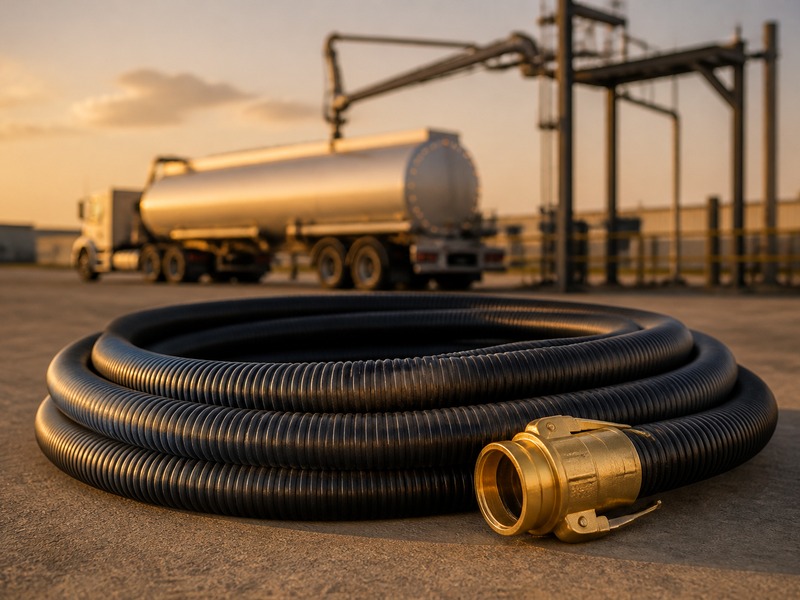
This hose family is the low-pressure, vacuum-resistant line that connects the oil reservoir to the pump inlet in a hydraulic system. It must hold vacuum without collapsing, resist hot mineral oil, and survive the continuous flexing of mobile equipment. This is the same product family sold as an SAE 100R4 hose, a suction and return hose, or — in oil-transfer terminology — an oil suction and delivery hose.
The construction explains the behaviour. The inner tube is an oil-resistant nitrile (NBR) compound that resists swelling in mineral hydraulic oil and water-based fluids. Around the tube, high-tensile textile cord carries the working pressure, and a dual spiral steel wire helix stops the hose from flattening under vacuum. The cover is oil-, weather- and abrasion-resistant rubber; for mining duty it is a flame-retardant neoprene (CR) compound, which is also the version with the best heat resistance. In our factory we proof-test every reel, and the cover marking carries the measured working pressure, burst pressure, vacuum rating and temperature range.

Figure 1. A typical R4 suction hose: oil-resistant NBR tube, textile layers and dual wire helix visible at the cut end.
Where Does It Sit in a Hydraulic Circuit?
A hydraulic circuit has three hose duties, and they need different constructions. The suction line runs from the reservoir to the pump and sees vacuum; the hydraulic oil return hose (sometimes called the delivery or drain line) carries oil from the valves and actuators back to the reservoir at low pressure; the pressure line runs from the pump outlet to the valves at full system pressure.
Hose duty versus circuit position in a hydraulic system.
| Line position | Typical pressure | Vacuum exposure | Hose family |
|---|---|---|---|
| Suction line (reservoir to pump) | Below atmospheric | Yes — must not collapse | SAE 100R4 suction hose |
| Return / delivery line (to reservoir) | Up to ~30 bar (435 PSI) | Usually no | SAE 100R4 or textile-braid hydraulic hose |
| Pressure line (pump outlet) | 100–600 bar (1,500–8,700 PSI) | No | SAE 100R1 / R2 / R12 wire-braid or spiral hose |
How Is It Different from a Pressure Hydraulic Hose?
The difference is pressure rating and construction. A hydraulic suction hose works at 300 PSI or less and relies on a wire helix for vacuum strength; a pressure hose such as SAE 100R2 carries 4,000–6,000 PSI on steel wire braid and has no vacuum requirement. They are not interchangeable: fitting a pressure hose on a suction line risks collapse and cavitation, while fitting a suction hose on a pressure line is a burst hazard. Our how to select hydraulic oil hose guide explains the full boundary, and our hydraulic hose guide covers pressure-line selection in depth.
Hydraulic Suction Hose Sizes and Working Pressures
Hydraulic hoses are specified by dash size and inside diameter (ID). Dash sizes run in sixteenths of an inch: -12 means 12/16 inch, or 3/4 inch. The SAE 100R4 range covers 3/4 inch to 4 inch ID, and the working pressure falls as the bore grows, because a larger tube needs more reinforcement for the same pressure. The R-series naming and dash-size system are explained in full in our SAE 100R hydraulic hose guide.
Typical SAE 100R4 ratings by size for oil suction and return service (published values — verify the cover marking of the product you install).
| Taille des tirets | Inside diameter | DN (mm) | Working pressure | Burst (4:1) | Vacuum rating |
|---|---|---|---|---|---|
| -12 | 3/4 in | 19 | 300 PSI (20.7 bar) | 1,200 PSI | 25 in Hg (0.85 bar) |
| -16 | 1 in | 25 | 250 PSI (17.2 bar) | 1,000 PSI | 25 in Hg (0.85 bar) |
| -20 | 1-1/4 in | 32 | 200 PSI (13.8 bar) | 800 PSI | 25 in Hg (0.85 bar) |
| -24 | 1-1/2 in | 38 | 150 PSI (10.3 bar) | 600 PSI | 25 in Hg (0.85 bar) |
| -32 | 2 in | 51 | 100 PSI (6.9 bar) | 400 PSI | 25 in Hg (0.85 bar) |
| -40 to -64 | 2-1/2 to 4 in | 63–100 | 62–100 PSI by size | 4 × working pressure | 25 in Hg (0.85 bar) |
Two practical notes from our test bench. First, burst pressure is four times working pressure on this family, so the 4:1 safety factor is built in — but never select a suction hose by burst pressure alone. Second, sizes above 2 inch are mostly used on reservoir return and oil transfer duty where flow, not pressure, is the driver.
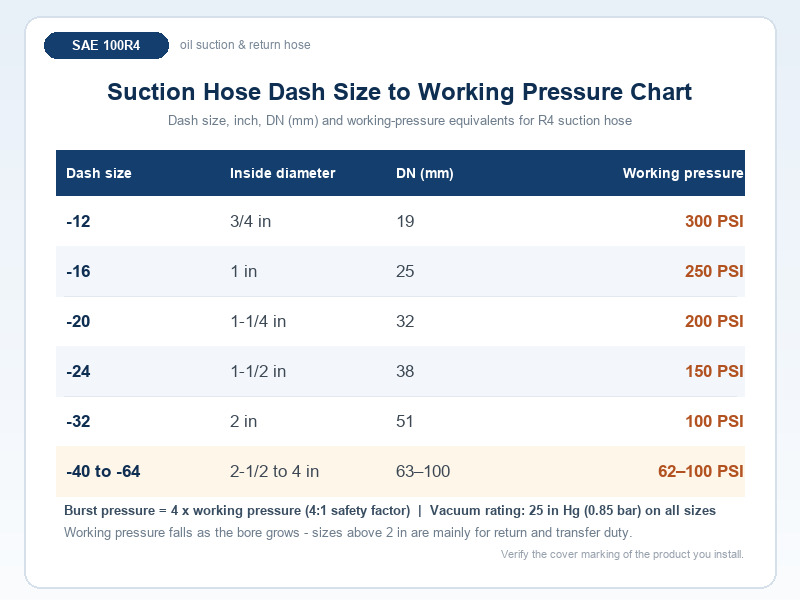
Figure 2. Dash size to inch, DN and working pressure conversion for R4 suction hose.
What Size Do I Need for My Pump?
Size the suction line from flow and fluid velocity, not from the pump outlet thread. Published design guidance for hydraulic systems keeps suction velocity between 0.6 and 1.2 m/s so the pump never starves, and return velocity up to about 3 m/s. An undersized suction hose raises velocity, drops pressure at the pump inlet and causes cavitation — the classic cause of premature pump failure that has nothing to do with the pump itself. When in doubt, go one size up on the suction line; the extra cost is small next to a failed pump.
Why Does the Return Line Get Hot Oil?
The hydraulic oil return hose is the hottest line in the circuit: the oil has just done work in the actuators and absorbed heat from the pump. On a hard-working excavator or mining machine, sustained return temperatures of 80–100 °C are normal, and short peaks above that occur during stall conditions. That is why the return hose is usually specified as a high temperature hydraulic hose grade rather than a standard one — see the next section.
High-Temperature Ratings: How Hot Can the Oil Run?
Temperature rating is the second specification after pressure, and it is the one most often ignored. Standard SAE 100R4 hose is rated -40 °C to +100 °C continuous, with momentary peaks to about +120 °C allowed by most makers. High-temperature grades use heat-stabilised compounds and are rated to +125 °C, and some premium constructions reach +135 °C. In our long-term testing, a standard-grade hose run continuously above its rating loses flexibility first: the cover hardens and cracks, then the tube loses oil resistance and the hose fails from the inside.
Temperature grades for hydraulic oil suction and return hose.
| Grade | Continuous rating | Typical cover | Best use |
|---|---|---|---|
| Standard R4 | -40 to +100 °C | Oil- and weather-resistant rubber | General suction and return lines |
| High-temperature | -40 to +125 °C | Heat-stabilised NBR / CR | Hot return lines, compact machines |
| Premium / MSHA mining | -40 to +125 °C (some +135 °C) | Flame-retardant neoprene (CR), antistatic | Underground mining, heat + fire risk |
Does Heat Derate the Working Pressure?
Yes. Rubber softens with heat, so manufacturers publish a derating curve: at the top of the temperature range, the safe working pressure is reduced, and impulse life shortens. Treat the temperature rating as a ceiling, not a target. If your return line regularly exceeds 100 °C, move up to a high temperature hydraulic hose grade instead of accepting early failures — in our experience the price difference is small and the service life difference is several times.
What About Cold Weather?
The same hose family handles the low end well: -40 °C is the standard minimum, and arctic grades go lower. The practical cold-weather risk is not the hose but the fittings and routing — a stiff hose at -30 °C needs a larger bend radius, and clamping a cold hose too tight can crush the helix. Warm the reel before installation in winter and check the minimum bend radius data.
What Does MSHA-Certified Mean on a Suction Hose?
MSHA is the U.S. Mine Safety and Health Administration, the agency that approves equipment and components used in underground coal mines and gassy metal/nonmetal mines. “MSHA certified” or “MSHA approved” on a hose means the hose has been accepted as flame resistant for use on mining equipment, under the acceptance program of 30 CFR Part 18 of the U.S. Code of Federal Regulations.
For a hose, the acceptance criteria that manufacturers must meet centre on fire and static risk. The hose must pass the Part 18.65 flame test — after the ignition source is removed, the material must self-extinguish within the limits set by the regulation. It must also be antistatic, with a surface resistance no higher than 10⁶ Ω in the published acceptance criteria, so that static charge from oil flow and cover friction dissipates instead of sparking in a methane or coal-dust atmosphere. Accepted hoses are permanently marked on the cover with the acceptance statement and number, and that marking is how you verify a real MSHA approved hydraulic hose on the shelf — no marking, no acceptance.
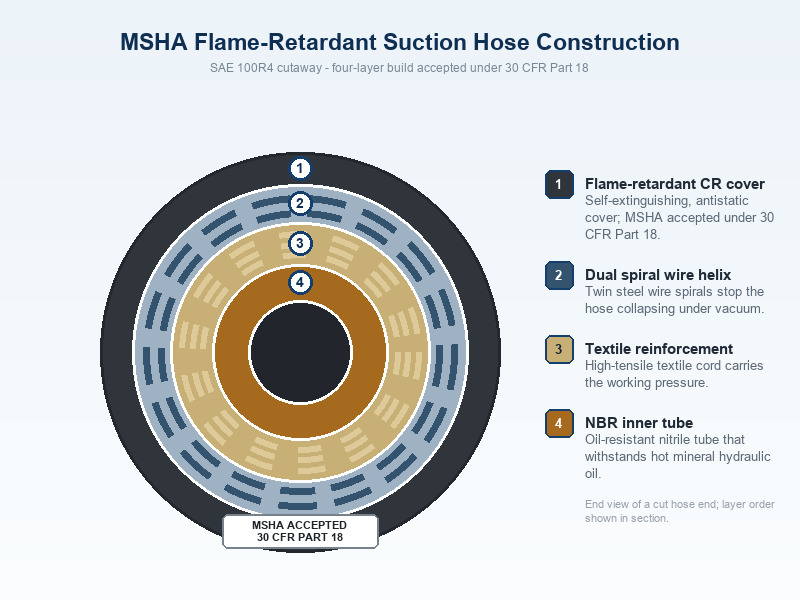
Figure 3. Construction of a mining-grade flame-retardant suction hose.
MSHA Hose vs Standard Hose: What Changes?
The working pressure and vacuum ratings do not change — MSHA acceptance is not a pressure rating. What changes is the cover compound and the test evidence behind it.
Standard suction hose versus MSHA-accepted mining hose.
| Property | Standard hose | MSHA-accepted hose |
|---|---|---|
| Cover flame resistance | Standard rubber | Flame-retardant, self-extinguishing (Part 18.65 test) |
| Static control | Not specified | Antistatic, surface resistance ≤ 10⁶ Ω |
| Marking | Size and ratings | Size, ratings plus MSHA acceptance number |
| Heat resistance bonus | Standard compounds | CR cover also resists heat well |
| Where required | General industry | Underground mining equipment per 30 CFR Part 18 |
When Do You Legally Need an MSHA Approved Hydraulic Hose?
Whenever a hydraulic hose is part of equipment that operates in an underground coal mine or a gassy underground mine, and the applicable regulations require flame-resistant components. In practice that covers OEM machines such as shearers, roof supports, shuttle cars and roadheaders, plus replacement hose supplied into those machines. If your application is surface equipment, a standard flame-resistant cover may be sufficient — but if there is any chance the machine goes underground, specify the MSHA version from the start, because retrofitting is more expensive than specifying correctly.
Can One Hose Be Both High-Temperature and MSHA-Certified?
Yes — and in mining machines it usually must be. The flame-retardant neoprene (CR) cover used for MSHA acceptance is itself a heat-resistant compound, so mining-grade hose typically carries both the -40 to +125 °C rating and the MSHA acceptance on the same cover. This is the configuration we recommend for hot return lines on underground equipment: one spec, two requirements met.
Where Hydraulic Oil Suction and Delivery Hoses Are Used
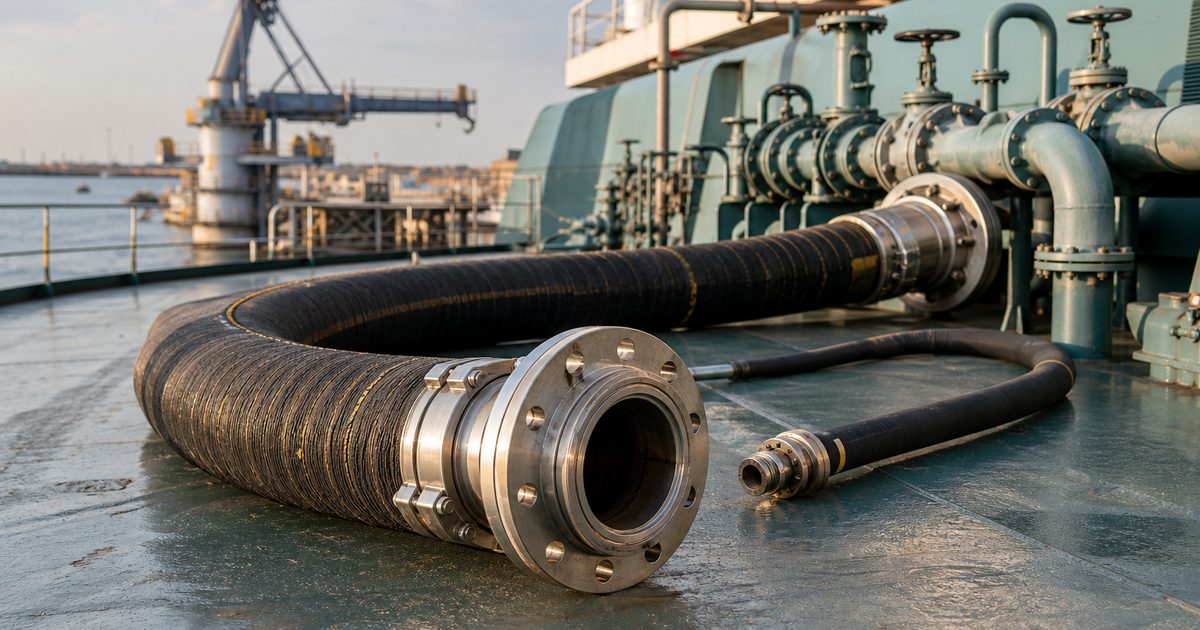
The same R4 family serves two worlds: the machine’s own oil suction and delivery circuit, and workshop oil handling. Understanding both helps you buy one stock line instead of several. For petroleum transfer service at 10 or 20 bar, our oil suction and discharge hose guide is the reference.
Typical applications for hydraulic oil suction and delivery hose.
| Application | Duty | Recommended hose |
|---|---|---|
| Excavators and loaders | Reservoir suction and hot return lines | SAE 100R4, high-temperature grade |
| Underground mining machinery | Suction and return on shearers, roof supports, shuttle cars | MSHA-accepted flame-retardant hose |
| Hydraulic power units (HPUs) | Tank-to-pump suction, return to tank | SAE 100R4, 1 to 2 inch |
| Tractors and log splitters | Light suction and return lines | SAE 100R4, 3/4 to 1 inch |
| Machine tools and presses | Oil circulation and filtration lines | SAE 100R4 or textile-braid hose |
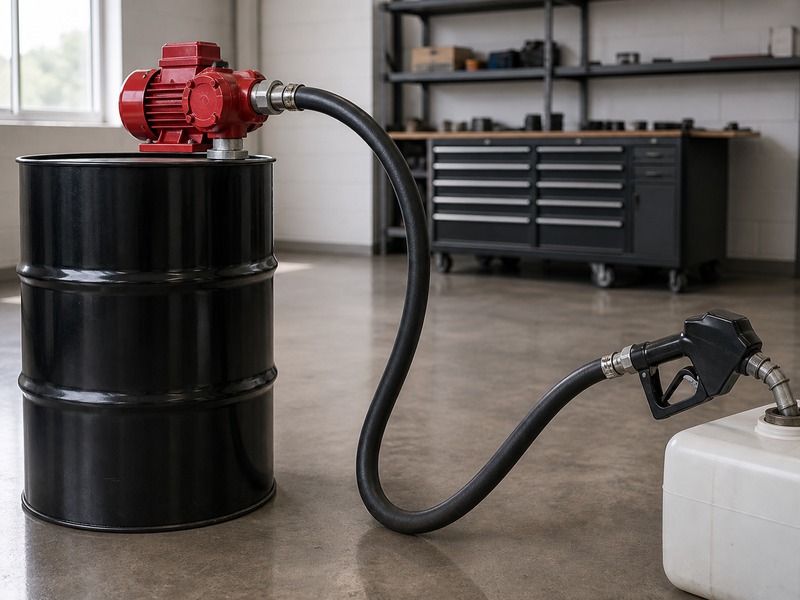
| Workshop oil filling and draining | Transferring hydraulic oil at low pressure | Oil suction and delivery hose, conductive tube |

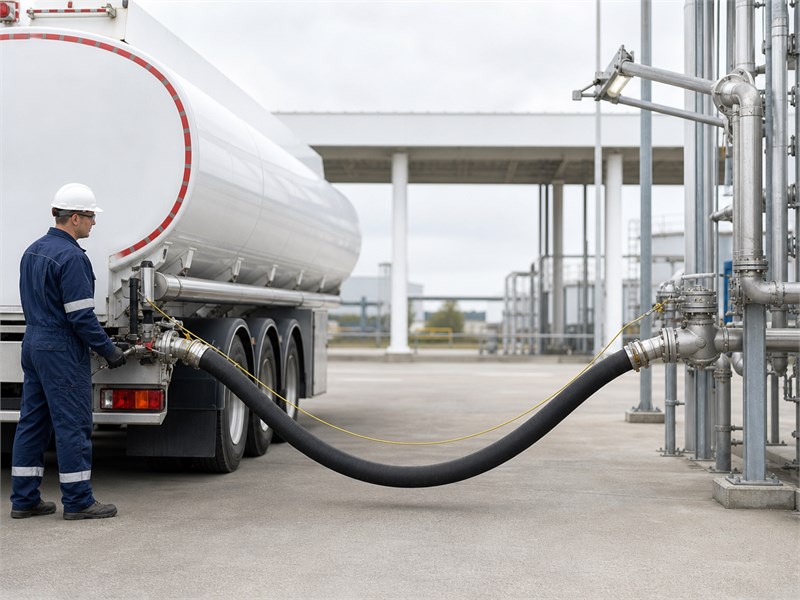
Figure 4. Suction hose duty on mobile equipment: reservoir to pump, and the hot return line back to the reservoir.
Our workshop test rig runs a 1-inch high-temperature R4 hose on the suction side of a 60 L/min pump and a 3/4-inch hydraulic oil return hose on the return side. After a full working season the suction hose shows no collapse marks and the cover no heat cracking — the two failure signs we look for first on customer returns. When we do see failures, the cause is almost always a specification mismatch: a standard hose on a hot return line, or a pressure hose pressed into suction service.
How to Choose a Hydraulic Suction Hose
Work through this checklist in order, and you will not go far wrong:
- Duty first: confirm it is suction, return or transfer duty — this decides the construction family.
- Size from flow: keep suction velocity at 0.6–1.2 m/s; choose the dash size from the table above.
- Pressure and vacuum: match the working pressure to the system and confirm the vacuum rating covers the pump inlet (25 in Hg is the common published value).
- Temperature: measure real oil temperature at the hydraulic oil return hose; pick standard, +125 °C, or mining grade accordingly.
- Certification: for underground mining, require the MSHA acceptance marking on the cover; ask for the acceptance number and verify it.
- Fittings: suction hose is normally fitted with clamps or barbed/crimped ends rated for low pressure — never assume high-pressure crimp fittings are needed or compatible. Our hydraulic fittings types guide and NPT vs BSP thread guide cover the options.
- Fluid check: mineral oil and water-based hydraulic fluids are fine; for ester-based or HFD fluids, confirm compound compatibility before ordering.
- Length and routing: allow slack for flexing, respect minimum bend radius, and protect the cover where it rubs frames.
How Much Does a Hydraulic Suction Hose Cost?
Price is driven by bore size, temperature grade, certification and volume. A 3/4-inch standard R4 hose sits at the low end; a 2-inch high-temperature or MSHA-accepted construction costs substantially more per metre, and volume orders cut the unit price. Certification adds a real but modest premium because of the test evidence and traceability behind it. For your exact size, grade and quantity, request a quotation — our team replies the same day with factory-direct pricing, samples and lead times for bulk orders.
Which Fittings and Clamps Work on Suction Hose?
Use fittings and clamps rated for the hose OD and the low working pressure: T-bolt or band clamps over a barbed nipple are the standard for R4 suction hose, and factory-crimped assemblies are available where the machine needs them. The common field failure is an undersized clamp that lets the hose pull off under vacuum, or a clamp torqued so hard it crushes the helix — follow the clamp maker’s torque spec.
Common Mistakes and Failure Modes
Knowing how these hoses fail makes inspection useful and buying safer:
- Suction collapse: hose flattens under vacuum — almost always a non-helix hose used on a suction line. Check for a wire helix before installation.
- Cover hardening and cracking: sustained heat above the rating. Measure the real oil temperature and step up the grade.
- Static build-up: on oil transfer duty without a conductive tube. Specify an antistatic version where the fluid is low-conductivity.
- Wrong hose in a mine: a standard hose fitted to underground equipment is a safety and compliance issue, not just a durability one. Check the MSHA marking.
- Coupling pull-out: undersized or over-torqued clamps. Use the correct clamp and torque.
- Bend-radius abuse: kinking at the fitting stresses the helix and shortens life. Add a bend restrictor or reroute.
Replace a suction hose when the cover cracks or blisters, the helix shows through, the hose stays deformed after bending, or a proof test fails. An annual inspection of cover, marking, clamps and routing catches most problems before they stop a machine.
Suction Hose FAQ: Sizing, Heat and MSHA
What is the difference between a hydraulic suction hose and a delivery hose?
In a hydraulic circuit, the suction hose runs from the reservoir to the pump and must resist vacuum; the delivery (return) hose carries oil back to the reservoir at low pressure. Both are commonly SAE 100R4 or textile-reinforced constructions. In oil-transfer language, an oil suction and delivery hose is a single hose rated for both suction and discharge service. The two concepts overlap but are not identical — confirm which side of the pump your hose will sit on.
What temperature can a hydraulic suction hose handle?
Standard SAE 100R4 hose is rated -40 °C to +100 °C continuous, with momentary peaks near +120 °C; high-temperature grades extend the continuous rating to +125 °C, and some premium constructions to +135 °C. Above the rating, pressure must be derated and service life drops sharply.
What does the MSHA marking on a hose mean?
The marking means the hose has been accepted by the U.S. Mine Safety and Health Administration as flame resistant for mining equipment under the 30 CFR Part 18 acceptance program, based on the Part 18.65 flame test and antistatic surface-resistance criteria, and carries a permanent acceptance number. It is not a pressure or temperature rating.
Is an MSHA certified hydraulic hose required outside mining?
No. MSHA acceptance is required where regulations apply — underground coal and gassy underground mines. For general industrial and surface equipment, standard flame-resistant or high-temperature hose is normally sufficient. When in doubt, ask the equipment OEM what the specification requires.
What size hydraulic suction hose do I need?
Size from flow and velocity, not from the pump port. Keep suction velocity at 0.6–1.2 m/s; the common sizes are 3/4, 1, 1-1/4 and 1-1/2 inch for mobile machines, and 2 inch and above for HPU reservoirs and transfer duty. The dash size is the ID in sixteenths of an inch: -16 is 1 inch.
How do I stop a hydraulic suction hose from collapsing?
Confirm the hose has a spiral wire helix (SAE 100R4 construction), size the line so velocity stays below 1.2 m/s, and avoid routing that lets the hose bend past its minimum bend radius under vacuum. If collapse persists, the pump may be demanding more flow than the line can deliver — go up one size.
How long does an MSHA approved hydraulic hose last?
In our testing and field returns, a correctly specified mining-grade hose on suction and return duty typically outlasts standard hose in the same hot, abrasive environment because the flame-retardant cover also resists heat and wear. Published comparisons from manufacturers put mining-grade service life at roughly double that of standard hose in equivalent duty. Exact life depends on temperature, impulse frequency and handling; inspect annually and replace on the failure signs listed above.
Final Verdict
A hydraulic suction hose is a specialist product, and the specification is simple once you know the four numbers: dash size, working pressure, temperature grade, and whether MSHA acceptance is required. Buy SAE 100R4 construction with the wire helix for suction duty, step up to the high temperature hydraulic hose grade for hot return lines, and demand the MSHA acceptance marking for anything that goes underground. Order by inside diameter, verify the cover marking, and buy from a supplier who proof-tests every reel and shows the test data.
If you are sourcing hydraulic suction and delivery hoses for excavator fleets, hydraulic power units, or underground mining equipment, contact our team with your dash sizes, temperature and certification requirements. We supply the full SAE 100R4 range from 3/4 to 4 inch in standard, high-temperature and MSHA-approved constructions, with factory-fitted ends, private labeling, OEM/ODM programs, samples and lead times for bulk orders — all backed by a clear warranty.

 English
  Spanish
  Portuguese
  French
  German