
An EN 12115 Type SD hose is the answer wherever a line can pull a vacuum, be crushed, or be emptied from below; a Type D hose covers delivery duty only. The suction and delivery version carries one or more embedded helixes. The four electrical grades sit on top of that choice and describe how the hose handles static charge. This guide separates the two decisions, explains the four grades, shows how each is verified, and covers how to read the label and pick a construction for your duty.
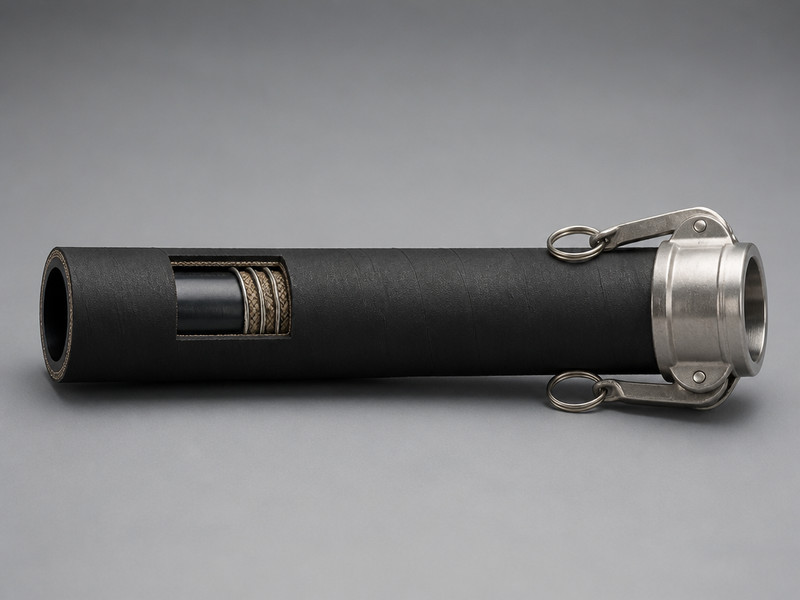
Figure 1. A suction and delivery hose with an embedded helix, made up ready for service.
Short Answer: Which Type, Which Grade
Two questions decide the purchase. The first is whether the line ever pulls a vacuum or risks being crushed, because that answer selects the type. The second is whether the product is flammable or the area is classified, because that answer selects the grade.
Where a line only ever pushes product, a Type D construction is adequate and cheaper. Where a tank is emptied from below, a road tanker is unloaded by suction, or the hose may be run over, an EN 12115 Type SD hose is the correct answer. The embedded helix prevents collapse and lets the bore recover.
The grades are independent of the type. A hose can be Type D and antistatic, or Type SD and electrically bonded. Treat them as two separate specification fields rather than as a hierarchy, and state both on the enquiry.
Type D: Delivery Duty Only
Type D describes a hose for delivery duty only. Its construction is a lining, a reinforcement and a cover, with no helix. The lining carries the chemical decision, the reinforcement is a textile material resistant to the medium, and the cover resists mechanical damage, wear, weather and short-term chemical exposure.
The absence of a helix is the defining feature. Without it, the wall depends on the lining and the fabric to hold its shape, which is entirely sufficient when the internal pressure is positive. Under positive pressure the wall is pushed outward and the fabric does the work it was designed for.
Against EN 12115 Type SD, the Type D build is the lighter and more flexible of the two. Delivery-only duty covers more plant work than it first appears. Filling operations, dosing lines, and transfer between two pressurised vessels are all delivery duty, and none of them benefits from a helix. Choosing Type D in those cases keeps the hose lighter, more flexible and less expensive.
EN 12115 Type SD: Suction and Delivery Duty
The suction and delivery case is where the helix earns its place. An EN 12115 Type SD hose is built for duties where the internal pressure can fall below atmospheric, and the helix or helixes hold the bore open against that load.
Suction duty appears in more places than the name suggests. A vessel emptied from the bottom, a drum or IBC drawn off by pump, a road tanker unloaded by suction, and a line drained below its outlet all pull a negative pressure inside the hose. Each of those duties puts the wall into a mode it was not designed for unless a helix is present.
Helixes must also be fully embedded in the wall so the product never contacts them. That requirement matters for two reasons: an exposed wire is a corrosion site sitting inside the wetted path, and it creates an electrically conductive route that the declared grade may not allow.

Figure 2. The construction difference: a delivery hose, and a hose with an embedded helix.
Which Construction Differences Decide the Choice?
The two types differ in more than the helix, because adding a wire changes how the whole hose behaves. Table 1 sets out the practical differences.
Table 1. Type D and Type SD compared on construction and operating behaviour
| Aspect | Type D | Type SD |
|---|---|---|
| Construction | Lining, reinforcement and cover | Lining, reinforcement, cover and an embedded wire helix |
| Suction duty | Not intended | Designed for it, with a rating to verify |
| Crush recovery | None required for this type | Tested for recovery, with the test applying to this type only |
| Weight and flexibility | Lighter, more flexible at the same bore | Heavier and stiffer, with a larger bend radius |
| Utilisation courante | Filling, dosing and pressurised transfer | Unloading, emptying and any duty that can see vacuum |
Weight and flexibility are the costs of the SD build. A helixed hose is stiffer than a plain delivery hose of the same bore, and it will not bend as tightly. That matters on a crowded skid, where a heavier hose can be harder to route and more likely to be pulled past its limit.
Choose on the duty, not on the price. An EN 12115 Type SD hose costs more, and it earns the difference only where vacuum is genuinely possible. A Type D hose used on a suction line will collapse, and a collapsed hose is a total loss: the lining creases and the hose cannot be straightened back into service. The working pressure is a separate limit that also has to be respected on suction duty. Where there is any doubt about whether vacuum can occur, the safer specification is the helixed construction.
Vacuum Stability and the Crush Recovery Test
Two requirements separate the types in testing, and both relate to the same load case. The first is vacuum stability, which requires the hose to resist an internal vacuum to a stated value without collapse or an excessive change in diameter and length. The second is the crush recovery test in Annex D, which applies to SD hoses only and confirms that the construction recovers after being flattened. The vacuum figure is verified to EN ISO 7233.
Both requirements exist because an EN 12115 Type SD hose has to survive a load case that a delivery hose never sees. The crush recovery test is the one buyers underrate. It reflects the reality of a hose lying across a yard: a delivery hose that is run over may be destroyed, while a helixed hose is expected to spring back and continue in service. On a site where hoses are moved by vehicle, that difference ends service life sooner or later.
The vacuum stability figure applies while the hose is laid reasonably straight. A wire helix holds its round bore on a straight run and loses that bore on a tight bend. A hose bent close to its minimum radius while under vacuum has less resistance than the figure suggests, so plan the vacuum case with the route in mind rather than with the datasheet alone.
The Four Electrical Grades: M, Ω (Omega), M/T and Ω/T
The grades are defined by resistance rather than by construction, which is why two very different hoses can carry the same grade. Table 2 sets out the four.
Table 2. The four EN 12115 electrical grades and what each requires
| Grade | Lining Property | Through-Wall Requirement |
|---|---|---|
| M | Electrically bonded, with the lowest resistance | None |
| Ω | Electrically conductive, lining resistance 10⁶ Ω or less | None |
| M/T | Electrically bonded, as Grade M | Resistance through the wall not exceeding 10⁹ Ω |
| Ω/T | Electrically conductive, as Grade Ω | Resistance through the wall not exceeding 10⁹ Ω |
Grade M and Grade Ω
The grade is a statement about electrical resistance, and it is verified rather than assumed. Grade M is the electrically bonded grade. It requires a conductive path and a lower permitted resistance than Grade Ω, and the hose ends must be electrically bonded so that the fittings are part of that path.
Grade Ω is the conductive grade used for most antistatic hose duties, and its lining resistance is 10⁶ Ω or less. Ask for the electrical resistance figure for the grade you need, and ask which measurement it refers to. A conductive lining is what stops charge accumulating on the wetted surface, which is where it would otherwise build as product flows.
The /T Suffix
The suffix changes the scope of the requirement rather than the lining. Grade M/T and Grade Ω/T keep the lining properties of M and Ω and add a requirement that the resistance through the hose wall does not exceed 10⁹ Ω. That means the path exists from the inside surface to the outside, not merely along the lining.
That distinction is what matters in a classified area. A charge built inside the hose has to leave the system, and it can only do so through the wall to the fittings and then to earth if a through-wall path exists. A hose graded Ω without the suffix has no through-wall path, so specify a /T grade whenever the classification requires one.
Which Grade to Specify
Specify the grade from the area classification and the product, not from the colour of the cover. Where the classification requires a through-wall path, specify a /T grade. Where the product is flammable but the area is unclassified, an antistatic hose may be sufficient, subject to your own assessment.
Where a plant already standardises on an antistatic hose, keep the through-wall requirement separate and state it independently. State the grade, the type and the required resistance on the enquiry. A supplier cannot infer an electrical requirement from a chemical duty, and a hose delivered without the right grade is not a compliant assembly even if every other specification field matches.
For the highest static-safety requirement, specify Grade Ω/T. As an engineering convention, Grade M/T may stand in for Grade Ω/T in most cases, because it meets the same through-wall limit. Treat that as a convention to confirm against the datasheet and the site classification rather than as a rule.
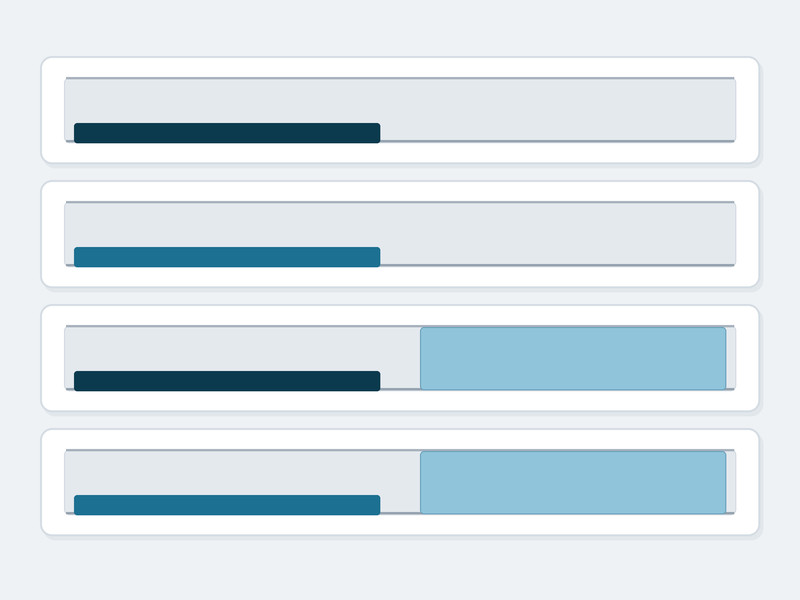
Figure 3. The two-part structure of the grades: lining property, plus a through-wall option.
How Resistance Limits Are Measured and Verified
Electrical resistance is measured to EN ISO 8031 rather than to a supplier’s own procedure, and the result depends on where the electrodes are placed. That is why a figure quoted for the lining alone cannot be compared with a figure quoted through the wall.
Three practical points follow. First, ask which measurement a quoted figure refers to, because the two are different properties. Second, verify the grade on delivery rather than accepting the label, since a resistance check is quick and non-destructive. Third, re-verify after any work on the fittings, because a coupling that has been re-made can break the conductive path that the grade depends on.
A wire helix that is not fully embedded is a defect rather than a manufacturing variation. Wire helix constructions need particular care here. The helix is a conductor, and it sits inside the wall. If it is not fully embedded, or if it makes contact with a fitting in a way the grade does not allow, the assembly’s electrical behaviour changes. That is another reason the embedded-helix requirement is a safety requirement rather than a manufacturing preference.
Which Grade Fits Your Hazardous Area?
The grade follows from the assessment, and it should be written into the specification rather than left to the supplier. Table 3 shows the decision in outline.
Table 3. Selecting a grade and a type from the duty
| Situation | Type | Grade |
|---|---|---|
| Non-flammable product, delivery only | D | No electrical designation needed |
| Non-flammable product, suction duty | SD | No electrical designation needed |
| Flammable product, closed system | D or SD per duty | Conductive lining, verified on delivery |
| Flammable product, classified area | SD where vacuum can occur | Through-wall grade, with bonding and earthing |
| Highest consequence duty | SD | Grade Ω/T, verified after every repair |
Whichever grade is chosen on an EN 12115 Type SD hose, the hose is only half of the protection. Bonding and earthing are the other half, and neither can be replaced by a conductive grade.
Seven fields should appear on the enquiry:
- Type — D or SD, decided by whether vacuum is possible.
- Grade — M, Ω, M/T or Ω/T, decided by the area classification.
- Working pressure and temperature — including any agreed extension.
- Resistance requirement — the limit and the measurement basis.
- End fittings — the mating standard at each end.
- Duty — delivery only, or suction and delivery, decided by the process route.
- Bonding and earthing — the fitting-to-fitting path, stated separately from the conductive lining.
Reading the Label on an EN 12115 Hose
The label on the hose is the only place where the agreed specification appears on the product itself. It must identify the manufacturer, the standard and the type, and it must state the grade together with any temperature or pressure agreed outside the default envelope. The default envelope under EN 12115:2021 is −20 °C to +65 °C at 10 bar or less, and a figure outside it holds only when the label states it.
Read four things before the first transfer. Confirm the type is the one the duty requires. Confirm the grade, including whether the suffix is present. Confirm the working pressure and temperature figures match what was ordered. Confirm the label is legible and will stay legible, because a label that abrades away takes the evidence with it.
Record what you read against the assembly identity, because that record is what allows a bulk order to be checked against the original specification. A hose used at an agreed pressure above the default envelope is compliant only when the label states that figure, so the label is not decoration; it is the record of the agreement between buyer and maker.
The choice also affects how the hose is stored and inspected. A helixed hose should be coiled to a diameter at least as generous as a delivery hose, because a sharp coil can permanently deform the helix even when the lining is undamaged. Inspect the cover for wire impressions at every service, since a visible ridge often means the helix has moved.
On a delivery-only line, the same discipline applies to the lining. A Type D hose that has been kinked in storage will crease the tube, and a creased lining fails at the crease rather than at the coupling. Neither type is forgiving of a bad coil, and the inspection record is the only way to catch it before the lining gives way.
Service boundary. Take the assembly out of service and replace it when the cover is damaged far enough to expose the helix, or when the lining is creased or kinked. Apply the same rule when the label has become illegible or a resistance check fails. Inspection finds those conditions, and repair does not clear them.
EN 12115 Type SD FAQs
When is a Type D hose sufficient?
When the line only ever runs at positive internal pressure. Filling, dosing and transfer between pressurised vessels all run at positive pressure, so no helix is required. A Type D hose is lighter, more flexible and less expensive, so it is the better choice where the duty genuinely excludes vacuum.
How do I know whether my line can see vacuum?
Trace what happens when the pump stops and when a valve closes. A line that can be closed at one end while product continues to drain will pull a vacuum. So will any unloading operation, any drum or IBC draw-off, and any drain that sits below the outlet. If any of those are possible, specify an EN 12115 Type SD hose and confirm the vacuum rating.
What is the difference between Grade Ω and Grade Ω/T?
Grade Ω is the electrically conductive grade, and its lining resistance is 10⁶ Ω or less. Grade Ω/T keeps that lining property and adds a 10⁹ Ω through-wall limit. The suffix is what provides a path from the inside surface to the outside, and that is the property a classified area usually needs.
Does a conductive grade remove the need to earth the hose?
No. A conductive lining reduces charge accumulation on the wetted surface and gives the charge a route to the fittings. It does not connect the system to earth. Bonding and earthing remain necessary, and on a through-wall graded hose the continuity should be verified rather than assumed.
Why does the recovery test apply only to one type?
Because recovery after being flattened is a property of a helixed construction. A delivery hose that has been run over has no mechanism to return to shape, so the requirement would be meaningless for it. Testing it only where it applies keeps the requirement honest and the cost proportionate.
Can I use an EN 12115 Type SD hose on a delivery-only line?
Yes, and it is a conservative choice rather than a mistake. The price difference between the two types is small next to the cost of replacing a hose that has collapsed. The cost is weight and stiffness, plus a higher purchase price. Where a line may later be used for unloading, buying the helixed construction from the start avoids replacing the assembly when the duty changes.
What should I check on delivery?
Check the type, the grade including any suffix, the bore and length, the working pressure and temperature, the end fittings and the label. Verify the electrical resistance if a grade is declared, and verify the continuity after any work on the fittings. Record all of it against the assembly identity so the history survives the next crew change, and so a bulk order can be audited the same way.
Source EN 12115 Type SD Hose Against a Written Specification
The two decisions are independent and both have to be written down. State the type, the grade, the duty and the end fittings, and ask for the vacuum rating, the working pressure and the resistance figures in the same document.
HENGHUA manufactures chemical transfer hoses and complete hose assemblies for chemical plants, tank farms, distributors, and OEM brands. Every hose we build is specified by its lining, its reinforcement, and its cover, and the assembly leaves the factory with crimped or reusable stainless steel fittings, a hydrostatic proof test, and a documented pressure rating. Our chemical hose range covers PTFE, FEP, polypropylene, UHMWPE, and EPDM lined hoses from 1/2 inch to 8 inch bore, rated to 16 bar. Both delivery-only and helixed builds are available, with conductive and antistatic hose options on request.
Because we control compounding, extrusion, lining, winding, and crimping in one plant, a bulk order moves quickly and the specification on the label is the specification you get. A clear specification also makes the price comparable between suppliers. If you are sourcing hose for a tank farm, a distribution line, or OEM supply, send us your specification and we will quote against it. Where a project repeats, ask for a bulk order price alongside the sample quantity. Get a quote and free samples
Check the rest of the standard before you finalise the specification, and use the hazardous transfer guide when the line also needs bonding and earthing procedures. Use the couplings selection guide when you specify the end connections. Where the duty is abrasive as well as corrosive, compare the UHMWPE hose option before settling on the lining.
Written by the HENGHUA engineering team, with input from chemical plant, tank farm, and maintenance teams across North America and Europe. HENGHUA manufactures chemical transfer hoses and hose assemblies with PTFE, FEP, polypropylene, UHMWPE, and EPDM linings, from 1/2 inch to 8 inch bore, rated to 16 bar, with crimped or reusable stainless steel fittings and OEM branding.






 English
  Spanish
  Portuguese
  French
  German
  Arabic
  Russian
  Indonesian
  Japanese
  Korean