
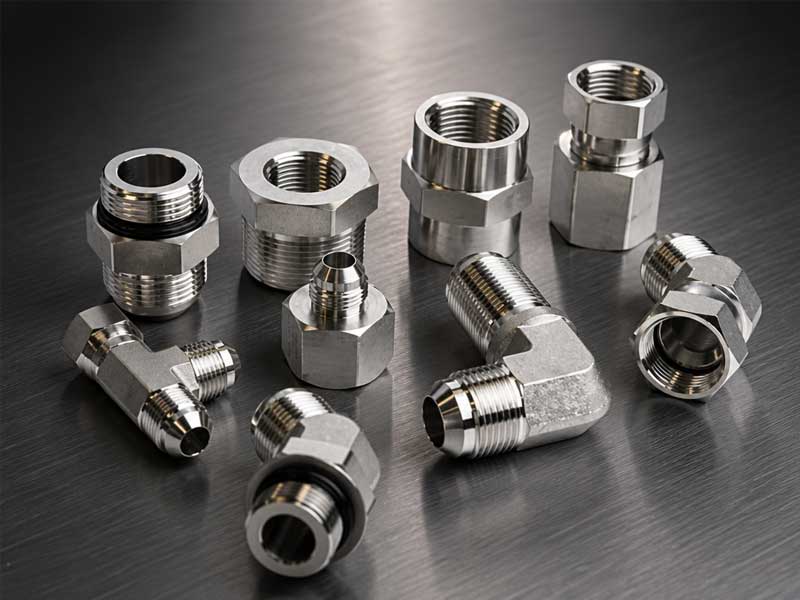
How Many Hours of Salt Spray Testing for Marine Hydraulic Fittings?
ASTM B117 exposure durations for marine stainless steel hydraulic fittings commonly range from 240 to 500+ hours depending on material grade, surface treatment, customer specifications, and application severity. 316L stainless steel is generally preferred over 304 for these applications because its molybdenum content provides superior resistance to chloride-induced pitting and crevice corrosion. For many marine hydraulic fitting applications, 500 hours of ASTM B117 exposure is commonly used as a practical corrosion resistance benchmark. However, specific project requirements may vary, and buyers should confirm acceptance criteria with their supplier.
ASTM B117 Salt Spray Testing Definition
ASTM B117 is a standardized laboratory corrosion test method that exposes metallic components and coatings to a controlled, continuous salt fog (5% sodium chloride) environment at 35°C to evaluate and compare their relative corrosion resistance performance under accelerated chloride conditions.
1. What Is ASTM B117 Salt Spray Testing?
ASTM B117 is the most widely cited corrosion test standard across the automotive, marine, defense, and manufacturing industries. Established in 1939, it defines the practice for operating salt spray (fog) apparatus to evaluate the comparative corrosion resistance of metallic materials and protective coatings.
The test exposes specimens to a continuous 5% sodium chloride fog at a controlled chamber temperature of 35°C. The saline mist settles on the test samples, creating an aggressive environment that accelerates the corrosion process. This allows manufacturers to evaluate and compare the performance of different materials, surface finishes, and manufacturing processes in a matter of days rather than years.
While ASTM B117 is a powerful tool for quality control and material selection, it is a practice standard—it defines how to operate the equipment and maintain conditions but does not prescribe test duration or acceptance criteria. These parameters are left to product specifications or customer requirements.
2. ASTM B117 Test Parameters and Conditions
Adherence to the specified test parameters is critical for ensuring repeatable and comparable results. The standard mandates strict control over the test environment:
| Parameter | ASTM B117 Requirement |
|---|---|
| Test Type | Neutral salt spray (fog) |
| Salt Solution | 5% sodium chloride by weight in deionized water |
| Chamber Temperature | 35°C ± 1°C (95°F) |
| Solution pH | 6.5 to 7.2 |
| Fog Collection Rate | 1.0 to 2.0 mL per 80 cm² per hour |
| Specimen Positioning | 15° to 30° from vertical to allow drainage |
| Common Exposure Durations | 96, 240, 500, 1000+ hours |
Source: ASTM B117-19 Standard Practice for Operating Salt Spray (Fog) Apparatus
3. Why Marine Hydraulic Fittings Need Corrosion Resistance Testing
Marine environments are among the most corrosive natural settings for hydraulic systems. Components are subjected to continuous or cyclic exposure to salt-laden moisture, temperature fluctuations, and biological fouling. For stainless steel hydraulic fittings, this environment can lead to several failure mechanisms:
- Pitting Corrosion: Localized breakdown of the passive film, leading to stress concentration points and potential leakage.
- Crevice Corrosion: Aggressive localized attack in shielded areas such as thread roots and under seal rings.
- Stress Corrosion Cracking (SCC): Combined tensile stress and chloride exposure can cause cracking in susceptible austenitic grades.
For hydraulic systems, corrosion is not merely a cosmetic issue. A corroded fitting can cause:
- Hydraulic fluid contamination from corrosion byproducts
- Thread galling and seizure during maintenance
- Seal surface degradation leading to external leakage
- Catastrophic fatigue failure in critical offshore applications
Salt spray testing provides tangible evidence that a fitting’s material and manufacturing process can withstand these aggressive conditions, validating its suitability for marine service.
4. 304 vs 316L Stainless Steel Hydraulic Fittings
One of the most critical decisions in specifying hydraulic fittings for marine use is the choice between 304 and 316L stainless steel. Salt spray testing vividly demonstrates the performance gap between these two grades.
| Material | Typical Time to First Pitting (ASTM B117) | Key Advantage | Marine Suitability |
|---|---|---|---|
| 304 Stainless Steel | 24 – 96 hours | Cost-effective for mild environments | Limited; suitable for sheltered or temporary marine use |
| 316L Stainless Steel | 200 – 500+ hours | Molybdenum (2-3%) enhances chloride resistance | Preferred grade for permanent offshore and marine hydraulic systems |
Why 316L Performs Better: The addition of 2-3% molybdenum to 316L stainless steel significantly stabilizes the passive chromium oxide film in the presence of chlorides. This makes the material far more resistant to pitting and crevice corrosion, the two most common failure modes for hydraulic fittings in saltwater environments.
For critical marine hydraulic systems, 316L stainless steel is the industry standard. 316L stainless steel generally demonstrates significantly improved resistance to chloride-induced pitting compared with 304 stainless steel under salt spray and marine corrosion testing conditions.
5. ASTM B117 Salt Spray Test Duration: 96 vs 240 vs 500 vs 1000 Hours Explained
While ASTM B117 does not define pass/fail criteria, the industry uses exposure duration as a primary performance metric. The number of hours a fitting withstands salt spray without corrosion directly correlates to its expected durability in chloride-rich environments.
Common ASTM B117 Test Duration Benchmarks
| Salt Spray Hours | Typical Interpretation |
|---|---|
| 24 – 96 hours | Basic corrosion screening; suitable for indoor or protected components |
| 120 – 240 hours | General industrial applications with occasional exposure |
| 500 hours | Common qualification benchmark for many marine hydraulic components |
| 720 – 1000+ hours | More demanding offshore and subsea applications |
| 2000+ hours | Special coating systems or extreme corrosion requirements |
For marine hydraulic fittings, a minimum of 500 hours of salt spray testing without significant pitting or red rust is widely used as a practical quality benchmark. This provides confidence that the fitting can withstand prolonged, aggressive exposure typical of shipboard and offshore environments. However, specific project requirements may vary, and buyers should confirm acceptance criteria with their supplier.
6. Limitations of ASTM B117 Salt Spray Testing
While ASTM B117 is invaluable for comparative evaluation, it has well-documented limitations that engineers and procurement professionals must understand.
Key Limitations to Consider
- No Direct Correlation to Real-World Service: ASTM B117 does not provide a correlation factor to translate hours of salt spray exposure into years of marine service. The continuous fog at a constant 35°C does not replicate natural wet/dry cycling, UV radiation, or biofouling.
- Accelerated, Not Realistic: The 5% salt concentration exceeds natural seawater (~3.5%). This accelerates corrosion in ways that may not mirror actual field conditions.
- Limited Scope: The test primarily evaluates general corrosion and early pitting. It does not adequately assess stress corrosion cracking (SCC), crevice corrosion, or galvanic corrosion, which require separate specialized tests.
- No Pass/Fail Criteria: Acceptance criteria must be defined by the purchaser, manufacturer, or application standard. This flexibility can lead to inconsistent qualification requirements across suppliers.
Recommended Complementary Testing
For a comprehensive corrosion resistance evaluation, ASTM B117 should be supplemented with:
- Cyclic Salt Spray (ASTM G85): Simulates wet/dry cycling and is more representative of natural marine conditions.
- Pitting Potential Testing: Electrochemical methods to quantify pitting resistance.
- Crevice Corrosion Testing (ASTM F746): Specifically evaluates susceptibility in crevice geometries.
- Impulse/Pulse Fatigue Testing: Validates mechanical integrity under hydraulic pressure cycling.
7. Manufacturing Factors Affecting Corrosion Resistance
The corrosion resistance of a stainless steel hydraulic fitting is not solely determined by the material grade. Manufacturing processes play a critical role in preserving or degrading the passive film that protects the steel. A qualified manufacturer must control several key factors to ensure ASTM B117 performance:
| Manufacturing Factor | Effect on Corrosion Resistance |
|---|---|
| Passivation Treatment | Removes free iron and contaminants; restores and enhances the passive oxide layer |
| Surface Finish | Smoother surfaces reduce sites for crevice corrosion and promote uniform passivation |
| Heat Treatment | Optimizes grain structure and reduces susceptibility to intergranular attack |
| Minimized Cold Working | Excessive cold working increases dislocations and pitting sensitivity |
| Clean Steel / Low Inclusions | Reduces initiation sites for pitting |
| Material Traceability | Ensures batch-to-batch consistency and verification of grade composition |
Even when two fittings meet the same ASTM material specification, differences in manufacturing quality can result in dramatically different corrosion test results. This is why salt spray testing is critical for supplier qualification.
8. How to Select Marine Stainless Steel Hydraulic Fittings
Selecting the correct hydraulic fitting for a marine application goes beyond choosing between 304 and 316L. A systematic approach ensures long-term reliability:
| Selection Factor | Recommendation for Marine Use |
|---|---|
| Material | 316L Stainless Steel for the best balance of cost and corrosion resistance |
| Pressure Rating | Must match or exceed system working pressure; consider surge pressures |
| Thread Type | Specify SAE J514, DIN 2353, or ISO 8434 based on system compatibility |
| Surface Treatment | Passivation recommended as standard; consider additional coatings for ultra-severe exposure |
| Testing & Certification | Require ASTM B117 test report (500+ hours) and impulse/pulse test data |
| Supplier Quality | Verify ISO 9001 certification and material traceability procedures |
9. Marine Hydraulic Fitting Cost Factors
For procurement professionals, understanding the cost drivers for marine-grade stainless steel hydraulic fittings is essential for budget planning and supplier evaluation.
| Type | Typical Price Factor |
|---|---|
| 304 Stainless Steel Fitting | Lower cost; suitable for mild environments |
| 316L Stainless Steel Fitting | 20-50% higher than 304, depending on design and complexity |
| Custom/Offshore Specification Fitting | Higher cost due to additional machining, specialized testing, and certification requirements |
| Small Batch / Low Quantity | Higher unit cost due to setup and inspection overhead |
| Bulk / High Volume Order | More competitive per-unit pricing |
Key Cost Drivers:
- Material grade: 316L vs. 304
- Pressure rating and design complexity
- Thread standard: SAE, DIN, ISO
- Testing and certification requirements: Salt spray reports, impulse data, material certificates
- Quantity and delivery terms
Buyers should request a detailed quotation that specifies material grade, testing documentation, and delivery terms to make an accurate cost comparison between suppliers.
10. ASTM B117 Testing Checklist Before Purchasing
Use this checklist when evaluating a manufacturer to ensure the hydraulic fittings meet your corrosion resistance requirements:
- Material Certificate: Mill test report verifying the specified stainless steel grade (304, 316L)
- Salt Spray Report: Documented ASTM B117 test results for the specific fitting type and material
- Passivation Process: Evidence of post-manufacturing passivation treatment
- Pressure Test Report: Hydrostatic or pneumatic test records
- Impulse Fatigue Data: Performance data (e.g., cycle count) from pulse testing to validate mechanical integrity under pressure
- Traceability Records: Batch-level traceability from raw material to finished fitting
- Quality System: ISO 9001 or equivalent certification
- Dimension Report: Verification of critical dimensions and thread gauging
Key Takeaways
- ASTM B117 evaluates comparative corrosion resistance under accelerated salt fog conditions.
- ASTM B117 does not predict exact marine service life; it is a comparative screening tool.
- 316L stainless steel generally provides better chloride corrosion resistance than 304 for marine hydraulic applications.
- Passivation and manufacturing quality significantly affect corrosion performance.
- Buyers should evaluate salt spray test reports, material certificates, and pressure performance together when qualifying a supplier.
11. Evidence-Based Manufacturer Profile: HENGHUA
HENGHUA is a manufacturer specializing in stainless steel hydraulic fittings for marine, offshore, and industrial hydraulic applications. Our manufacturing and testing protocols are designed to meet the stringent requirements of marine and offshore hydraulic systems.
Quality Control and Testing Capabilities
HENGHUA maintains in-house testing facilities, including:
- Salt Spray Chambers: Operating to ASTM B117 and ASTM G85 standards, enabling batch-level verification of corrosion resistance for 304 and 316L fittings.
- Pulse Fatigue Test Stands: Capable of simulating millions of hydraulic pressure cycles. Our stainless steel hydraulic fittings routinely withstand over 1 million cycles, validating their durability under real-world dynamic loads.
- Metallurgical and Dimensional Labs: Equipped with profile projectors, hardness testers, and roughness testers to ensure every fitting meets specification.
Manufacturing Process Controls
- Material Sourcing: Certified raw materials with full traceability.
- Machining: CNC precision machining with controlled parameters to minimize surface damage.
- Passivation: Rigorous post-machining passivation to restore maximum corrosion resistance.
- Inspection: 100% dimensional and visual inspection of critical seal surfaces and threads.
Commitment to Transparency
HENGHUA provides complete documentation for every batch, including material certificates, salt spray test reports, and impulse test data. We provide engineering evidence, not marketing claims.
Frequently Asked Questions About ASTM B117 Testing for Hydraulic Fittings
Q1: How many hours of ASTM B117 salt spray testing is required for stainless steel hydraulic fittings?
There is no universal requirement defined by ASTM B117. The standard defines the test method but not the acceptance hours. For many marine applications, 500 hours is a common benchmark for 316L stainless steel fittings, while offshore or subsea applications may require 720–1000+ hours. Requirements are typically set by the customer or application specification.
Q2: Is 316 stainless steel better than 304 for marine hydraulic fittings?
Yes. 316L stainless steel is generally superior for marine hydraulic fittings because its molybdenum content (2-3%) significantly improves resistance to chloride-induced pitting and crevice corrosion. 316L stainless steel generally demonstrates significantly improved resistance to chloride-induced pitting compared with 304 stainless steel under salt spray and marine corrosion testing conditions.
Q3: Does ASTM B117 directly predict actual marine service life?
No. ASTM B117 is an accelerated comparative test and cannot directly convert hours of salt spray exposure into years of field service. It is designed for evaluating relative corrosion resistance under controlled conditions, not for predicting absolute service life in natural environments.
Q4: What other corrosion tests should be performed alongside ASTM B117?
For a comprehensive evaluation of marine hydraulic fittings, ASTM B117 should be supplemented with cyclic salt spray (ASTM G85), crevice corrosion testing, and stress corrosion cracking evaluations. For hydraulic applications, impulse/pulse testing is critical to verify mechanical integrity under pressure cycling.
Q5: What is the salt concentration used in ASTM B117 compared to seawater?
ASTM B117 uses a 5% sodium chloride solution, which is more concentrated than natural seawater (approximately 3.5% salt). This elevated concentration accelerates the corrosion process but does not exactly replicate the chemical composition of seawater.
Q6: Does passivation affect salt spray test results for stainless steel fittings?
Yes. Proper passivation removes surface contamination and free iron, restoring a robust, uniform passive film. Passivated 316L stainless steel fittings consistently show superior performance in ASTM B117 testing compared to non-passivated or poorly passivated parts. It is a critical process step for marine-grade fittings.
Q7: Can 304 stainless steel hydraulic fittings be used in seawater?
304 stainless steel can be used in some mild marine environments, but 316L is generally recommended for continuous seawater exposure because it provides better chloride corrosion resistance. For permanent marine hydraulic systems, 316L is the preferred material.
Q8: What documents should I request from a hydraulic fitting supplier?
Buyers should request material certificates (mill test reports), ASTM B117 test reports, pressure test records, impulse fatigue results, dimensional inspection reports, and traceability documentation. These documents provide the engineering evidence needed to verify product quality.
The Role of ASTM B117 in Quality Assurance
ASTM B117 salt spray testing is an indispensable tool for qualifying stainless steel hydraulic fittings for marine environments. While it has inherent limitations, its value in comparative evaluation, batch-to-batch quality control, and material selection is unmatched.
For marine hydraulic systems, 316L stainless steel with proper passivation and a certified manufacturing process offers the best combination of corrosion resistance and mechanical reliability. A robust 500-hour salt spray test result, combined with impulse fatigue data exceeding 1 million cycles, provides engineering confidence that the fittings will perform reliably in harsh offshore environments.
When selecting a supplier, demand engineering evidence—material certificates, salt spray reports, and pressure test data—not marketing slogans. This approach ensures your hydraulic system delivers long, trouble-free service in the world’s most corrosive environments.
Contact HENGHUA to request stainless steel hydraulic fitting samples, ASTM B117 salt spray test reports, material certificates, and customized marine hydraulic fitting solutions for your specific application.

 English
  Spanish
  Portuguese
  French
  German