
A white food grade hose is the default on dairy, ready-to-eat and pharmaceutical lines, and blue is the default almost everywhere else in a food plant. The colour does not make either hose compliant. It makes the hose identifiable, which is what an auditor is really testing: whether the plant can show that the hose on a product line is the hose approved for that line.
The rule that survives an audit has five parts: the zone, the colour, the liner requirement, the record, and a spare in every zone. A scheme missing any one of the five is a decoration with a legend, and an auditor reads the record before looking at the hose.
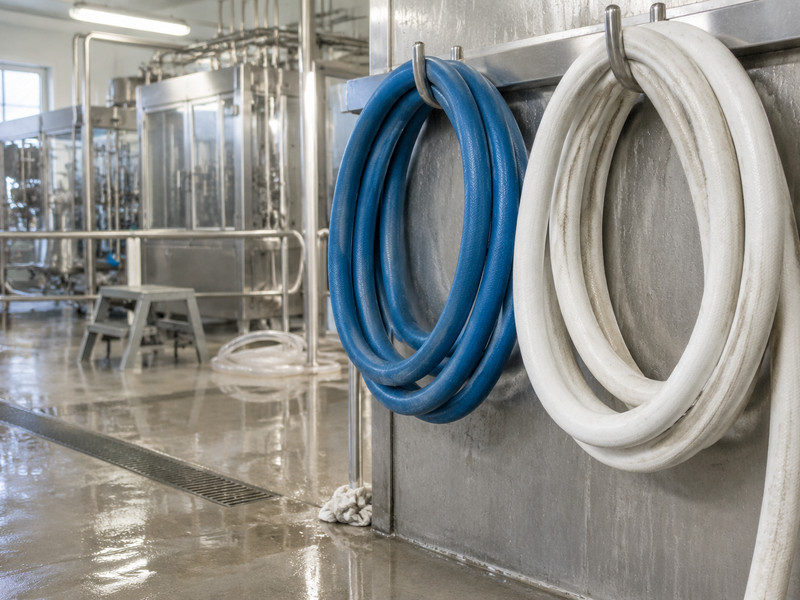
Figure 1. Water still standing under the rack, with the two colours hanging a bay apart.
What Does Colour Actually Prove?
Nothing on its own. A white food grade hose with an industrial liner is a white hose. A blue hose with a food-contact declaration is a compliant one.
What colour proves is segregation. In a plant where product lines, cleaning lines and waste lines all use similar hoses, colour is the fastest way to show that the right hose is in the right place. That is a real control, and auditors treat it as one.
The confusion arises because the control is mistaken for the evidence, as the compliance guide sets out, and a white food grade hose is the easiest place to make that mistake. Colour supports the segregation claim; the liner declaration supports the compliance claim. A plant needs both, and a supplier who talks only about colour is selling the easier half.
Why White on Dairy and Blue Elsewhere?
The convention grew from two practical needs: seeing soil and seeing the hose.
White shows residue. On a dairy line, a white liner that has not cleaned properly is visible to an operator before it becomes a microbiological problem. That is why white dominates ready-to-eat and dairy applications, where cleaning verification is continuous.
Blue stands out against stainless steel, white walls and product. A blue food grade hose is easy to spot from a distance, which matters in a large plant where hoses are moved between areas.
Neither convention is universal. Some sites use green for cleaning chemical, red for waste, yellow for gas and clear or natural for product. The rule matters more than the colour, provided the rule is written down and everyone follows it.
Is There a Standard for Hose Colour?
Hose colour sits outside every product standard. Food-contact rules govern the wetted material, sanitary rules govern cleanability and design, and colour is a plant convention in both. The lining comparison shows where material compliance stops.
What exists is plant-level convention and, in some markets, retailer or customer requirements that a site must follow. Those are contractual rather than regulatory, and they are the rules an audit will test against.
This is why a supplier cannot certify a colour. They can supply a white liner, a blue cover, or a traceable pigment, and they can state that the compound is food-contact approved. Anything beyond that is a claim about the plant, not the product.
What Colour Conventions Do Plants Actually Use?
| Area | Usual colour | Reason |
|---|---|---|
| Dairy and ready-to-eat product | White | Residue visibility |
| Raw product intake | Blue | Stands out, separates raw from RTE |
| Cleaning chemical (CIP) | Green or yellow | Never product-contact |
| Waste and drain | Red or grey | Clear exclusion from product |
| Compressed air and gas | Yellow or black | Utility identification |
| Allergen-containing product | Purple or dedicated | Prevents cross-contact |
Table 1. Colour conventions found in food plants. The pattern is consistent; the exact colour choice is local.
Two rules make any scheme work. Every colour has exactly one meaning, and the meaning is posted where the hoses are stored. A scheme with two blues and no legend is worse than no scheme, because it looks controlled.
Where Does Colour Coding Fail?
Three failures recur, and each is visible in the first hour of an audit walk.
The first is a hose that has been cleaned and put back in the wrong zone. Colour made the error visible but did not prevent it, because nothing tied the hose to an area except the operator’s memory.
The second is a colour that exists in the standard but not in the store, so an operator substitutes. Substitution is the normal failure mode of any coding system that does not control stock.
The third is a hose whose cover colour has faded or been replaced by a repair sleeve. A blue hose with a black repair is neither colour, and the scheme silently stops working.
A fourth, less obvious, is the plant that uses colour but records nothing. When the auditor asks which hoses are approved for the RTE area, the answer is “the white ones”, which is a claim about appearance rather than a record.
What About Detectable Hose?
Detectable hose carries a metallic or magnetic additive so that a fragment can be found by a metal detector or a magnet. It is a genuine control in plants that run product through a detector downstream.
The trade-off is mechanical. Additives change the compound, and a detectable cover is usually a rubber or specially compounded hose rather than a standard composite cover. That means the detectable option may not be available in the same liner and pressure range.
Where detectability is required, specify it as a property with a test method. Detection belongs to the compound; food contact belongs to the wetted material. A detectable hose is bought for the detector, and a food-grade hose is bought for the product.
How Do You Write the Colour Rule Into a Specification?
Write four lines: the zone, the colour, the liner requirement, and the record.
The zone line names the area, not the product. The colour line names one colour per zone with no exceptions. The liner line states the food-contact requirement, because colour without it is decoration. The record line says where the hose is logged, which is what turns a convention into a control.
Add a fifth line for spares. A zone that holds two spare hoses in the correct colour will not substitute, and a CIP-compatible liner keeps that spare usable; one that holds none will.
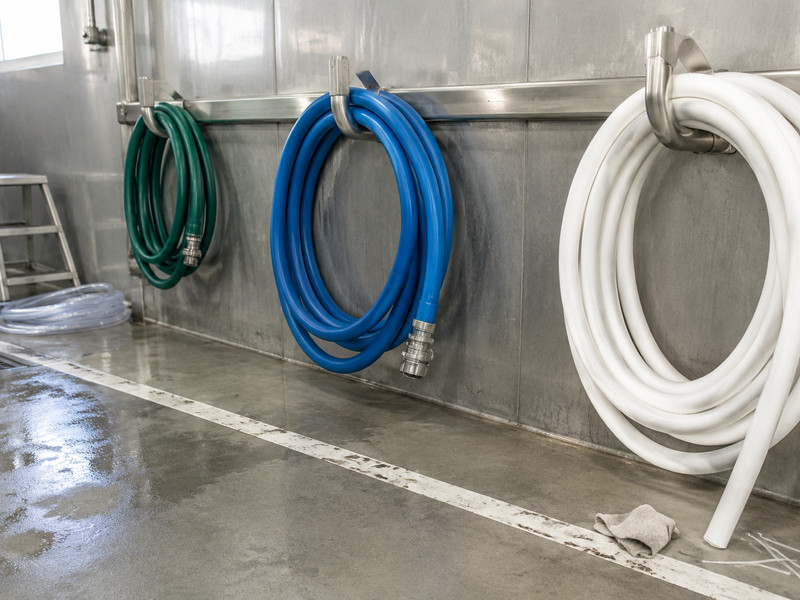
Figure 2. The floor line runs past all three bays, so the walkway and the storage zone read as separate bands.
What Should an Auditor See?
Four things, in this order.
A written scheme with a legend, dated and signed. A store where the colours match the scheme. Hoses marked with a batch or asset number that ties them to the register. And a register that names the liner and the declaration for each hose.
| Evidence | What it shows | Where it lives |
|---|---|---|
| Colour legend | Zone segregation rule | Plant wall, dated |
| Hose marking | Which article is installed | On the hose |
| Register | Liner and declaration per hose | Quality file |
| Declaration | Material approval | Supplier document |
Table 2. The four pieces of evidence an auditor reads, in the order they are usually requested.
Notice what is missing from that list: the hoses themselves looking clean. Appearance is the weakest evidence in a hygiene audit, because it is the easiest to stage. The paper trail is what an experienced auditor reads first.
How Do You Handle Multi-Site Colour Rules?
Groups with several plants inherit several schemes. The usual resolution is a group standard for the four or five zones that matter, with local freedom on the rest.
The compromise holds where the group standard names the zones where a mix-up is serious: allergen, RTE and waste. Local colour choices for utilities cost nothing and avoid a repaint.
Where two sites share a hose store, as in a campus with a central warehouse, the group standard has to include the store. Otherwise the shared store becomes the place where colours stop meaning anything.
How Does Colour Fit a HACCP Plan?
A hygiene plan looks at hazards and controls. Hose colour is not a control on its own, but it supports two that are: segregation between raw and ready-to-eat areas, and prevention of cross-contact with allergens.
That framing matters because it tells you where a colour scheme earns its place. A plant with a single product and a single area gains little. A plant that runs raw and cooked through the same building gains a visible, cheap control that a new operator can follow on day one.
Write it into the plan as a supporting measure, not a critical control point, and keep the PP liner data with it. A colour cannot be monitored with a limit and a corrective action, and calling it a CCP invites an auditor to test it as one.
Where the plan already uses colour for cleaning equipment, extend the logic to hoses. Consistency between brooms, buckets and hoses is what makes a scheme usable; a scheme that covers only hoses is a scheme operators will forget.
What About Cover Material and Colour Stability?
A white food grade hose is only white while the cover holds its pigment. Three things change that: UV exposure, cleaning chemicals and abrasion.
UV is the fastest. A hose stored on a rack beside a skylight will yellow within a season, and the yellowing is cosmetic rather than a compliance issue. It still breaks the scheme, because a yellowed white hose looks like a natural one.
Cleaning chemicals attack pigment more slowly. Strong oxidisers lift colour from some compounds, and a plant that runs peracetic acid daily will see it within a year.
Abrasion removes colour where the hose touches a support or a floor. That is useful information, because the worn patch is also where the cover is thinnest and where moisture reaches the reinforcement.
A practical rule: inspect colour at the same time as the cover. Fading and abrasion appear in the same places, and one inspection covers both.
Choosing a cover compound with good pigment stability is worth a small premium on a hose that is expected to stay identifiable for years. The alternative is a plant that quietly stops trusting its own colour scheme.
How Do You Audit the Scheme in Ten Minutes?
Walk the store first, then one product area. In the store, check that every colour in the legend exists and that no unlabelled colour is present. In the product area, check that the hose in use matches the zone and carries a marking.
Then ask one operator where a white food grade hose belongs and where a blue one does. If the answers differ between two operators, the scheme is documented but not trained, and training is the cheaper fix.
A white food grade hose that cannot be traced is a visual control with no record behind it. Finish the walk at the register: match the marking to the register line, confirm the liner and the declaration on that line, and note the date. A hose colour coding scheme without a register answers the question of what a hose looks like, not what it is. The audit can close on the register and the markings; colour is the fastest way to find the hose that will not.
Foire aux questions
Should hose colour coding replace a zone register?
No. A white food grade hose on a product line is easier to check than a register, and easier to fake. Keep the register and use the colour as the quick visual check that sends someone to it.
What belongs in a hose colour coding legend?
Four columns: zone, colour, liner requirement and record. A blue food grade hose is common on raw intake lines, so the legend has to name the zone rather than imply that blue means non-food.
Can colour replace a food-contact declaration?
Never. Colour is a segregation aid. The declaration is the compliance evidence, and an audit will ask for it whatever the hose looks like.
Is detectable hose the same as food grade hose?
No. Detectability is about finding fragments; food grade is about the wetted material. A hose can be one without the other.
What if our cover colour fades?
Fading is a maintenance trigger rather than a compliance failure, but it breaks the scheme. Replace the hose at the next inspection rather than letting a pale blue sit on a raw line.
Should the colour rule be in the purchase order?
Yes, with the zone and the liner requirement. A colour specified alone will be supplied, and the liner will follow the price.
How often should the colour scheme be reviewed?
When the layout changes, and at least once a year. Schemes decay through new areas and new products rather than through deliberate change.
About HENGHUA
HENGHUA supplies composite hose with white, blue and natural covers, matched to the liner the duty needs rather than to the colour alone. Both the cover colour and the food-contact grade are specified at order, with batch marking that can be logged against a plant register.
Send the zone, the product and the cleaning regime, and we will confirm which cover and liner combination we can document for that area.




 English
 Spanish
 Portuguese
 French
 German
 Arabic
 Russian
 Indonesian
 Japanese
 Korean